
48-hour partial strike begins Wednesday
Union demands 1.4 trillion won, including 7.1% base pay hike
Controversy over 300,000 won extra daily pay for strikers
First-half operating profit down 43%
Full strike weighed for October
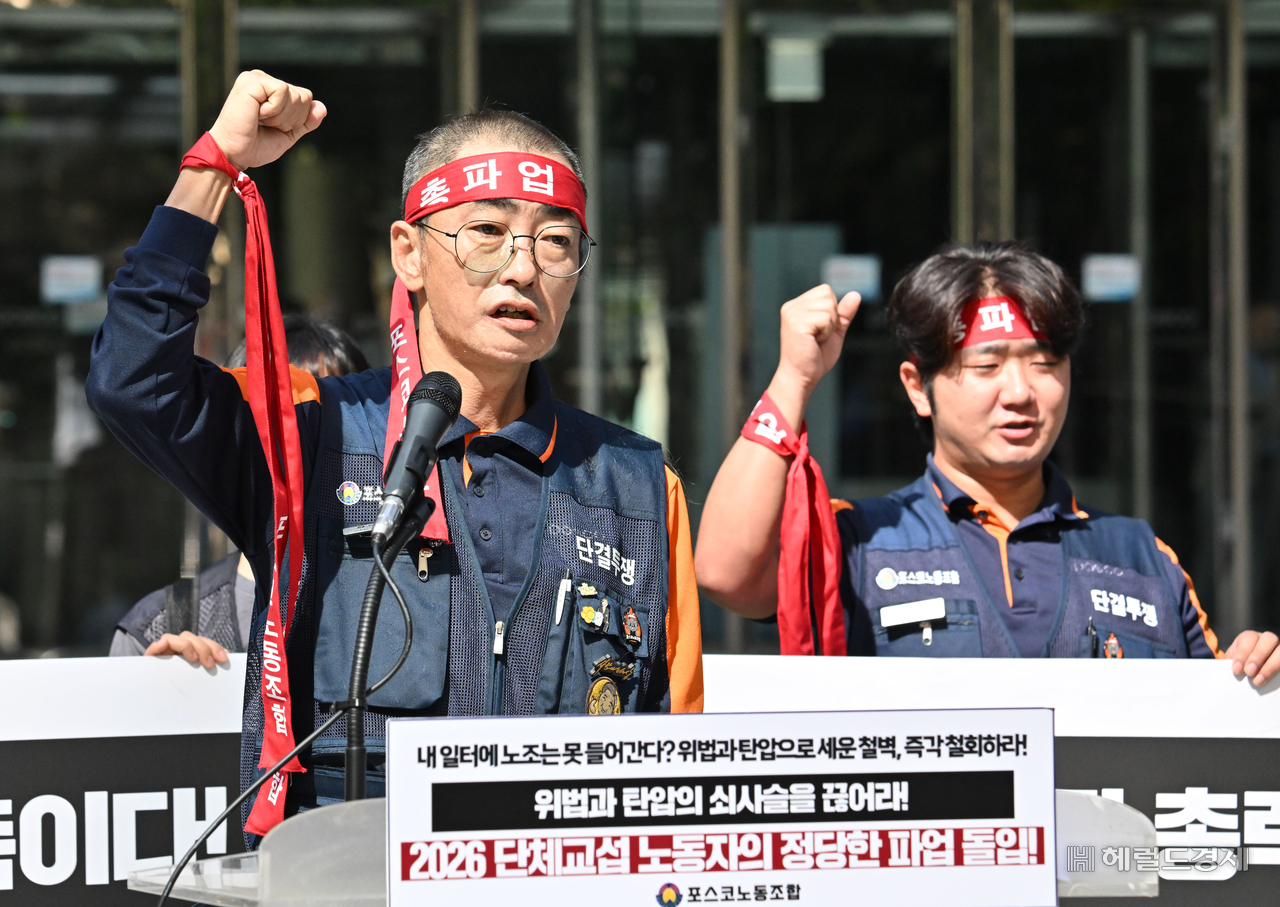
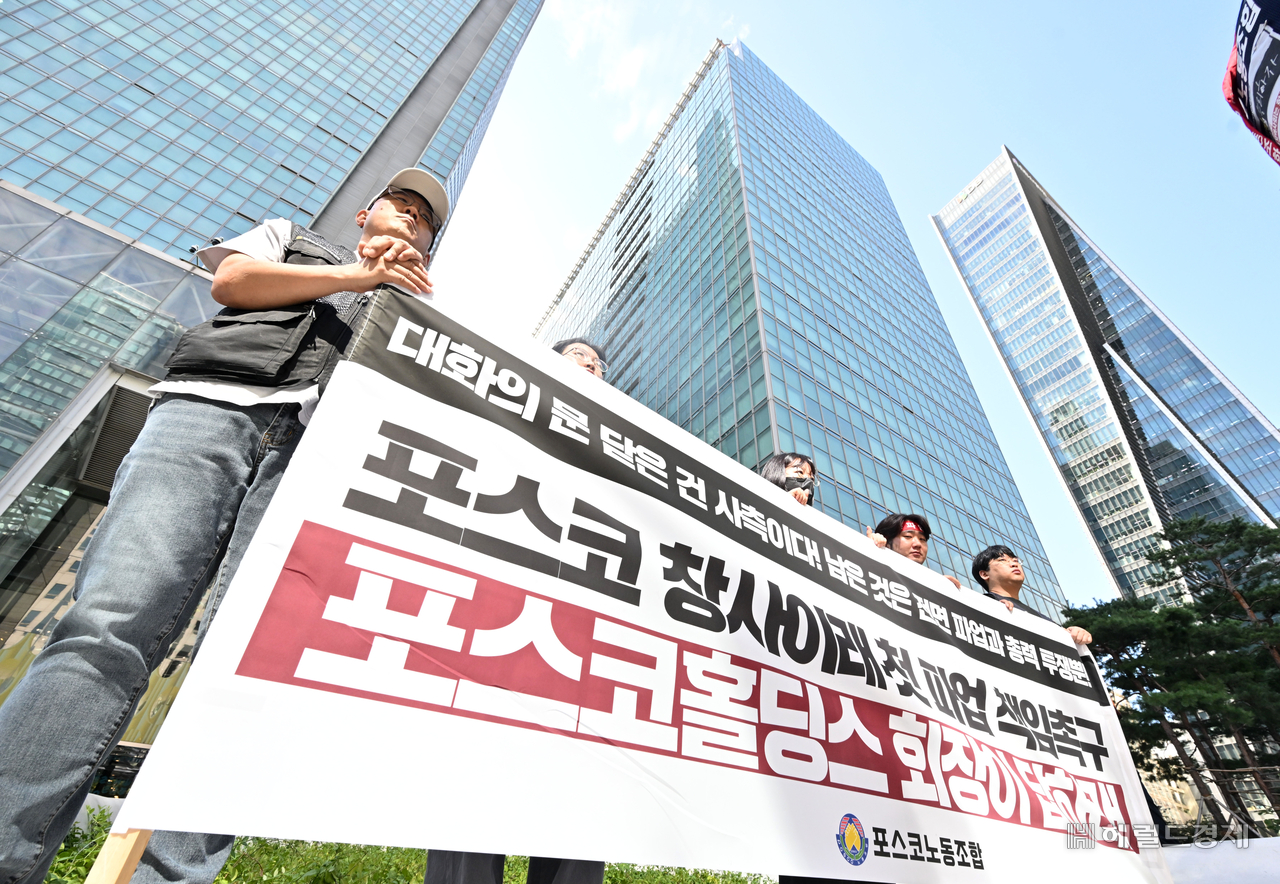
The Posco labor union, which has refused to back down on demands for higher wages amid a steel industry slump and shrinking profitability, has ignited controversy over "strike pay" by deciding to compensate striking workers not only for lost wages but also with an additional daily allowance.
The Posco labor union, affiliated with the Federation of Korean Trade Unions' Korean Metal Workers' Federation, began a 48-hour partial strike at 7 a.m. Wednesday targeting some production lines at Pohang Steel Works and Gwangyang Steel Works. It is the first strike aimed at actual production lines since Posco's founding in 1968.
Posco's no-strike tradition had long been regarded as a symbol of labor-management culture in Korea's manufacturing sector. To ensure a stable supply of steel — a core industry vital to the national economy — labor and management had chosen dialogue and compromise over confrontation, keeping operations strike-free for 58 years.
The controversy deepened after the union decided to pay striking workers an additional 300,000 won ($224) per day on top of compensation for lost wages, drawing criticism that the union is using money to encourage strike participation. Some union members stand to earn more by striking than by working normally. There is also grumbling within the union that a welfare fund the company expanded for members is, in effect, being used to finance the "strike pay."
'Hand over a year's earnings': union demands total 1.4 trillion won
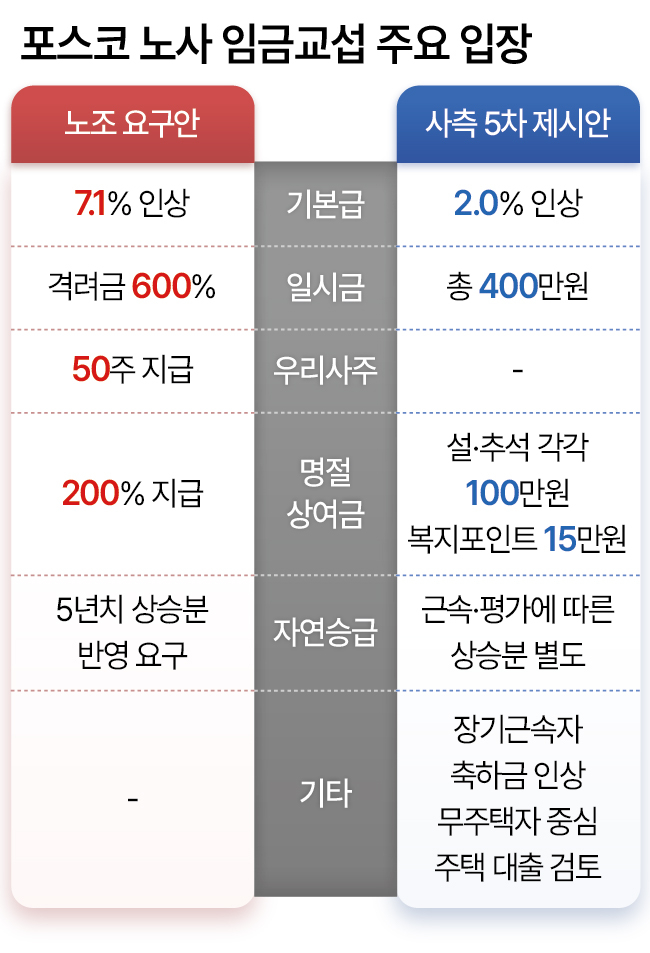
The biggest point of contention between labor and management is wages and compensation. The union is demanding a 7.1% increase in base pay, a bonus worth 600 percent of base pay, 50 shares of company stock per employee, retroactive pay raises reflecting five years of seniority-based increases, and a holiday bonus worth 200 percent of base pay.
Meeting all these demands would cost roughly 1.4 trillion won, about twice what the union sought last year. That figure is in effect equal to Posco's projected operating profit for the full year, meaning the company would have to hand over an entire year's earnings.
The company has raised its offer several times during negotiations. It is currently proposing a 2.0% increase in base pay, a 3.5 million won performance incentive, and 500,000 won worth of local gift certificates. Additional proposals include Lunar New Year and Chuseok holiday bonuses, welfare points, expanded congratulatory payments for long-tenured employees, and improved eligibility criteria for housing loan support. Management maintains that its offer, measured by total actual payout, exceeds settlements reached at rival companies, but the union insists it falls short.
The union maintains that the strike is not simply about wages. It is also demanding improvements to staffing shortages, long working hours and safety conditions. Late last month, it urged the Ministry of Employment and Labor to conduct a special labor inspection, citing continued violations of the 52-hour workweek limit. The union also alleges that the company obstructed union activities after a union official was injured while touring Pohang Steel Works on Friday.
Operating profit nearly halved as steel industry slump drags on
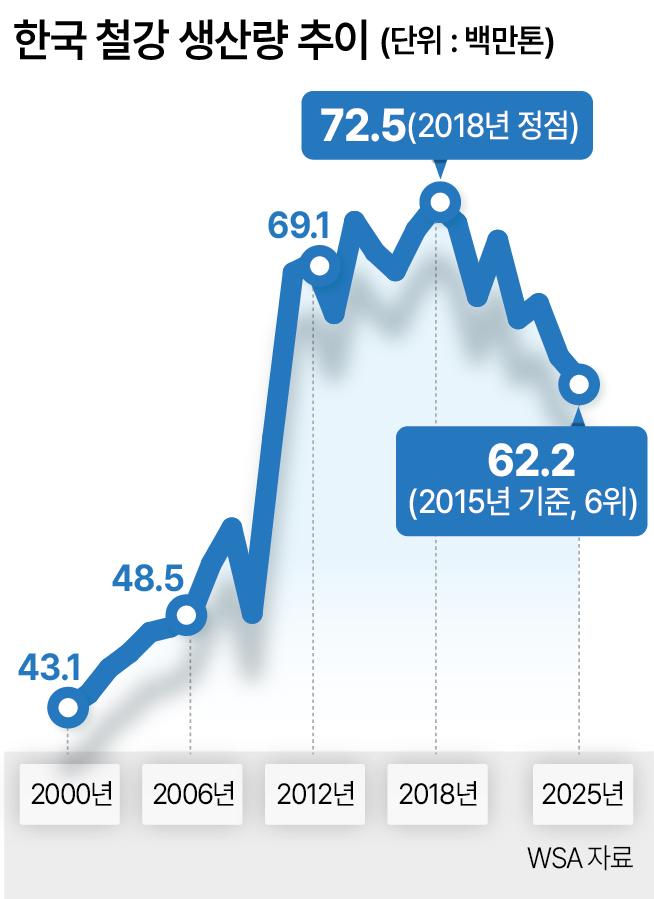
Posco and the rest of Korea's steel industry are struggling to find a turnaround after a prolonged slump, with domestic steel demand already having fallen below the 50-million-ton annual threshold the industry had long regarded as a psychological floor. Domestic steel demand this year is projected to reach only about 43.7 million tons, a mere 0.3% increase from last year.
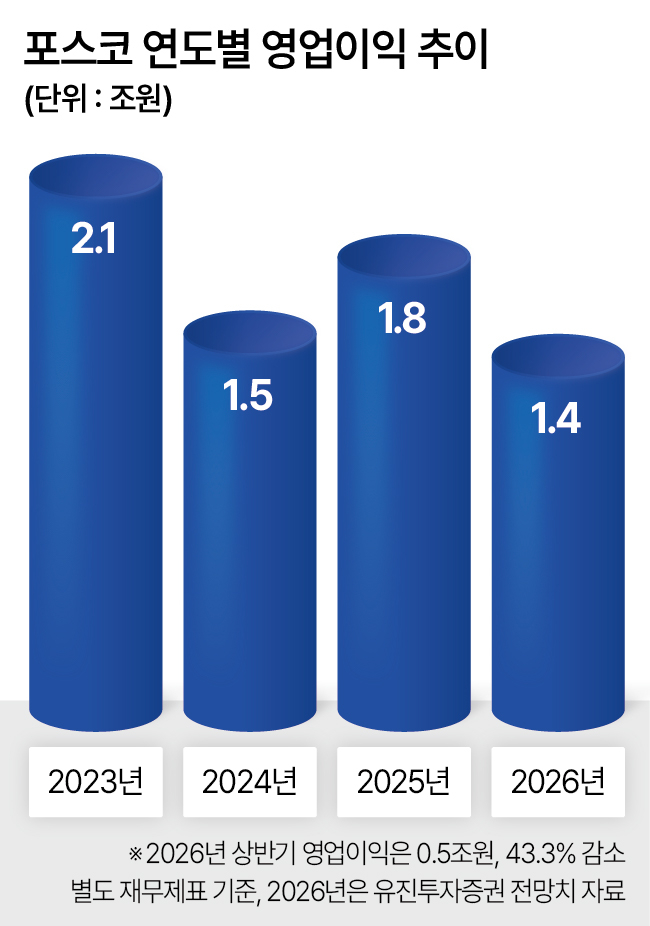
On a standalone basis, Posco's first-half sales this year rose slightly to 18.35 trillion won, but operating profit plunged 43.3%, from 859.3 billion won to 487.3 billion won. The operating margin also fell from the high-4-percent range to the low-2-percent range.
Posco's operating profit, which reached 6.7 trillion won in 2021, has since fallen sharply. This year's projected annual operating profit stands at around 1.4 trillion won.
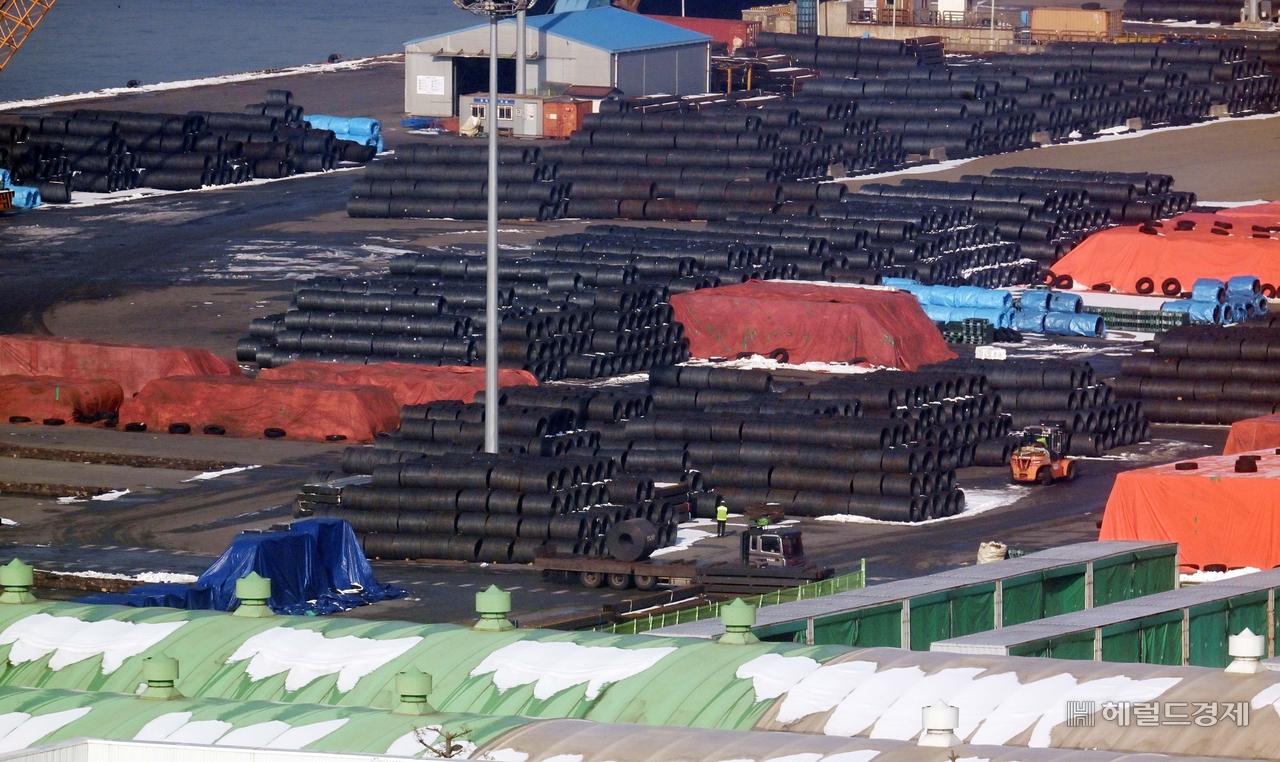
Posco's crude steel output also fell 13.4%, from 43.12 million tons in 2019 to 37.36 million tons last year, while its global ranking among steelmakers slipped from second in 2000 to eighth last year.
Cost pressures are also significant. In the first half of this year, Posco's average purchase price for coking coal was 355,000 won per ton, up more than 30% from last year's average. Prices for steel scrap and nickel also posted double-digit percentage increases. Steel is a notoriously low-margin industry, with costs accounting for about 90% of sales, so rising raw material prices combined with growing fixed costs can quickly erode profitability.
External conditions are equally challenging. Chinese steel products imported into Korea last year totaled 8.134 million tons, accounting for 62% of all steel imports. As China's domestic demand slump drags on, Chinese steelmakers remain under pressure to export. At the same time, major markets such as the United States and Europe are tightening tariffs, import restrictions and carbon regulations. Posco now finds itself competing with cheap Chinese products while also clearing higher trade barriers in overseas markets.
'Now is the time to invest': trillions of won for US, India, low-carbon shift
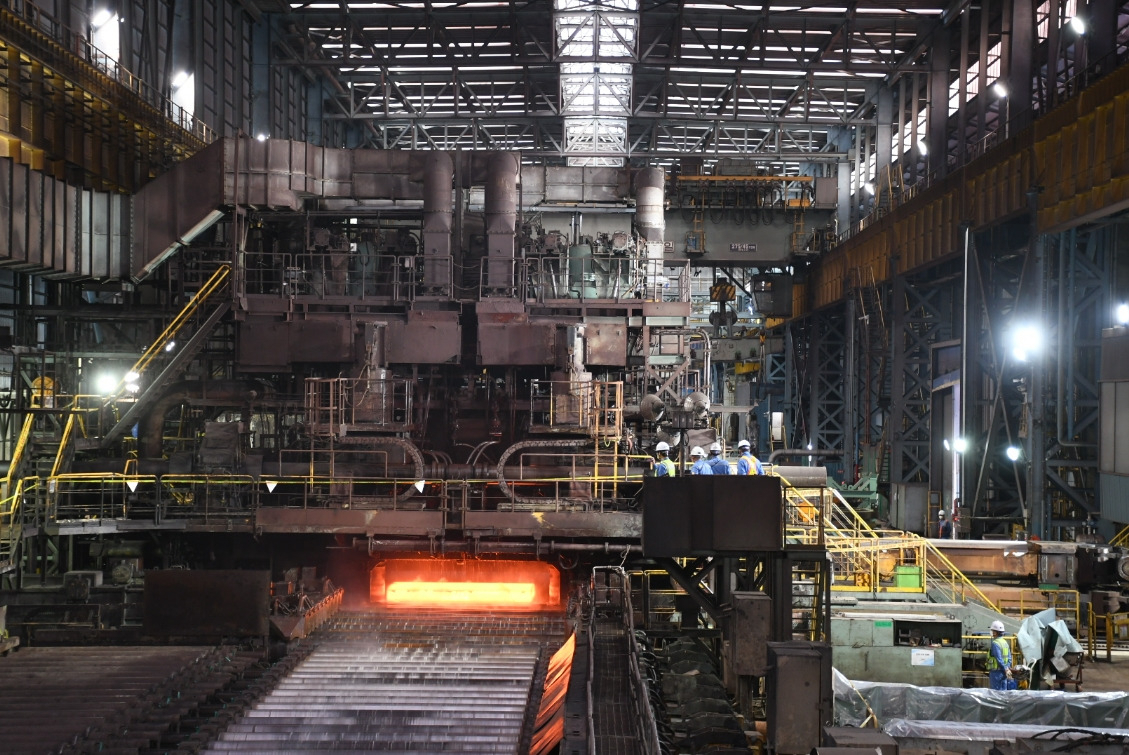
Planned spending on Posco's major domestic equipment investments alone exceeds 4.1 trillion won. Massive funding is needed for a demonstration plant for its hydrogen reduction ironmaking technology, HyREX, in Pohang, new facilities in Gwangyang, and the overhaul of aging equipment.
Overseas, Posco has committed $582 million to an integrated electric-arc-furnace steel mill in Louisiana and plans to invest $1.09 billion in a 6-million-ton integrated steel mill it is building with JSW Steel in India. With massive investment needed both at home and abroad to localize its steel supply chain and shift to low-carbon production, a sharp rise in labor costs could squeeze Posco's capacity for future investment.
Some suspect the union may be using the strike as leverage in internal politics ahead of leadership elections set for September and October. The union launched a dispute response committee even before this year's first labor-management meeting and moved to a strike vote after just three rounds of negotiations. In December last year, it extended the chairman's term from two to three years. If current Chairman Kim Sung-ho is reelected in the upcoming vote, he would serve a total of seven years in the post, through November 2029. Industry observers say wage negotiation outcomes could sway voters, leading the union to escalate its dispute ahead of the election.
The union has warned that if negotiations show no progress even after this 48-hour partial strike, it will expand the affected plants and stage a second, 120-hour partial strike starting Sept. 16. If common ground still cannot be found, the union plans to consider a full strike involving about 10,000 members in October.
Kim Sung-ho, chairman of the Posco union, said, "If the company continues to ignore workers' voices even after this first strike, we will immediately and drastically expand the scale and scope of the strike to deal a critical blow to management."
Management said it plans to minimize production disruptions while pursuing negotiations based on its principles. A Posco official said, "We are utilizing available personnel to the fullest and keeping core processes running normally so that the strike does not disrupt production or supply to customers," adding, "We will continue to listen to and communicate with the union, while working toward a wage settlement within the range the company can bear and in line with our principles."
kwater@heraldcorp.com





