Rep. Lee Sung-yoon analyzes Supreme Court data on judicial appointments
For two straight years, all specialized judges appointed came from major law firms
More than half of this year's general career-track judge candidates are law firm alumni
Panel assignments undisclosed: "Case allocation authority rests with each court's chief judge"
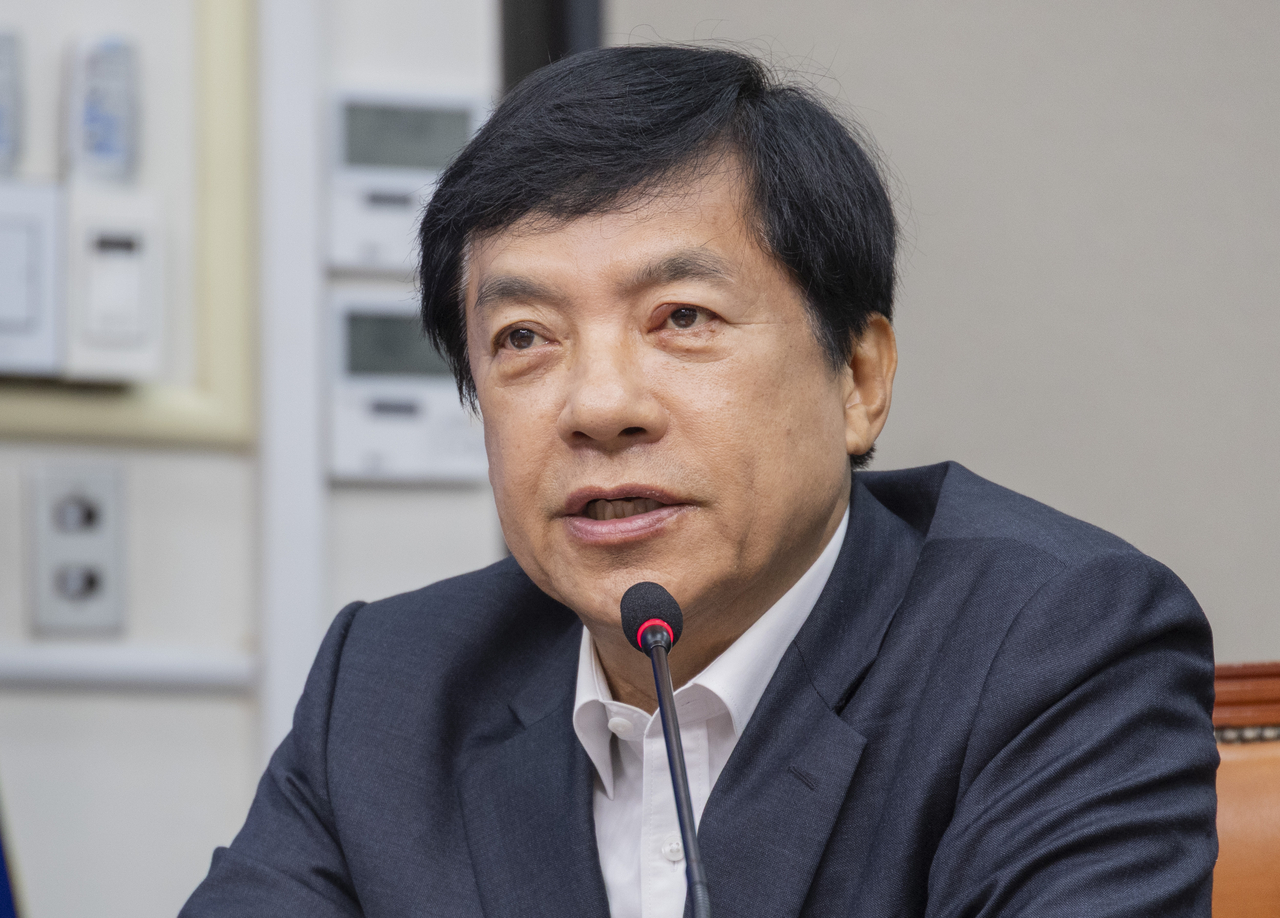
More than half of newly appointed judges come from law firms and other large legal practices. However, the National Court Administration has never classified which trial panels they are assigned to, it has emerged. Critics say this raises the risk of conflicts of interest if judges are placed on panels handling corporate, financial or antitrust cases related to their previous work.
Rep. Lee Sung-yoon of the Democratic Party of Korea, a member of the National Assembly's Legislation and Judiciary Committee, requested data from the Supreme Court on Wednesday. The data covered trial panel assignments for judges with backgrounds in corporate, financial and antitrust law following their appointment. The Supreme Court responded that "the authority over case allocation after appointment rests with the head of each court," adding that it "does not possess data on judges' case allocation."
According to the Supreme Court, 146 candidates passed the final review this year for judicial appointments open to lawyers with at least five years of legal experience. Of them, 79, or 54.1 percent, were lawyers from law firms and similar practices. They were followed by prosecutors with 32 (21.9 percent), those from state agencies and public institutions with 16 (11.0 percent), public defenders with eight (5.5 percent), in-house counsel with seven (4.8 percent), and court research judges with four (2.7 percent).
Judges with backgrounds at law firms and other large legal practices are expected to see a sharp rebound this year. Among general career-track candidates, the share who came from law firms was 43.6 percent (68 of 156) in 2021 and 48.1 percent (65 of 135) in 2022. It then reached 47.9 percent (58 of 121) in 2023, 46.8 percent (52 of 111) in 2024 and 40.5 percent (62 of 153) in 2026. The ratio hovered in the 40 percent range over the past five years but surpassed 50 percent this year. The Supreme Court plans to finalize its decision on judicial appointments by mid-September.
Among judges appointed through the general career track between 2021 and 2025, the largest number — 73 — came from Kim & Chang. They were followed by Yoon & Yang with 24, Shin & Kim with 23, Bae, Kim & Lee with 19, Daeryook & Aju with 17, Yulchon with 16, Barun Law with 13, and Lee & Ko with 11.
For specialized judges — those with at least 20 years of legal experience — all appointees have come from law firms for two consecutive years. This year, three specialized judges were appointed, from Dongin Law, JK Law and Jipyong, respectively. Of the four specialized judges appointed last year, one came from Kim & Chang, an unspecified number from Dongin Law, and one from Shin & Kim. Among the 17 specialized judges appointed from 2021 to 2026, only two — appointed in 2022 and 2024 — came from outside law firms.
"All newly appointed specialized judges over the past two years have come from law firms," Lee said, adding that "the Supreme Court does not even know which trial panels the newly appointed judges have been assigned to." He went on to say, "A transparent management and oversight system must be established so there is no concern about conflicts of interest between a judge's former law firm and case assignments."
addressh@heraldcorp.com