On-Site Training Rolls Out for Block Leaders Ahead of Launch of 'Tong-Ban Cooperation Corps'
Sept. 7-22 Job Training Reaches 1,768 Block Leaders Across 18 Dong, Explains System Overhaul and New Roles
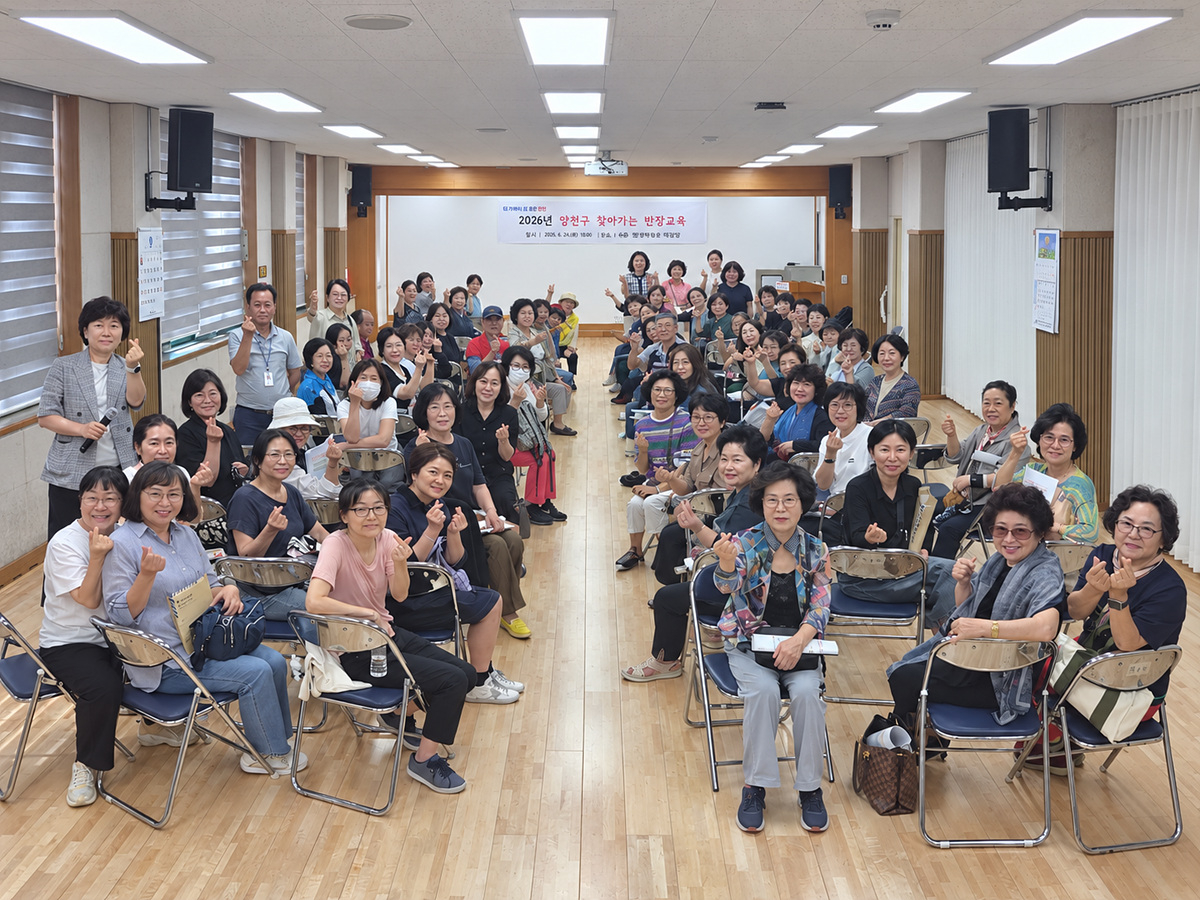
Yangcheon-gu is holding on-site training sessions for 1,768 block leaders across 18 dong in the district from Monday through Sept. 22, ahead of the planned rollout of the Yangcheon Tong-Ban Cooperation Corps next year.
The training explains on-site the purpose behind the overhaul of the block leader system and the roles set to change. It aims to quickly establish a cooperative structure in which neighborhood chiefs and block leaders work together. The district has already introduced term limits for block leaders and issued identification cards to them as part of earlier system improvements. An operational survey in July identified clarifying block leaders' roles and overhauling the operating structure as key tasks. In response, the district decided to move forward with a full-scale shift to a "cooperative team system."
Starting next year, the district will move away from the existing system in which each block leader operates individually. It will instead introduce the Yangcheon Tong-Ban Cooperation Corps, in which neighborhood chiefs and block leaders work as a single team overseeing the entire tong. Each tong will form one cooperative team, with the neighborhood chief serving as team leader and block leaders as team members. Block leaders will no longer be limited to their own assigned ban but will take part in joint tasks covering the whole tong. To support the change, the district plans to revise its regulations on the appointment of neighborhood chiefs and block leaders by the end of the year. This will ease the residency requirement for block leader appointments from "residing in the relevant ban" to "residing in the relevant tong."
Block leaders' duties will also become clearer. As regular tasks, they will distribute the Yangcheon-gu newsletter once a month and join a joint household registration fact-finding visit once a year. On an as-needed basis, they will monitor residents' daily lives, identify and report neighbors who need help, and flag everyday inconveniences. In addition, they may join neighborhood chiefs in voluntary activities tailored to each dong's characteristics, such as flood response, snow removal and environmental cleanup.
The on-site training will use a Yangcheon Tong-Ban Cooperation Corps work manual to explain in detail the newly revised block leader system and how the cooperation corps will operate. It will also cover each block leader's key duties and working methods.
Alongside this, hands-on training will run in parallel to strengthen practical skills needed for on-site work, such as communicating with residents and managing conflicts. The goal is to raise both block leaders' understanding of their duties and their ability to respond to issues.
Even after the training ends, the district will set up a system to track activity records so the cooperation corps can take root on the ground. Block leaders will share details of their activities with their neighborhood chief, who will then submit each team's activity record online once a month. Using a simple reporting system built on Google Forms, the district plans to reduce administrative burden while systematically tracking actual activity, boosting the sustainability and effectiveness of the program.
Yangcheon-gu District Mayor Lee Ki-jae said, "Neighborhood chiefs and block leaders are an important link in the community, positioned closest to hear residents' voices and see the inconveniences in their daily lives." He added, "Through a cooperative structure in which neighborhood chiefs and block leaders divide roles and work together, we will make sure even residents' smallest concerns are quickly relayed to the administration."
seouldream01@heraldcorp.com