National Assembly holds forum on expanding domestic NPU exports
DeepX proposes dedicated program for overseas PoC testing
'K-AI chip export voucher' needed to capture overseas demand, industry says
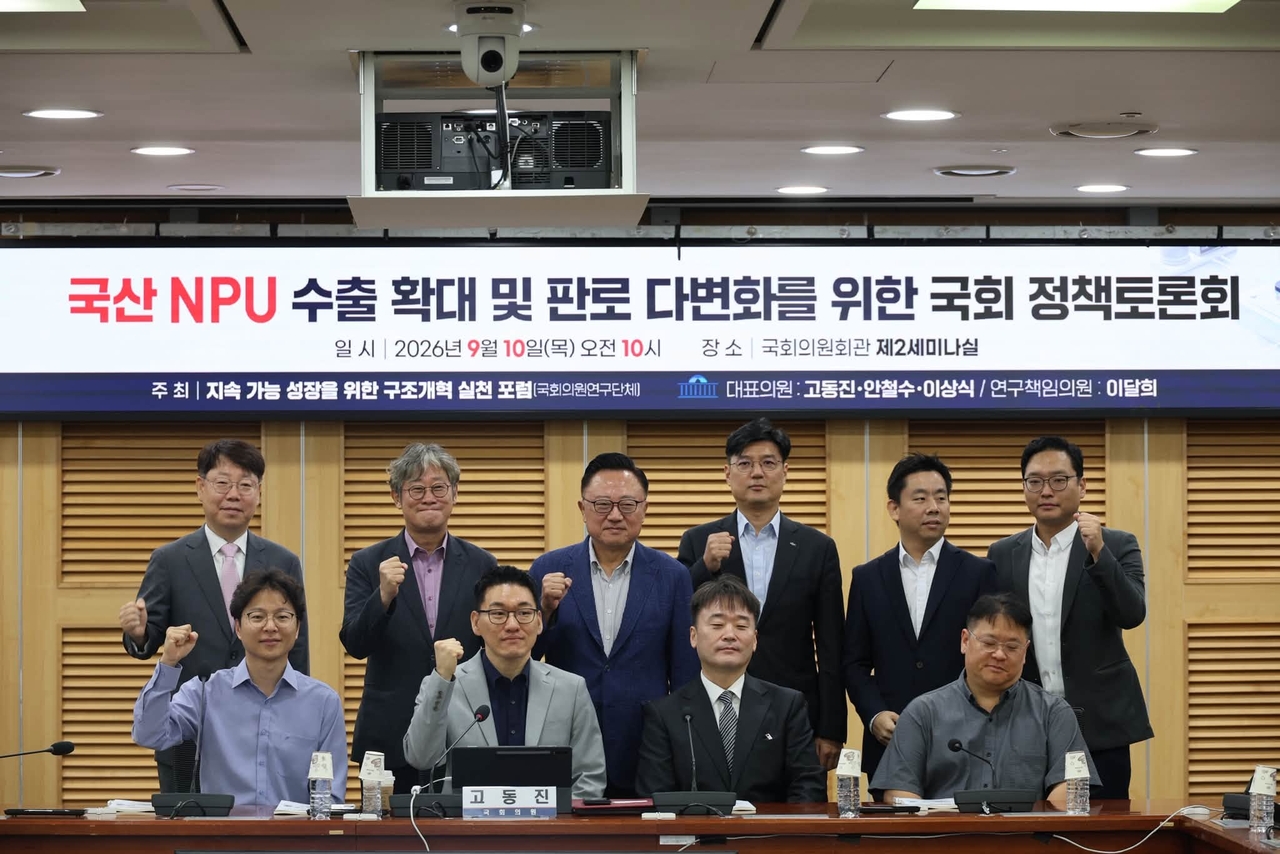
Industry officials called for a government-level support program to ease the burden of overseas verification costs and lower initial purchase costs for foreign clients, arguing this is needed to expand exports of domestically made AI chips.
Cho Jae-hong, a managing director at DeepX, laid out such a policy proposal for expanding exports of domestic AI chips at a policy forum titled "Expanding Domestic NPU Exports and Diversifying Sales Channels," held Thursday at the National Assembly Members' Office Building in Yeouido, Seoul.
NPUs, or neural processing units, are designed for specific AI computations and are cheaper and more power-efficient than Nvidia's GPUs.
Nvidia's GPUs currently dominate the global semiconductor market, but NPUs are considered essential chips for the coming era of physical AI. With the NPU market still in its early growth stage, industry voices say government support is needed to help domestic firms secure an early lead.
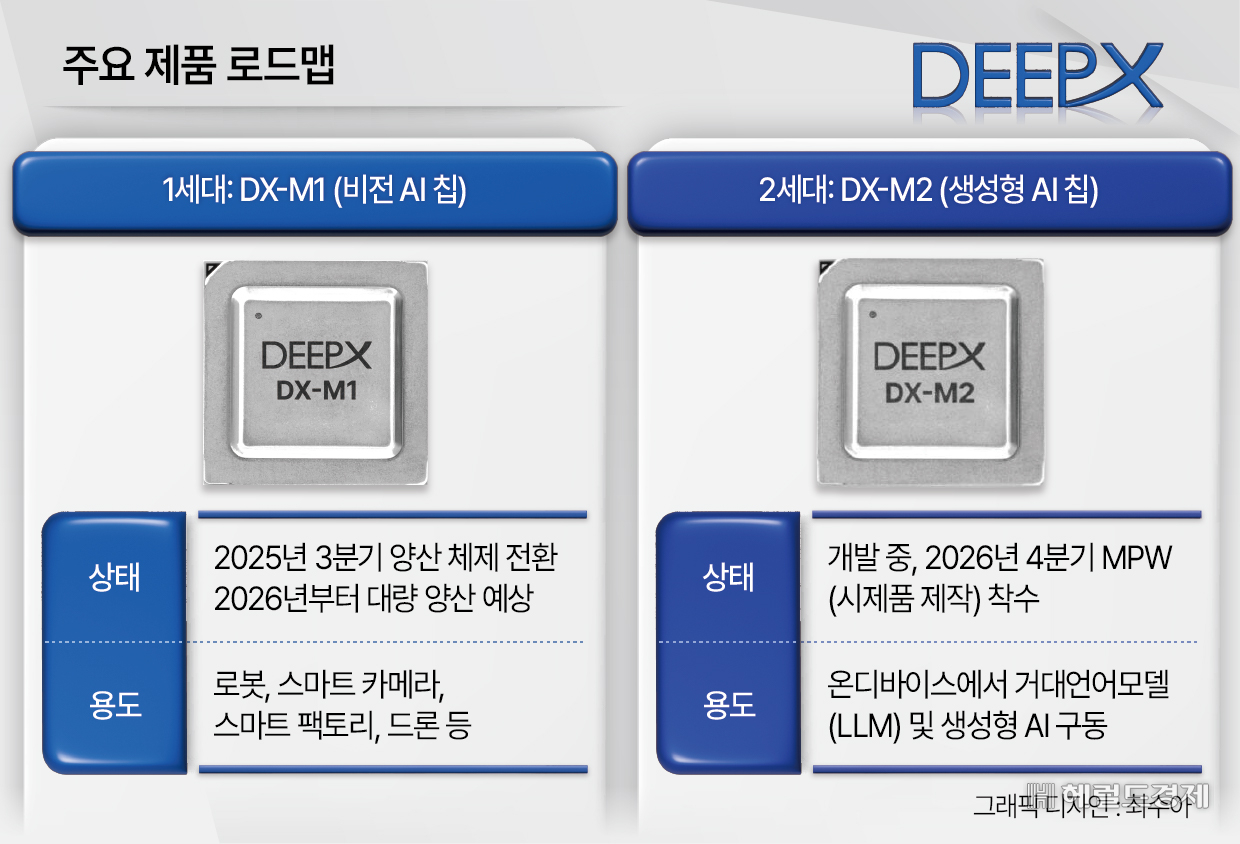
Since starting mass production of the DX-M1, an ultra-low-power on-device NPU, in August 2025, DeepX has secured more than $13 million in commercial purchase orders from more than 10 countries and regions worldwide over the past year.
But at the forum, participants pointed out that export growth would remain limited without active government support.
Cho explained that the proof-of-concept process overseas clients typically require before placing an order usually takes more than two years per case, and optimizing products to meet client demands involves significant costs — a burden that small and medium-sized domestic fabless firms must currently bear alone.
He also said that without confidence in long-term maintenance and technical support, overseas clients do not significantly increase their order volumes even after a product has passed verification.
This, he said, stems from a lack of awareness among foreign companies about domestic NPUs, with verification results obtained in Korea often failing to gain recognition abroad.
DeepX proposed creating a dedicated program to support overseas PoC testing for small and medium-sized domestic fabless firms, arguing this would build an export environment with a lighter verification cost burden.
It also proposed introducing a "K-AI chip export voucher" that would cover about 300 million won ($224,000) in PoC costs, easing the initial purchase burden for overseas demand companies.
Once overseas companies actually put the chips to use, doubts over maintenance and technical support could be resolved, DeepX said, adding that this could lead to order volumes of more than 3 billion won.
At a "Report on Strategies for Fostering the Semiconductor Industry in the AI Era" meeting chaired by President Lee Jae Myung in December 2025, domestic fabless company officials likewise stressed the need for active government support to expand opportunities to test self-designed chips and to secure demand both at home and abroad.
Particularly, some argued that the government should proactively expand public procurement of domestically made chips to build a bridgehead for fabless firms' overseas exports.
At the time, DeepX CEO Kim Nok-won said, "It is hard to survive by selling only domestically," adding, "It would help to have a policy that builds a bridgehead for exports to the US, China, Japan and Taiwan."
After hearing out the fabless companies' concerns, President Lee said, "Export demand will only emerge if the Korean government also says it uses (these domestic fabless chips)," and pledged to expand public procurement of domestic AI chips.
"Public officials avoid taking proactive action because they fear being held accountable if a purchase results in losses," Lee said. "We need to expand 'trial purchases' of innovative products, and the public needs to tolerate losses when they occur."
In practice, the Ministry of Science and ICT designated DeepX's NPU as an outstanding R&D innovative product last month, allowing it to enter into private contracts with public institutions — including government bodies and local governments — for three years. Purchasing officials are exempted from liability for the decision unless there is intent or gross negligence involved.
Rep. Ko Dong-jin of the People Power Party, who hosted the forum, wrote on social media, "Amid a solid ecosystem centered on Nvidia's GPUs, there are limits to what individual companies' technology alone can achieve in expanding exports and diversifying sales channels." He added, "I will carefully review how the proposals raised Thursday can be reflected in laws and regulations."
joze@heraldcorp.com