![People sit at a bus stop. [Image created with ChatGPT]](https://wimg.heraldcorp.com/news/cms/2026/09/10/news-p.v1.20260910.310bc460db334ce696c6d978ce22d760_P1.jpg)
Do people in their 20s and 30s not worry about matters of life and death?
Young adults in their 20s and 30s will face a much longer future than older generations. It would seem only natural, then, that they would carry deeper worries about a changing world.
Climate change is the clearest example. Extreme weather can upend daily life with little or no warning.
People in their 20s and 30s, in particular, are the generation that will bear the brunt of climate disasters such as heat waves, floods and wildfires, since such disasters are expected to grow more frequent and severe over time.
But reality tells a different story. Adults aged 60 and older turn out to view the climate and environmental crisis as more serious than those in their 20s and 30s do.
![Residents clear mud and water-damaged belongings from flooded stores and homes in Okpo-dong, Geoje, South Gyeongsang Province, on Aug. 18, after record rainfall caused extensive damage that morning. [Newsis]](https://wimg.heraldcorp.com/news/cms/2026/09/10/news-p.v1.20260818.e401882fa5074f9cb3d435ccccfb10ef_P1.jpg)
Analysis shows that the younger the age group, the weaker the sense of crisis over humanity's survival — a pattern that holds regardless of country or region.
Does only the older generation worry about the world? Experts say there is a clear explanation for why people in their 20s and 30s show relatively low awareness of the climate and environmental crisis.
The younger the age, the less climate worry — Korea included
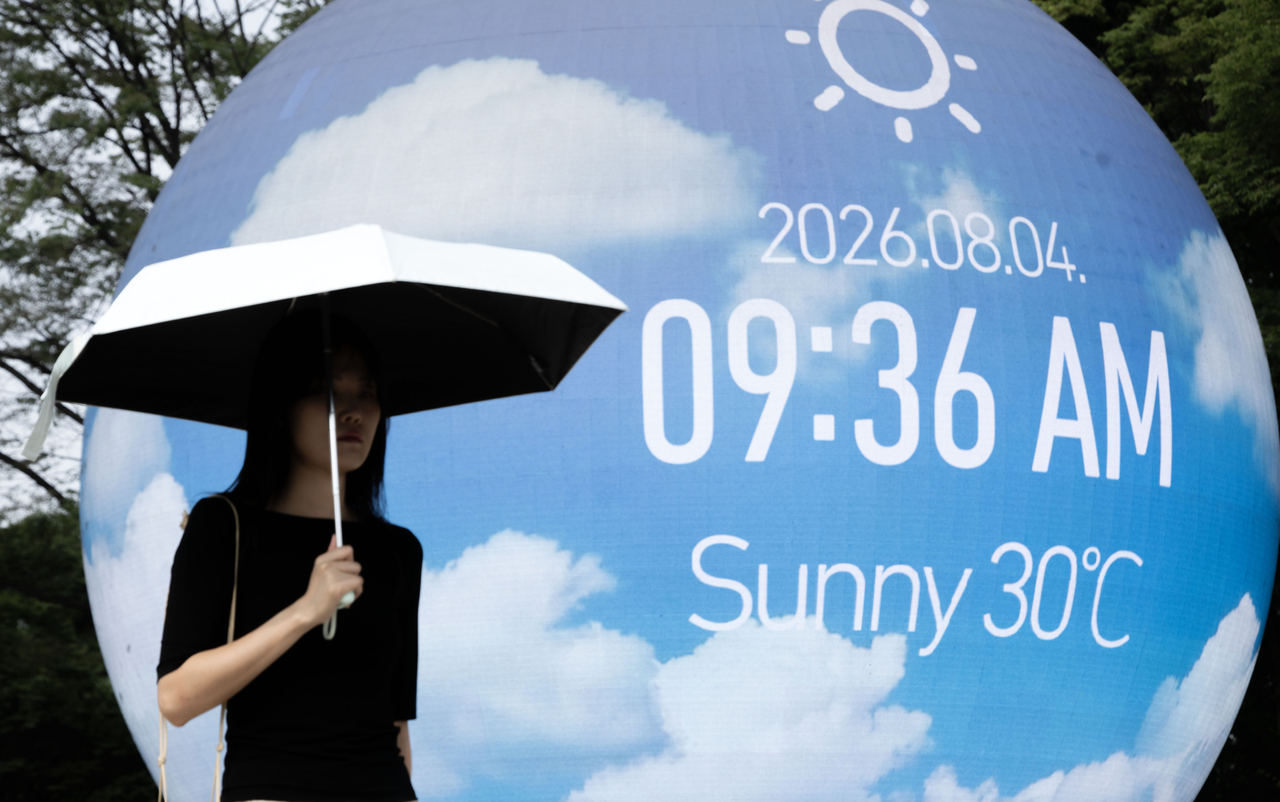
This tendency stands out in the "2026 Environmental Crisis Clock," recently released by the Environmental Foundation and Japan's Asahi Glass Foundation.
The Environmental Crisis Clock is an indicator that expresses, in the form of a "time," how seriously environmental problems threaten humanity's survival. Measured since 1992 through surveys of environmental experts worldwide, a later time signals a more serious threat.
![Some units inside an apartment building in Okpo-dong, Geoje, South Gyeongsang Province, sit damaged after heavy rain on Aug. 19. Because a mountain lies just to the left, units toward the rear also suffered landslide damage. [Yonhap]](https://wimg.heraldcorp.com/news/cms/2026/09/10/rcv.YNA.20260819.PYH2026081908950005200_P1.jpg)
This year's global Environmental Crisis Clock read 9:39, six minutes later than last year's 9:33, marking a "very dangerous" level. Korea's clock moved from 8:53 last year to 9:34 this year, advancing roughly 41 minutes closer to midnight in just one year.
A breakdown by age revealed a different pattern. The clock for people aged 60 and older stood at 9:48, while for those in their 20s and 30s it read 9:25 — about 23 minutes earlier. Those in their 40s and 50s fell in between, at 9:39.
![[Courtesy of the Environmental Foundation]](https://wimg.heraldcorp.com/news/cms/2026/09/10/news-p.v1.20260910.7280c19a3b6f48a8b65552042c9f3476_P1.png)
In short, the older people are, the more seriously they perceive the survival threat posed by climate change. Nor is this pattern unique to climate experts.
The Asahi Glass Foundation also conducted a separate survey this year of 1,302 ordinary Japanese people aged 15 to 69. Generation Z respondents aged 18 to 24 recorded an Environmental Crisis Clock reading of 6:36, while adults aged 25 to 69 recorded 7:27 — a sizable gap.
A similar pattern holds within Korea. In the National Environmental Awareness Survey conducted last year by the Korea Environment Institute on 3,008 adults nationwide, the share of respondents who said climate change has a serious impact on society overall rose with age, from 79.2 percent among people in their 20s to 87.6 percent among those in their 60s.
Everyday interest in environmental issues followed the same upward trend, from 3.62 points among people in their 20s and 3.58 among those in their 30s to 3.80 among those in their 50s and 3.96 among those in their 60s.
The gap widened further when it came to actual behavior. Only 38.3 percent of people in their 20s said they prioritize eco-friendly behavior even when it is somewhat inconvenient, compared with 72.1 percent of those in their 60s — nearly double.

A changing climate and environment are directly tied to humanity's survival. According to the Intergovernmental Panel on Climate Change, about 3.3 billion to 3.6 billion people worldwide currently live in environments highly vulnerable to climate change — meaning roughly half of humanity already faces a threat to its survival.
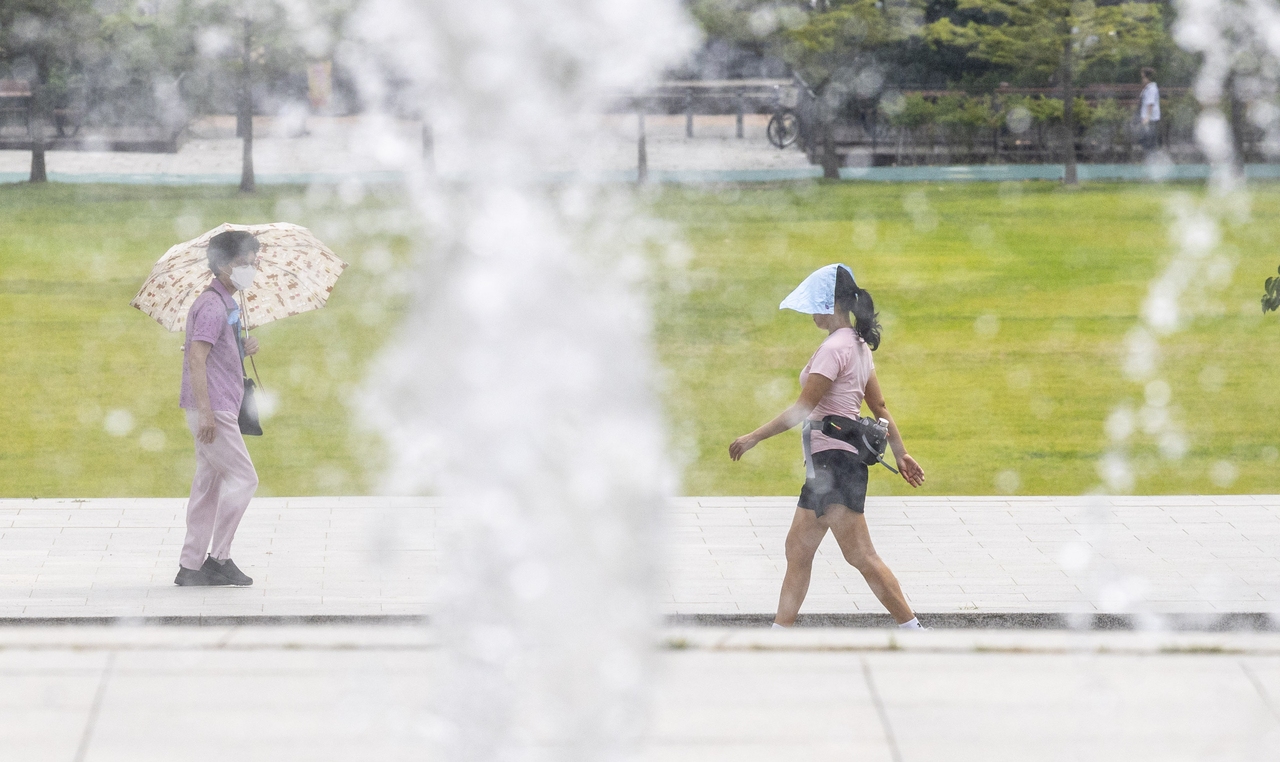
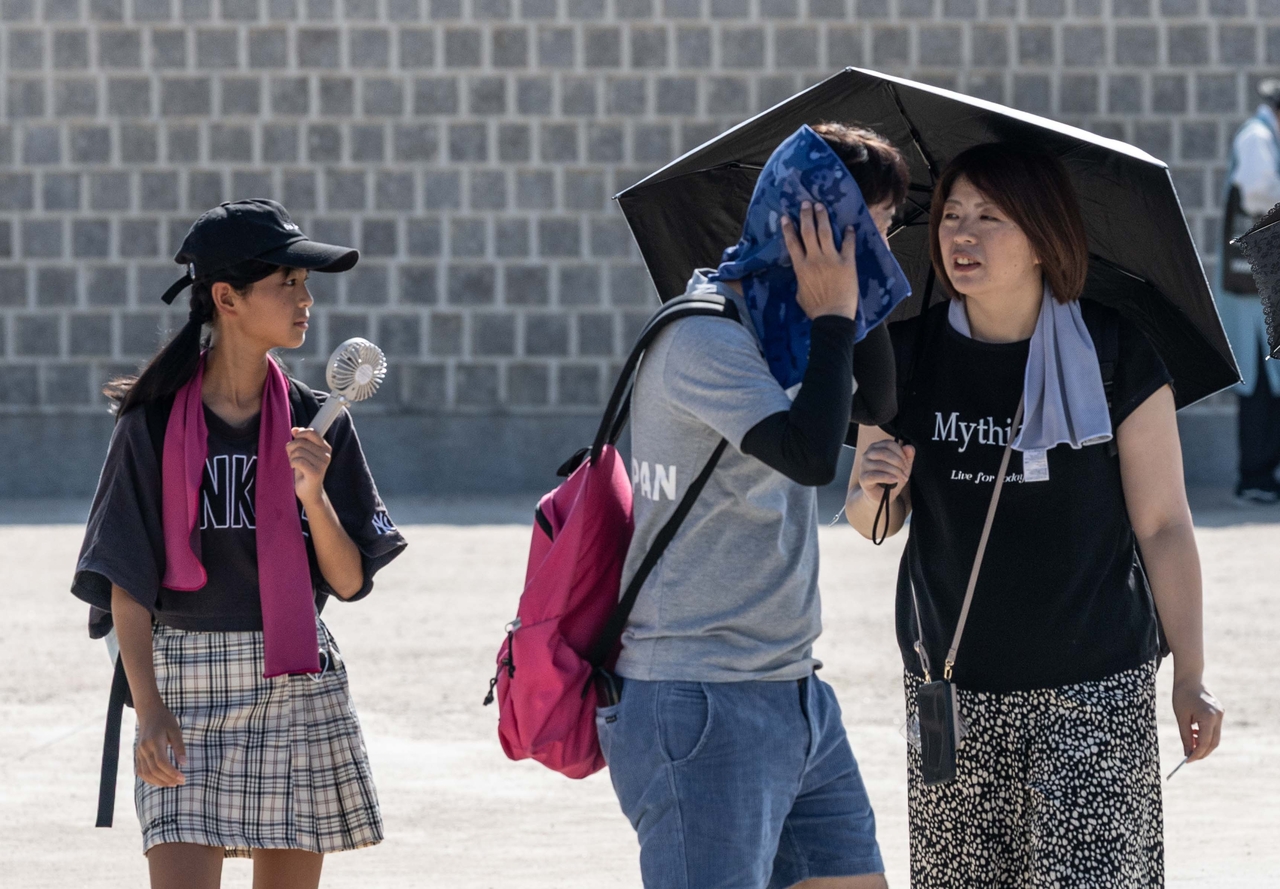
Korea is no exception. This summer alone brought record-breaking heat waves and torrential rain in succession. Temperatures in some areas soared to record highs while record rainfall drenched other regions, making clear that climate change is no longer a distant concern.
The public is well aware of this. In last year's National Environmental Awareness Survey, 88.3 percent of respondents expected "future generations" to suffer from climate change, and 70.7 percent said Korea is already experiencing its negative effects. The vast majority of Koreans, in other words, anticipate a looming crisis for humanity's survival.
'I'll just give up' — the hidden helplessness of Korea's youth
So do people in their 20s and 30s really have no worries about the world? There is a hidden twist. Rather than milder emotions like "worry" or "crisis," they may in fact feel a considerable degree of helplessness — a result, analysts say, of believing the problem is beyond their control or resolution.
In other words, a lower outward level of worry does not mean this generation views climate change with optimism.
When researchers at the Korea Institute for Health and Social Affairs surveyed 2,000 adults aged 19 to 65 nationwide in 2023, 87.6 percent of people in their 20s and 98.3 percent of those in their 60s said they "worry" about climate change. The share who said they feel "anxious" was likewise higher among older respondents: 83.8 percent for those in their 20s versus 94.4 percent for those in their 60s.
But when researchers measured "climate anxiety" — combining thoughts, emotions and disruptions to daily life caused by climate change — the results flipped. On the five-point Climate Change Anxiety Scale, people in their 20s scored highest at 2.02, with scores declining steadily with age: 1.99 for those in their 30s, 1.94 for those in their 40s, 1.77 for those in their 50s and just 1.75 for those in their 60s.
The gap was especially stark on "helplessness." Among people in their 20s, 59.3 percent said they feel helpless because they believe climate change cannot be controlled or solved — 13 percentage points higher than the 46.3 percent recorded among those in their 60s. Their outward sense of crisis may appear relatively low, but younger people feel more strongly that the problem cannot be solved anyway.
![Test takers wait for exam papers to be distributed at the main campus of Jongno Academy in Yangcheon-gu, Seoul, on Tuesday, when the September mock exam for the 2027 College Scholastic Ability Test was held. [Yonhap]](https://wimg.heraldcorp.com/news/cms/2026/09/10/rcv.YNA.20260902.PYH2026090206420001301_P1.jpg)
This sense of helplessness can also lead to "climate depression" — a psychological state in which the belief that the climate crisis is worsening and the future is uncertain gives rise to negative emotions such as sadness, loss, anger and helplessness.
A follow-up study released by the Korea Institute for Health and Social Affairs in December 2025 captured the same trend. When researchers analyzed climate anxiety levels among 2,000 adults, the "potentially high climate anxiety group" — those at risk of moderate or higher depression — made up 34.3 percent of young adults aged 19 to 34, compared with 25.8 percent of the middle-aged group aged 35 to 64.
![[Getty Images Bank]](https://wimg.heraldcorp.com/news/cms/2026/09/10/news-p.v1.20260223.762cbf8dcb73452e9d218a492b759afa_P1.jpg)
Given this, it is hard to write off the relatively low crisis awareness among people in their 20s and 30s as simple indifference or optimism. Even when their outward worry appears muted, they may feel greater anxiety and helplessness underneath, believing the climate crisis is beyond their control.
Experts said easing younger generations' sense of helplessness requires moving beyond traditional climate communication that emphasizes alarm, and instead offering more information that helps people feel a genuine sense of efficacy in responding to the crisis.
Researchers at the Korea Institute for Health and Social Affairs likewise said those who deliver climate information, including the government, should not simply repeat warnings that the situation is "dangerous." Young people need to see response methods they can actually follow, along with real-world solutions, so they can build the confidence that their own actions can make a difference.
"It should include not just knowledge about the causes and phenomena of climate change, but also specific behavioral guidance for adaptation, or information about best practices adopted by the government," the researchers said.
woo@heraldcorp.com