National Institute of Biological Resources unveils exhibition on halophytes and tidal flat ecosystems starting Friday
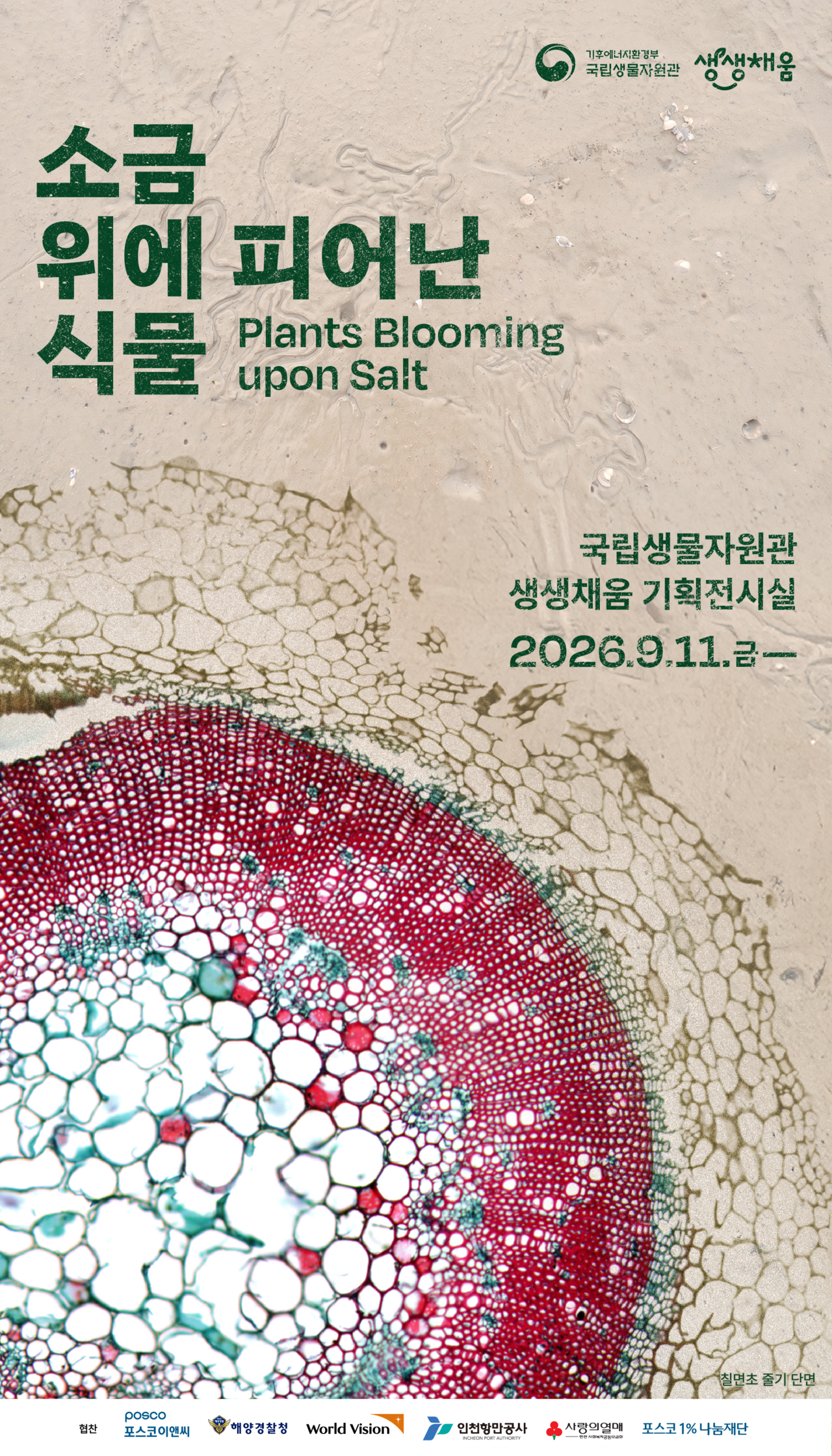
The National Institute of Biological Resources, under the Ministry of Climate, Environment and Energy, said Friday that it will run a special exhibition titled "Plants That Bloom on Salt" from Friday through next March at the Saengsaengchaeum Exhibition Hall in Seo-gu, Incheon.
The exhibition introduces halophytes — plants that grow in salty soil — alongside organisms that share an organic relationship with them in tidal flats, aiming to highlight the value and importance of the tidal flat ecosystem.
Posco E&C, the Korea Coast Guard, World Vision, Incheon Port Authority, Community Chest of Incheon and the Posco 1% Sharing Foundation all took part in organizing the exhibition.
The exhibition introduces a total of 26 halophyte species, including large-scale models of four species — Namunjae, Tungtungmadi, Haehong and Chilmyeoncho. Visitors can also view immersive video footage, created with generative AI, depicting halophyte colonies and tidal flat organisms.
The exhibition displays specimens of fish such as mudskippers, invertebrates such as fiddler crabs and hard clams, and birds such as black-faced spoonbills that live in tidal flats. Visitors can also see live mudskippers up close.
The exhibition explains, in accessible terms, how halophytes have adapted to survive in harsh environments. In addition, an interactive digital experience lets visitors virtually plant halophytes themselves, offering an indirect taste of biodiversity conservation efforts that enrich the tidal flat ecosystem.
The exhibition is open from 9:30 a.m. to 5:30 p.m. It is closed every Monday, on Jan. 1, and during Seollal and Chuseok, including the day before each holiday and the holiday itself. Admission and parking are free.
More details about the exhibition are available on the institute's website and official SNS accounts.
"I hope this exhibition helps visitors understand the precious value of halophytes and tidal flats, and serves as an occasion to remember that protecting a single life means protecting countless other organisms and habitats together," said Yoo Ho, director of the National Institute of Biological Resources. "The institute will continue to share the value of biodiversity with the public and carry on research and practical efforts toward the conservation and sustainable use of biological resources."
thlee@heraldcorp.com