Antimony supply to US to top 240 tons this year
Germanium mass production begins next year
Gallium output targeted at 15.5 tons by 2028
W11tr integrated US smelter to launch in phases from 2029
US plant to yield 540,000 tons a year, including 11 critical minerals
Annual EBITDA seen topping W1tr at full capacity
China's chokehold on critical minerals is being broken through Korean smelting technology. Korea Zinc is expanding its production lineup beyond antimony and indium into germanium and gallium, and plans to invest about 11 trillion won ($8.22 billion) to build a large integrated smelter in the United States. The goal is to secure global "mineral sovereignty" by diversifying a critical mineral supply chain now concentrated in China across South Korea and the United States.
According to industry sources Friday, China has tightened export controls in stages since 2024 on critical minerals essential to advanced technology and defense industries — starting with antimony, then gallium and germanium, and later tellurium, bismuth and indium. As supply of minerals whose production and refining are in effect dominated by a single country grew unstable, the United States and others moved more quickly to build supply chains outside China.
That has made smelters capable of reliably producing critical minerals outside China increasingly important. Drawing on its standing as the world's top zinc and lead smelter, Korea Zinc recovers not only its core metals from concentrate but also rare metals present in small quantities in smelting byproducts and recycled raw materials.
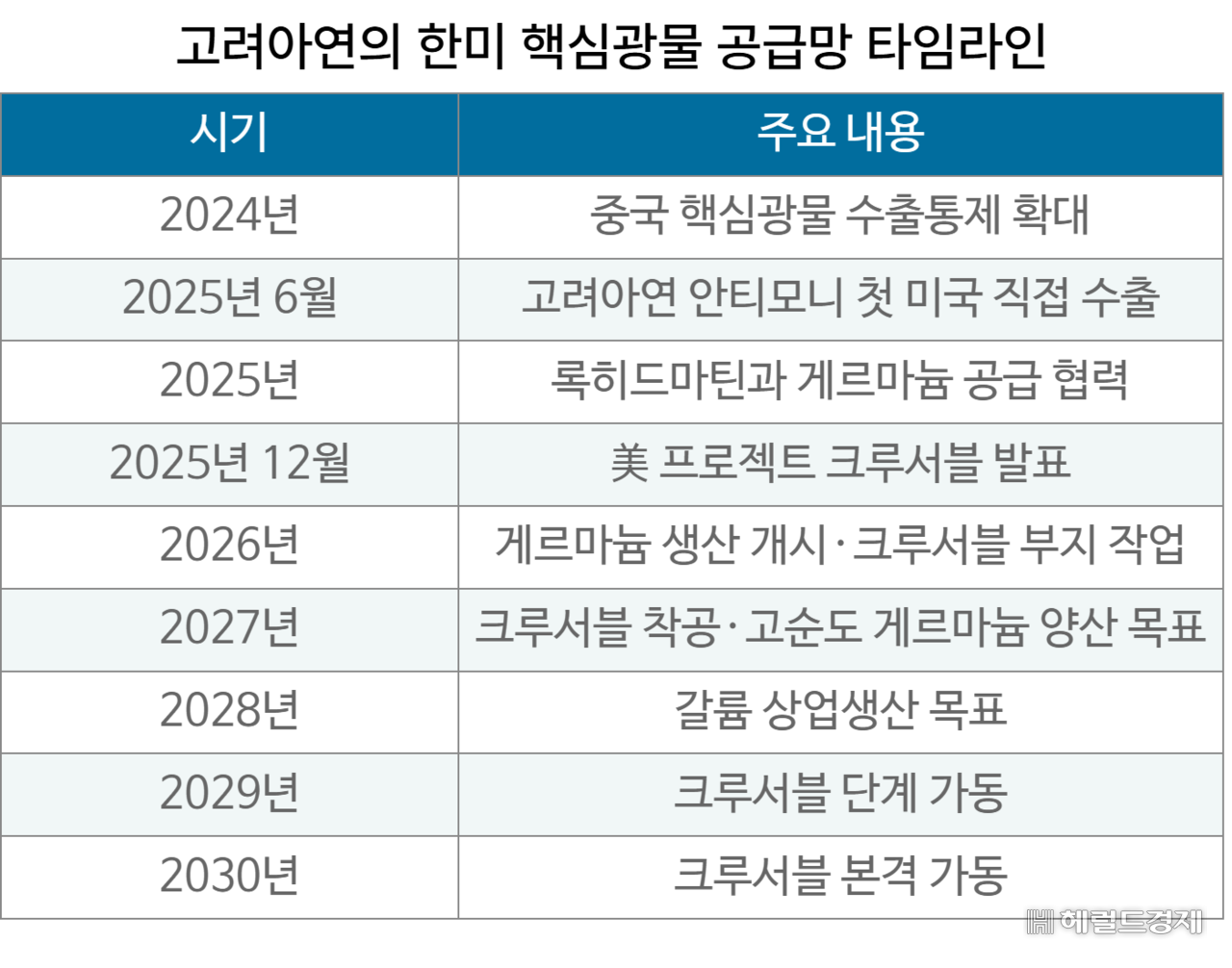
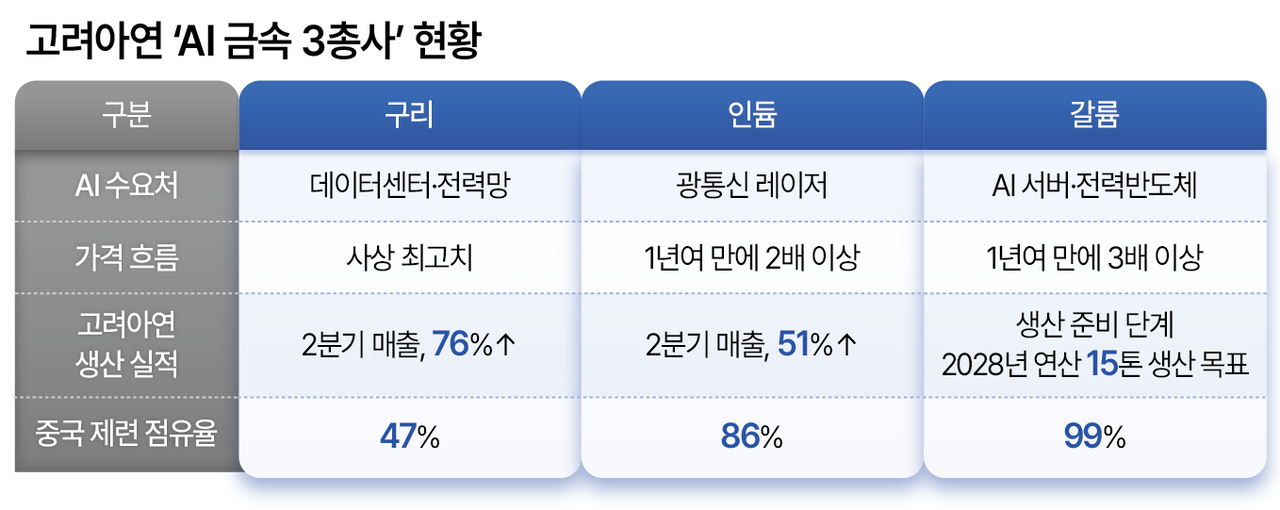
The leading example is antimony. Korea Zinc, the only domestic producer, produced about 4,500 tons last year. After first directly exporting 20 tons from its Onsan smelter to the United States in June 2025, the company plans to expand its annual US supply to more than 240 tons this year. Antimony is a strategic mineral used in ammunition, military electronics and aerospace alloys.
Korea Zinc is also the sole domestic producer of indium, with output of 97 tons last year. The mineral is used in displays and semiconductors, and China accounts for more than 70 percent of global supply.
W140b bet to localize germanium, high-purity output next year
Korea Zinc is not only increasing output of minerals it already produces but also expanding its portfolio into areas where domestic production has traditionally been weak.
Germanium is a prime example. The strategic mineral — used in night-vision devices, thermal imaging cameras and semiconductors — saw its price jump from about $3,000 per kilogram in the first quarter of last year to $11,000 in the second quarter of this year after China tightened supply controls.
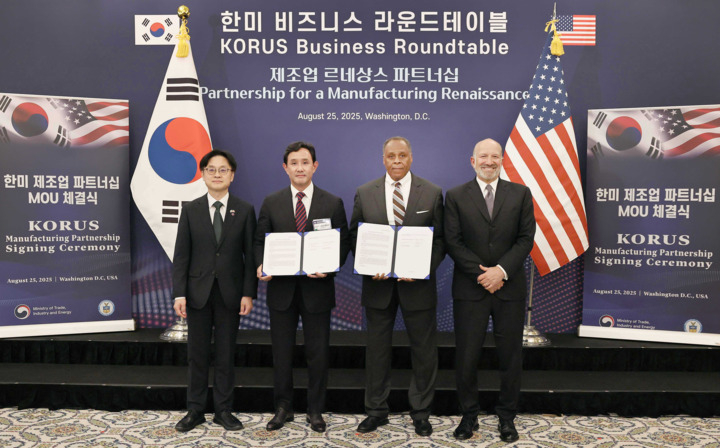
In August 2025, Korea Zinc signed an MOU with US defense contractor Lockheed Martin for germanium supply cooperation and committed about 140 billion won to refining facilities at its Onsan smelter.
The company has also moved up its production schedule. Subsidiary Kemco began producing intermediate materials last month and plans to start commercial production of high-purity germanium — 99.999 percent pure — in the second half of next year, about a year ahead of the original 2028 target.
Gallium is next. China accounts for about 99 percent of global gallium production; the mineral is used in power semiconductors and other applications. Korea Zinc plans to invest about 55.7 billion won to build a recovery process at its Onsan smelter and produce 15.5 tons annually starting in the first half of 2028.
Rather than developing a separate mine, the company will recover gallium from byproducts of its existing zinc and lead smelting operations — a strategy that extracts more rare metals from the same raw material, lowering feedstock costs while boosting added value.
Onsan-proven technology heads to US with W11tr investment
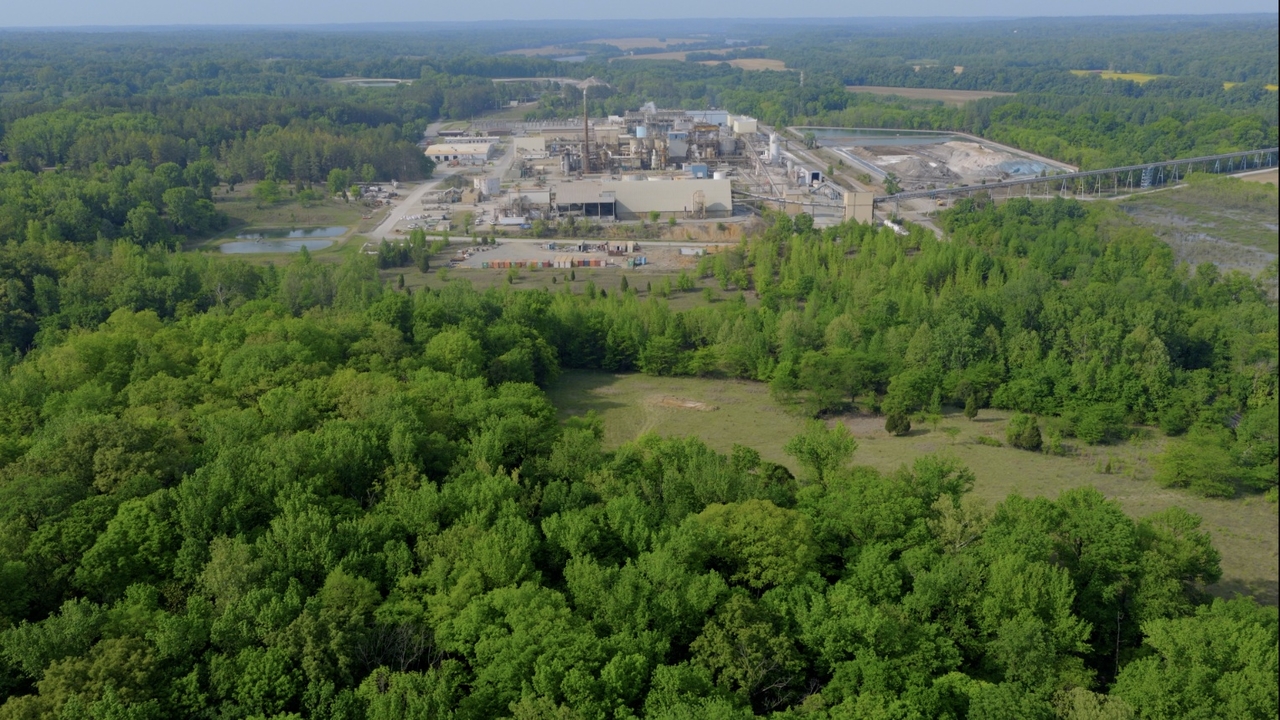
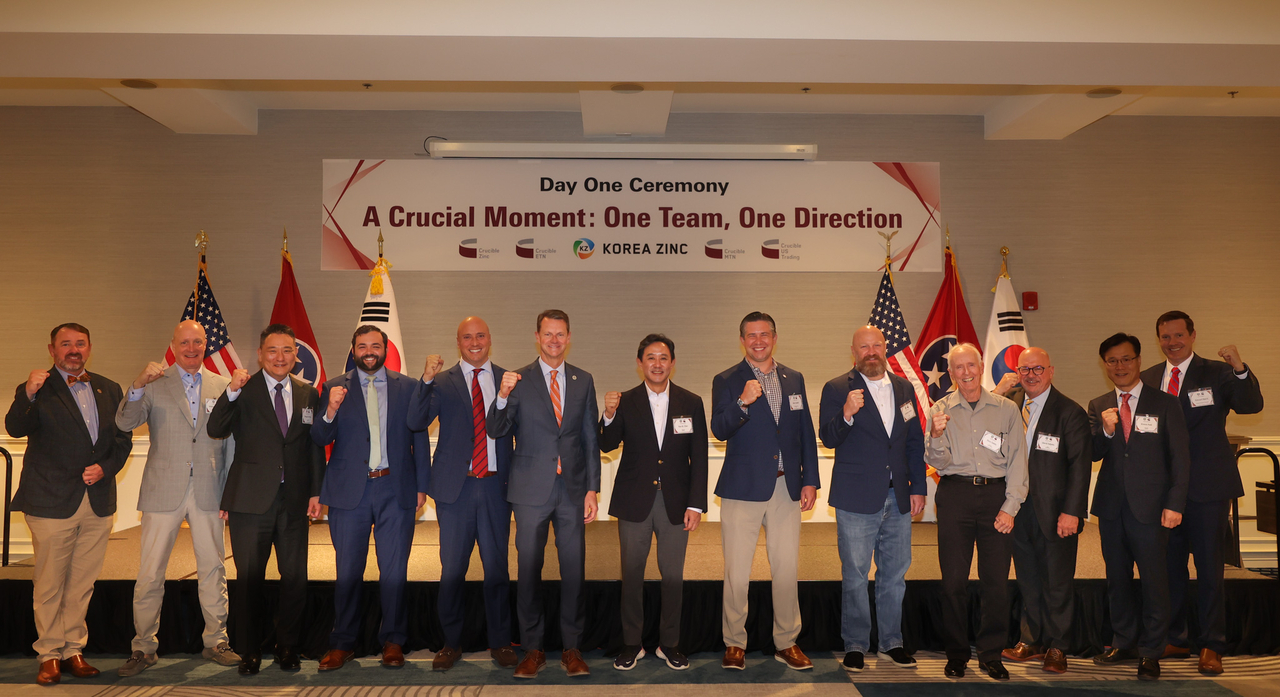
The final destination of Korea Zinc's critical mineral strategy is the United States. The company is working with the US government on Project Crucible, a plan to build a large integrated smelter in Clarksville, Tennessee. Valued at about $7.4 billion (11 trillion won), it is the largest overseas investment in Korea Zinc's history.
Starting in phases from 2029, the plant will process about 1.1 million tons of raw material annually and produce about 540,000 tons of products. Output will include zinc, lead and copper, along with 11 critical minerals designated by the US government — including antimony, indium, germanium and gallium — as well as semiconductor-grade sulfuric acid.
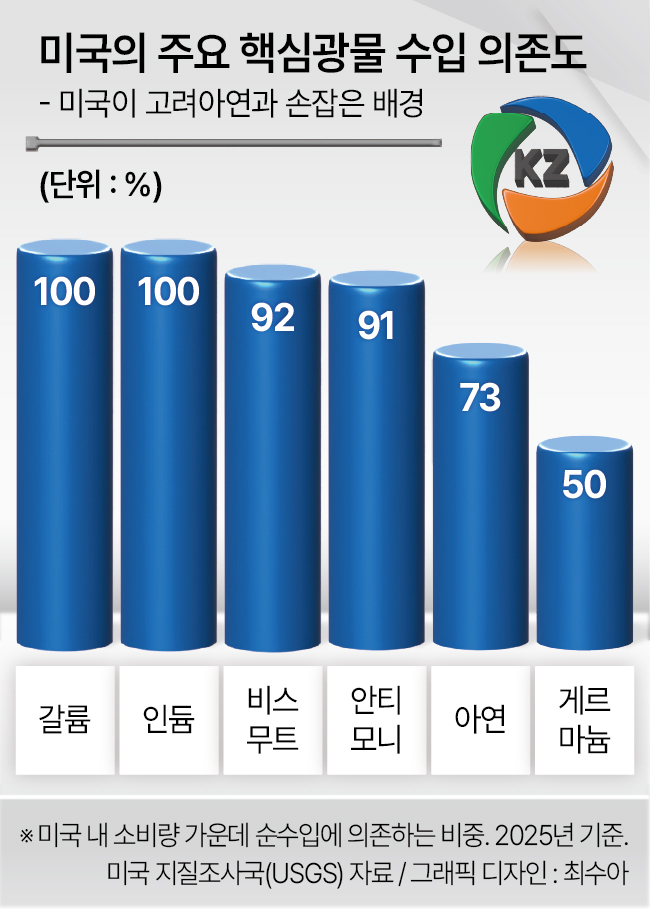
For the United States, the project offers a new supply source to reduce heavy import dependence. As of last year, the US relied entirely on imports for gallium and indium, while dependence on bismuth and antimony exceeded 90 percent.
Under the plan, gallium output is set at 54 tons per year and germanium at 44 tons — both exceeding US annual demand of 19 tons and 33 tons, respectively.
Korea Zinc is also broadening its critical mineral portfolio by pursuing a project in the US to recover rare earths from used permanent magnets.
US government backs permitting, calls it 'restoring Korea-US-Japan supply chain'
The US government is also lending its weight. Project Crucible was designated in April under FAST-41, a program that expedites permitting for major infrastructure and resource projects. US Secretary of Commerce Howard Lutnick called the project a "transformative deal" for the United States.
Crucible JV, which includes participation by the US government, has also secured a 10.6 percent stake in Korea Zinc. The arrangement goes beyond building a single factory in the United States — it ties the two countries together through shared equity and supply chains.

Analysts say the business case is solid. Shinhan Investment projected that Project Crucible could generate more than 1 trillion won in annual EBITDA at full normal operation, suggesting that supply chain security investments could also become a major new source of profit.
What Korea Zinc aims to transplant to the United States is not merely smelting equipment. The company wants to build an alternative to a critical mineral production structure now concentrated in China, drawing on the integrated smelting and valuable metal recovery technology it has accumulated over decades at its Onsan smelter.
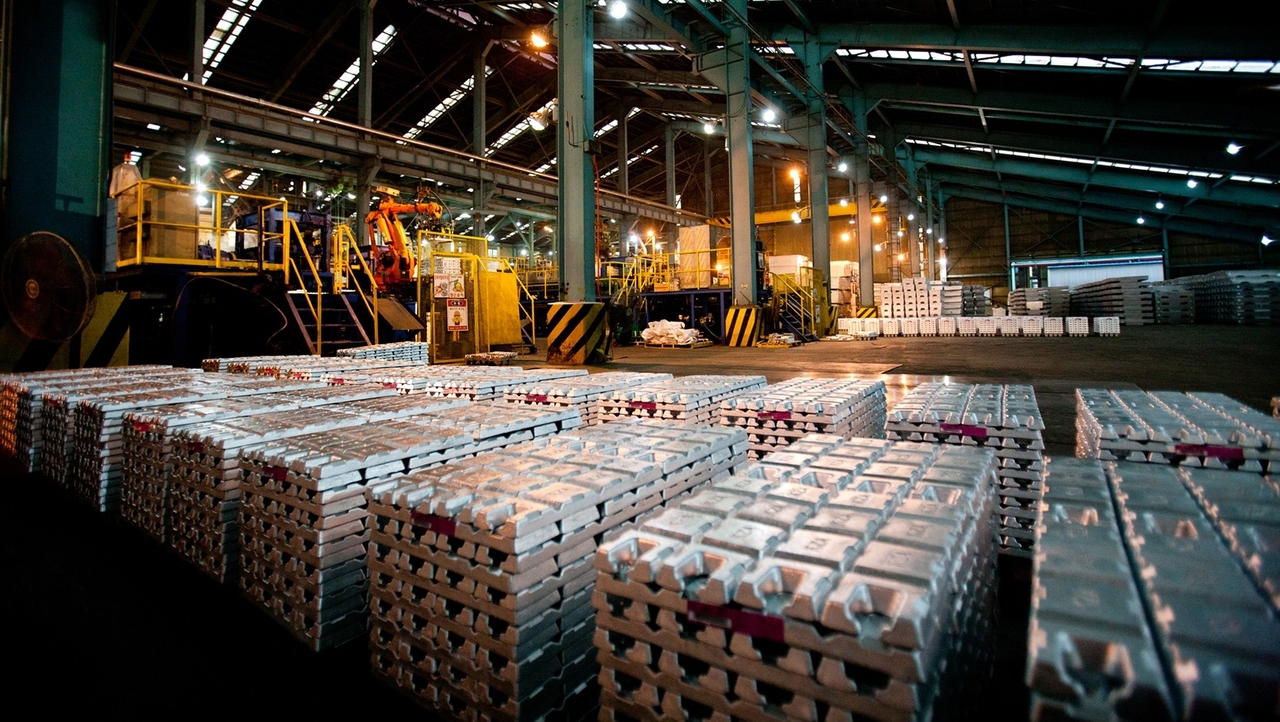
Half a century of smelting expertise at risk from private equity's exit logic?
The key question is whether this long-term strategy can survive the ongoing management dispute intact. From germanium and gallium production facilities to the 11 trillion won integrated smelter in the United States, the critical mineral business requires years of upfront investment.
MBK Partners and Yeongpoong have criticized Project Crucible as a "defense mechanism to protect management control" and filed for an injunction to block new share issuance; directors aligned with them voted against all six Crucible-related agenda items at board meetings. The dispute has spilled into litigation, with more than 30 related lawsuits filed by both sides since the management dispute began in September 2024.
If Korea Zinc's long-term supply chain plans falter, the effects could ripple across steel, automobiles, semiconductors, defense and batteries. Some in the industry warn that a bottleneck in a single material could disrupt production across entire sectors, as seen with Japan's 2019 export controls on semiconductor materials and the 2021 urea solution shortage.
The prevailing view in the industry is that if a private equity fund gains control, pressure to recoup its investment could undermine the smelting competitiveness and critical mineral investment plans built up over many years. "Critical mineral supply chains are directly tied to national industrial security, so they should not be approached with short-term profit or investment-recovery logic," an industry official said. "It is important that the smelting technology and long-term investment plans Korea Zinc has built over half a century not be shaken by the management dispute."
kwater@heraldcorp.com