Book flags 'paradox of a nuclear power giant'
'Nuclear latency is the capacity to broaden a nation's options'
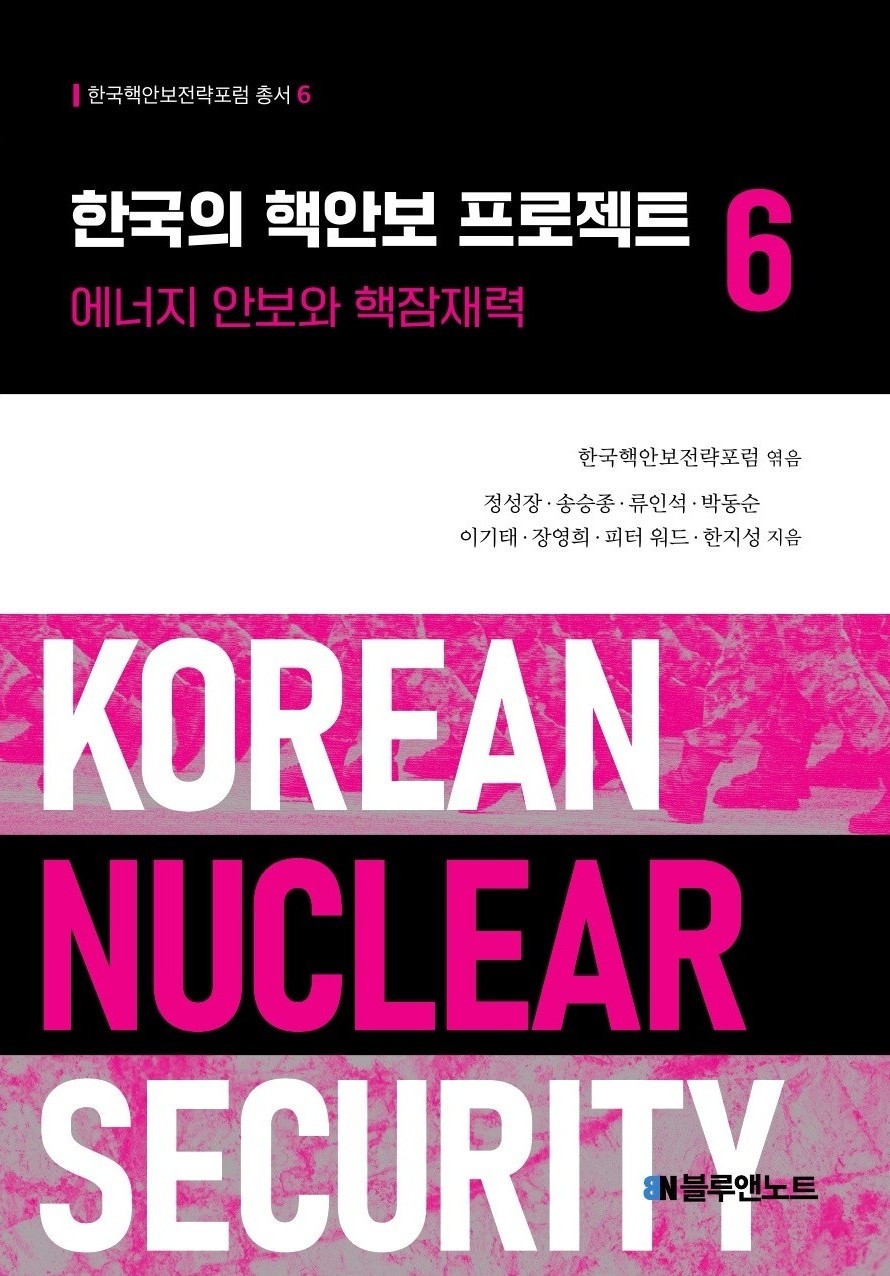
A new book, "Korea's Nuclear Security Project 6: Energy Security and Nuclear Latency," written by eight experts including Jeong Seong-jang, deputy director of the Sejong Institute, and compiled by the Korea Nuclear Security Strategy Forum, has been published.
On Friday, Jeong raised what he called the "paradox of a nuclear power giant." He said South Korea possesses the technology and industrial base to independently design, build and export nuclear power plants, yet remains heavily dependent on foreign suppliers for enriched uranium — the lifeblood of those plants — while spent nuclear fuel continues to pile up at plant sites with no clear disposal solution. "North Korea's nuclear threat grows more sophisticated by the day, but when it comes to the ultimate deterrence decisions on which national survival depends, we still rely heavily on the judgment of our ally," he said.
The book connects enrichment and reprocessing, nuclear fuel supply chains, spent nuclear fuel, the South Korea-US atomic energy agreement, Japan's nuclear latency, South Korea's and Taiwan's nuclear development experiences, middle-power strategic cooperation, and nuclear-powered submarine personnel and maintenance — all as facets of a single national strategy question. Its central inquiry is not simply whether South Korea can enrich uranium or reprocess spent fuel, but why such capabilities are needed, how the country can expand its options while maintaining international credibility, and how it can secure the space to make its own decisions in an uncertain future.
The book argues that declaring an intent to immediately build nuclear weapons and responsibly accumulating the scientific, technological and industrial foundations that would make such a choice possible are entirely different matters. Its thrust is that enrichment and reprocessing should not be treated as taboo subjects simply because they involve sensitive technology — but that South Korea should not be overly optimistic about easily overcoming international political constraints just because its technical capabilities are strong.
"Nuclear latency is not another name for nuclear armament," Jeong said. "It is the capacity to broaden a nation's options by accumulating technology and industry, human capital and institutional frameworks, and international trust and diplomatic networks in preparation for future crises." He added: "Energy sovereignty and security sovereignty are one issue."
youknow@heraldcorp.com