- Korea Research Institute of Chemical Technology develops cellulose reinforcement from hemp hurd waste
- Standard oven drying replaces costly freeze-drying, raising film tensile strength by 26.2%
![Researchers at the Korea Research Institute of Chemical Technology stretch a biodegradable plastic film made from hemp stems. [Korea Research Institute of Chemical Technology]](https://wimg.heraldcorp.com/news/cms/2026/09/13/news-p.v1.20260912.ad7eb3f011f3467bb6d2602f09e1e685_P1.jpg)
Hemp stems left over from fiber production are being transformed into a high-value material that strengthens eco-friendly plastics.
The Korea Research Institute of Chemical Technology said Sunday that a research team led by Kim Ho-yong of its Precision Bio-Chemical Research Division has developed a technology to extract cellulose from the inner core of industrial hemp stems and dry it while preserving its microfiber structure.
Industrial hemp yields fiber from its outer bark, but the inner core — known as the hurd — accounts for about 70 percent of the stem's weight and has largely had no practical use, with much of it discarded. The research team focused on repurposing the hurd as a reinforcing material to address the weak mechanical properties of biodegradable plastics.
Biodegradable films made from a blend of thermoplastic starch and PBAT break down in soil and can be used in eco-friendly packaging and agricultural mulching films, but they tear easily and perform poorly in humid conditions. Mixing in cellulose microfibers can improve strength, but the fibers tend to clump together during drying, reducing the reinforcing effect.
Freeze-drying and spray-drying can prevent fiber clumping, but both methods require significant energy and equipment investment, limiting their viability for mass production.
The research team found a way to keep cellulose microfibers from clumping while using ordinary heat drying. The key was controlling moisture content and treating the fiber surface.
The team precisely identified the "fiber saturation point" — the critical moisture threshold at which the properties of hemp hurd fiber change significantly — and processed the fibers while maintaining the appropriate moisture level. They also treated the fiber surface with alkyl ketene dimer to further suppress fiber-to-fiber adhesion.
Combining the two techniques allowed the team to preserve the microfiber structure using only a standard oven, without the need for costly freeze-drying.
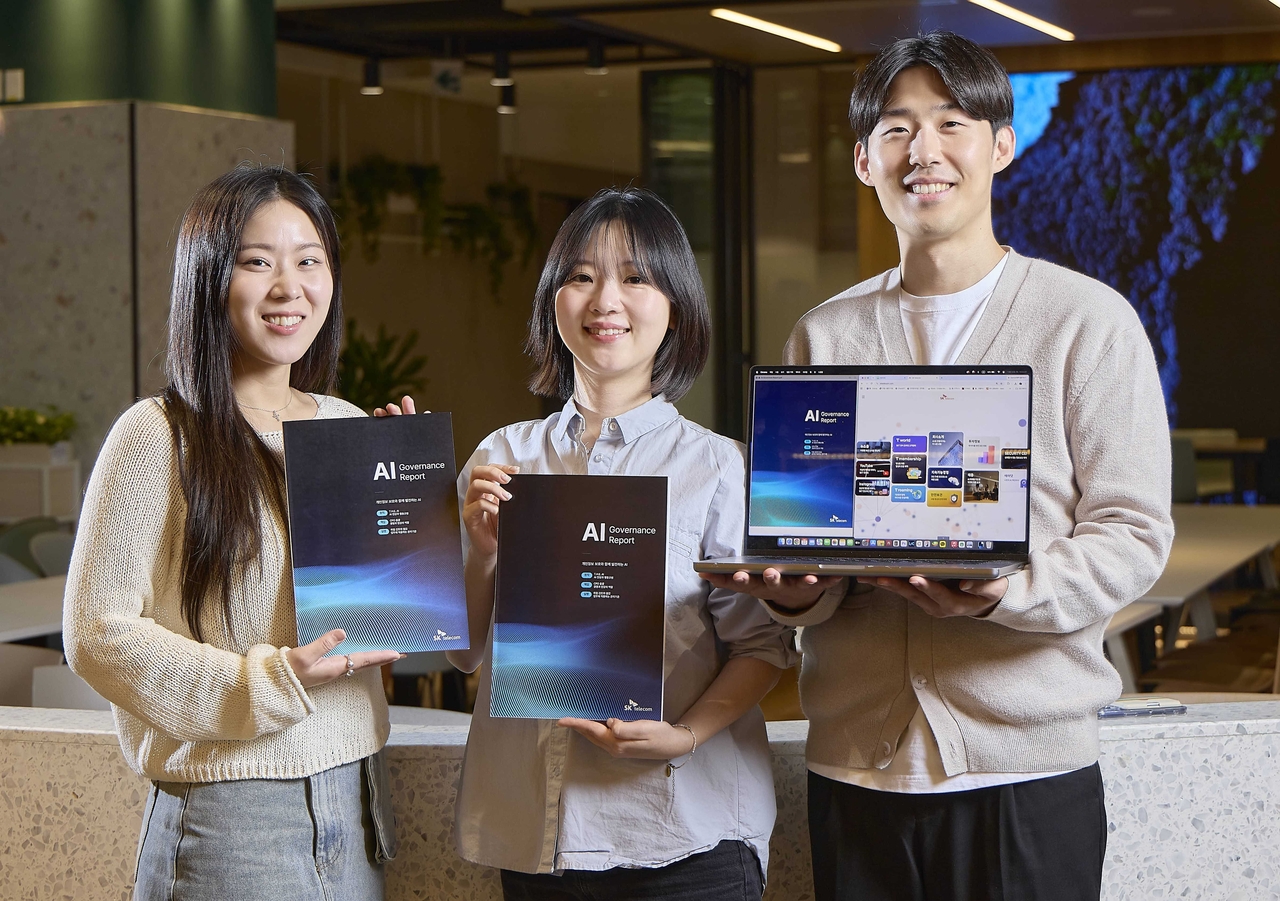
![From left: Senior Researcher Choi Jun-ho, postdoctoral researchers Cho Hae-min and Kim Jong-hwa, and Principal Researcher Kim Ho-yong. [Korea Research Institute of Chemical Technology]](https://wimg.heraldcorp.com/news/cms/2026/09/13/news-p.v1.20260912.33d48b4150a84c5ba9396a21e7a1f111_P1.jpg)
The performance gains were significant. Adding 10 percent of the hemp hurd cellulose to a starch-PBAT film raised tensile strength by 26.2 percent compared with the base film — a stark contrast to the 1.5 percent improvement seen when microfibers dried by conventional methods were used instead.
Water vapor and oxygen permeability also fell by 17 percent and 9 percent, respectively, improving the moisture and air barrier properties needed for packaging applications.
The research team expects the technology to find use as a reinforcing material in food and household product packaging films, biodegradable bags, agricultural mulching films, and molded bioplastic products such as containers and trays. It could also be applied beyond hemp to convert other agricultural byproducts generated in large volumes — such as soybean stalks and rice straw — into high-value cellulose materials.
"The significance lies in being able to turn discarded agricultural byproducts into high-value materials," Kim said.
The findings were published in Chemical Engineering Journal, an international peer-reviewed journal in the field of chemical engineering.
nbgkoo@heraldcorp.com