Accepts criticism over tax reform revision; cautious on capital gains tax
Virtual asset taxation to proceed as planned
Rules out exceeding $350 billion US investment cap
Household debt to be managed alongside targeted support for genuine buyers
Lee Hyung-il, nominee for deputy prime minister and minister of the Ministry of Economy and Finance, is expected to face intensive scrutiny over his real estate policy views and broader economic agenda — including tax and financial policy — at his National Assembly confirmation hearing Tuesday.
Lee has diagnosed a housing supply shortfall since 2022 as a key driver of speculative demand and has put forward "residence-centered" housing market reform as a firm governing principle. However, questions are expected to focus on his own apartment in Gwacheon, Gyeonggi Province, which he held for 17 years while actually living there for only about four months — a property he has argued cannot be classified as a speculative purchase on the basis of non-residency alone.
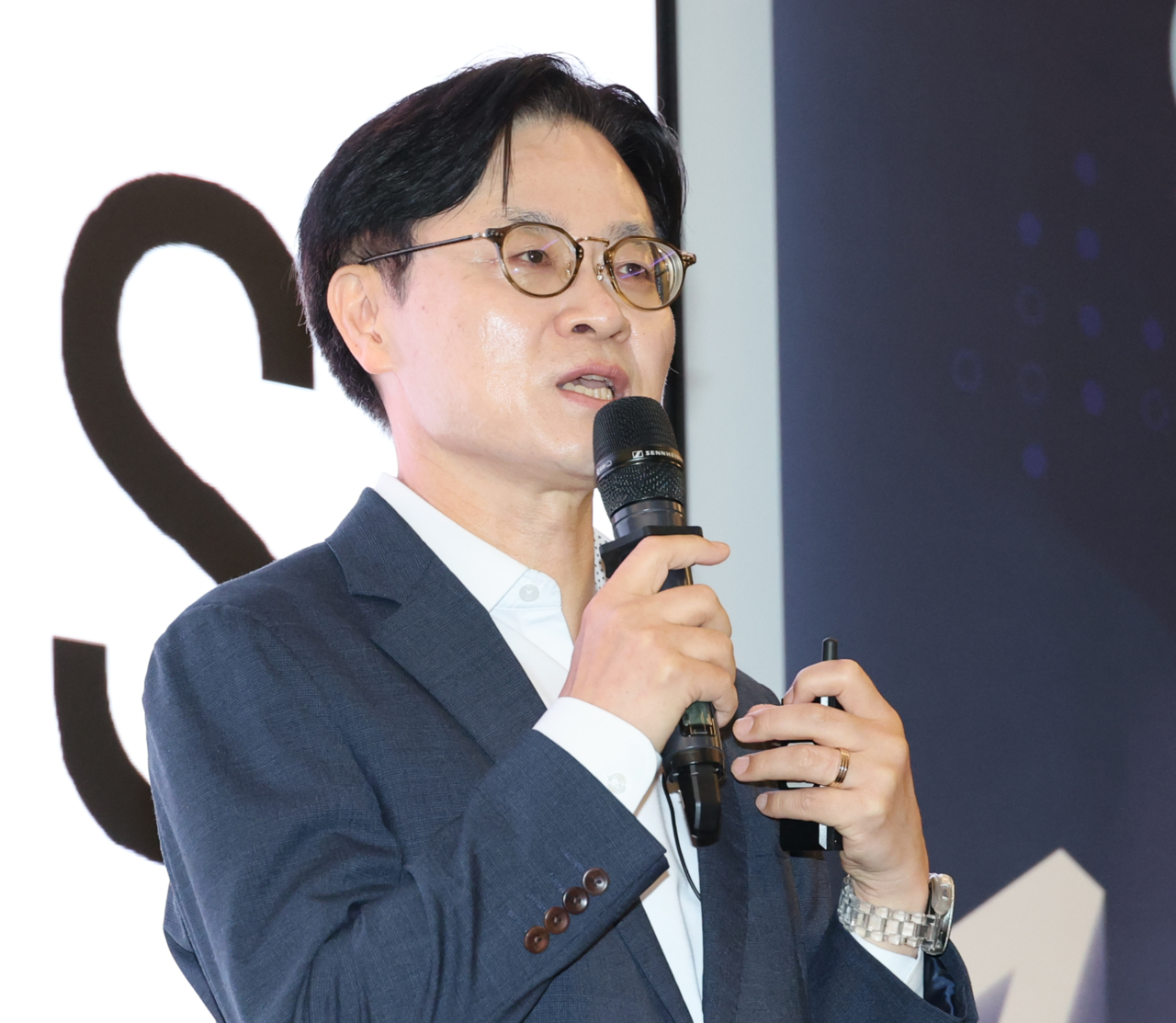
![Lee Hyung-il, nominee for deputy prime minister and minister of the Ministry of Economy and Finance, arrives at his confirmation hearing preparation office at the Korea Deposit Insurance Corporation in Jung-gu, Seoul, on Sept. 4. [Yonhap]](https://wimg.heraldcorp.com/news/cms/2026/09/14/rcv.YNA.20260904.PYH2026090402460001300_P1.jpg)
In written responses submitted ahead of Tuesday's confirmation hearing, Lee said excess demand driving up real estate prices stems from "complex factors," but identified the housing supply shortfall that has persisted since 2022 as a major contributor — one that has spread home-buying sentiment and stoked speculative demand.
On the continued rise in Greater Seoul home prices even after the government unveiled a housing supply package Sunday, Lee said accumulated supply shortfalls had kept prices elevated and that the measures were designed to expand the supply base, with an inherent lag before new units actually become available. "I will make every effort to deliver tangible supply results as quickly as possible, including shortening ground-breaking timelines to the greatest extent," he said.
The government's proposed "residence-centered" overhaul of real estate taxation is another key flashpoint. The original plan called for raising the basic deduction for the comprehensive real estate tax for owner-occupiers of a single home from the current 1.2 billion won ($891,000) to 1.4 billion won, while lowering it to 900 million won for non-resident single-home owners. The government later revised the plan to keep the non-resident deduction at the current 1.2 billion won, but maintained the broader direction of giving preferential treatment to owner-occupiers.
Lee said he accepts the criticism that revising the proposal after its initial announcement — through the legislative notice process — risks undermining policy predictability and credibility, while maintaining that the residence-centered direction remains unchanged. "I take seriously the concern that revising the plan after its announcement, through the legislative notice and other processes, could reduce policy predictability and credibility," he said. On his first day at the office Sept. 3, he said making the housing market residence-centered "is a principle with a firm sense of direction."
That policy stance is expected to draw pointed questions at the hearing given Lee's own property holdings. According to the confirmation request documents, Lee purchased an apartment in Gwacheon, Gyeonggi Province, in February 2009 and held it for 17 years, but his actual period of registered residency totaled only about four months. The apartment has since been demolished as part of a reconstruction project.
Asked whether the tax penalty he proposes for non-resident homeowners would apply equally to his own Gwacheon reconstruction apartment, Lee said that under the government bill submitted to the National Assembly, "it would be difficult to recognize the non-residency period as a period of actual residence." On suggestions that his registration at the address was intended to secure a school district assignment for his children, he said the move-in was for genuine residency purposes and that he plans to take up actual residence once the reconstruction is complete.
Asked whether holding a reconstruction property without living in it for an extended period could be considered speculative demand, Lee said "there are aspects that make it difficult to conclude it constitutes speculative demand based solely on the fact of non-residency."
Non-resident single-home owners will face a higher comprehensive real estate tax burden once the government plan takes effect. According to materials the Ministry of Economy and Finance submitted to the National Assembly, a non-resident owner of a home with a published price of 3 billion won and a market value of around 4.3 billion won would see their calculated tax rise from the current 7.75 million won to 12.04 million won next year — an increase of 4.29 million won. Under the original proposal to lower the non-resident deduction to 900 million won, the tax would have risen to 15.37 million won, but the revised plan reduced the size of the increase.
On household debt, Lee said he would pursue aggregate management alongside targeted support for genuine homebuyers without a property. "Taking into account South Korea's household debt ratio relative to major economies and conditions in the real estate market, I plan to maintain the management stance — including aggregate household debt management and soundness regulations — while strengthening targeted support to ensure there are no obstacles to assisting young people and genuine buyers, or to promoting housing supply," he said.
On the introduction of a financial investment income tax and capital gains taxes more broadly, Lee said such measures are "matters to be reviewed after market conditions have sufficiently stabilized." He said a corporate tax cut is not under consideration, and that any reform of inheritance and gift taxes would require extensive discussion grounded in social consensus. Virtual asset taxation, set to take effect in January, will proceed as planned, he said.
On single-stock leveraged ETFs, Lee said the rationale behind introducing the product — including addressing asymmetric regulation between domestic and overseas ETFs — "had meaningful intent," but added that he "takes seriously" the fact that the product launch coincided with a period of heightened market volatility and amplified that volatility. On whether a parliamentary investigation is warranted, he said he would "respect the National Assembly's judgment."
Strategic investment in the United States is also expected to come up at the hearing. With Washington pressing for investments in a Texas gas combined-cycle power plant, eight large nuclear power plants and Alaska LNG development — potentially pushing the total beyond the agreed $350 billion cap — Lee said the principle of not committing investment funds beyond that limit "is a matter clearly agreed upon through the MOU between South Korea and the United States."
On the government's "3-4-5 vision" — targeting 3 percent potential growth, top-four export status and per capita national income of $50,000 — Lee called the goals "admittedly somewhat challenging" but said they are "fully achievable if the policy tasks set out in the second-half economic growth strategy are successfully carried out and translate into structural growth." He added that if confirmed as deputy prime minister, he would treat the targets as policy goals throughout the Lee Jae-myung administration and do his utmost to achieve them.
y2k@heraldcorp.com