Current one-way fare of 3,000 won draws mixed views — some call it cheap, others say it's fair
Service posted 9.36 billion won operating loss last year, with transport revenue of just 200 million won
Seoul to hold public hearing, consult city council before deciding on increase next year
"Public transit is for everyone, so keeping it affordable makes sense. Once you raise the fare, it's hard to bring it back down," said Choi, 39.
"Enjoying the Han River all the way to Yeouido for 3,000 won is cheap. I think 4,000 to 5,000 won would be fine," said Kim.
Public opinion is divided over a possible fare increase for the Han River bus, Seoul's waterway transit service, as the Seoul Metropolitan Government weighs raising the current price. The city plans to hold a public hearing for experts and residents later this month before consulting the Seoul Metropolitan Council and reaching a final decision. A fare increase would take effect no earlier than April next year.
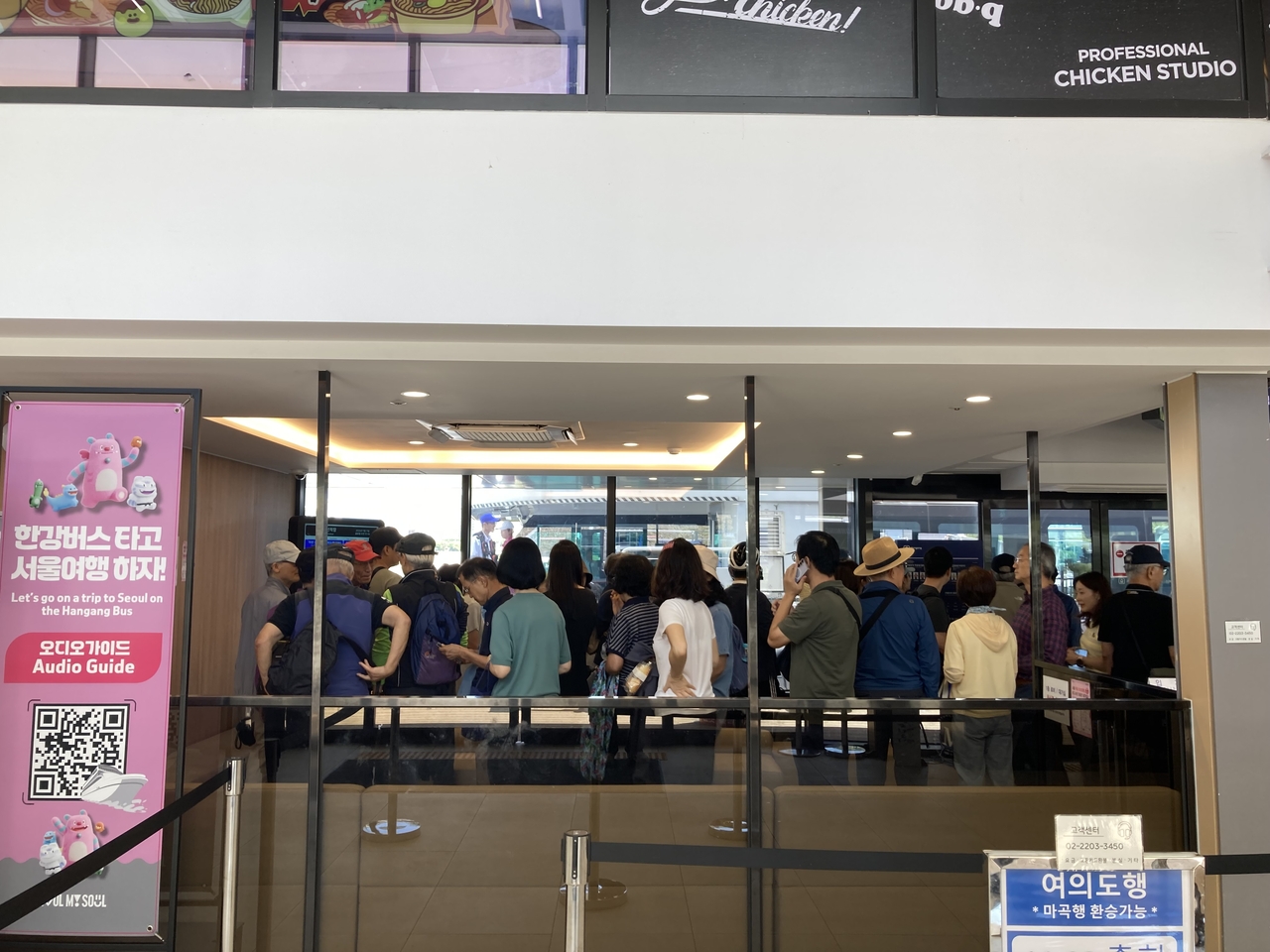
A reporter visited the Jamsil ferry terminal Friday morning to hear what riders think. Lee Seok-hyung, 40, who came with his 6-year-old son for their first Han River bus ride, said a 1,000- to 2,000-won increase would be acceptable. "But it would be nice if service improvements came along with it — things like shorter dispatch intervals and better safety features," he said.
Luiza, a visitor from Romania, called the 3,000-won fare "very cheap" and said tourists would probably pay around 10,000 won to ride.
Some riders suggested a tiered pricing system that would keep the current fare for Seoul residents while charging more from visitors and tourists from other regions.
Lee Eun-ju, 59, said local attractions in other parts of the country sometimes offer 50 percent discounts to residents. "Since the Han River bus runs on Seoul taxpayers' money, Seoul residents should be able to use it at the current fare," she said. "Tourists and outsiders could be charged a bit more."
Others argued that a fare hike would be unfair to daily commuters. Kang, 66, said some people ride only occasionally, like himself, but others take it regularly for their daily commute. "A fare increase would be a burden for them. There should be discount options like a monthly pass," he said.
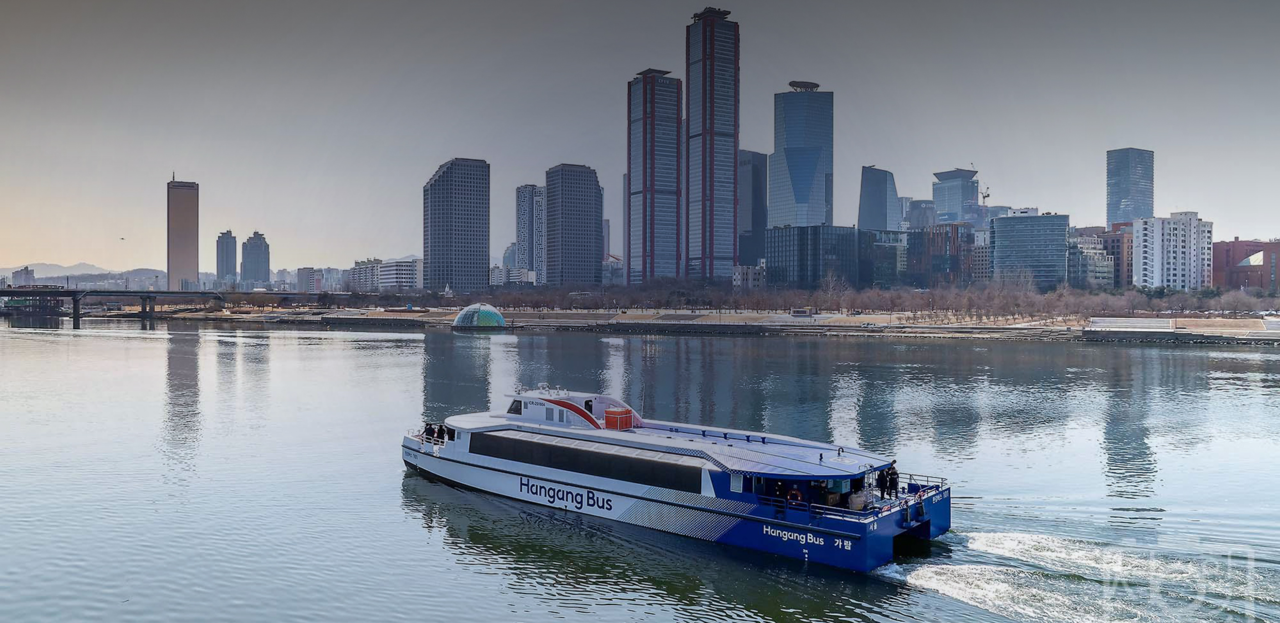
Classified as public transit, the Han River bus currently charges a flat one-way fare of 3,000 won ($2) on both weekdays and weekends. Riders have expressed high satisfaction with the low price, but the financial losses are mounting. According to an external audit report for Han River Bus Co. obtained by Seoul Metropolitan Council member Seo Mi-hwa, the service posted an operating loss of 9.36 billion won and a short-term net loss of 14.24 billion won last year. Accumulated deficit since 2024 grew to 16.13 billion won, and after fully eroding its 10 billion won in capital, the company's total equity stood at negative 6.13 billion won at the end of last year.
Han River bus posted sales of 5.4 billion won in 2025, but transport revenue from passenger fares amounted to just 200 million won. Merchandise sales accounted for 2.9 billion won and food and beverage sales for 1.7 billion won, meaning ancillary facilities generated the vast majority of revenue rather than fares.
With losses expected to continue, the Han River bus operator is understood to be reviewing an increase to the current 3,000-won fare.
The Seoul Metropolitan Government announced it will hold a public hearing on Sept. 29 to discuss restructuring the Han River bus fare system. At the hearing, the city will present findings from a recent Seoul Institute study on the appropriateness of a fare change and possible approaches, then gather input from experts, industry representatives and the public.
Even if a consensus emerges at the hearing, a fare increase would not take effect immediately. The proposal would still need to go through a review by the transportation committee and a report to the city council on amendments to the Han River bus operating agreement.
"After collecting diverse opinions from the public hearing, we also need to hear from the city council and coordinate with T-money on improvements to the ticketing system," a Seoul city official said. "At the earliest, a fare increase would apply after April next year."
The city is understood to be seriously considering keeping the weekday fare at 3,000 won while raising the weekend fare by some amount.
The Han River bus launched service on Sept. 18 last year and averaged 1,815 passengers a day over its first year, surpassing 500,000 cumulative riders as of Aug. 13. Nearly half — about 240,000 — rode on weekends. Rider satisfaction stood at 97 percent.
ikson@heraldcorp.com