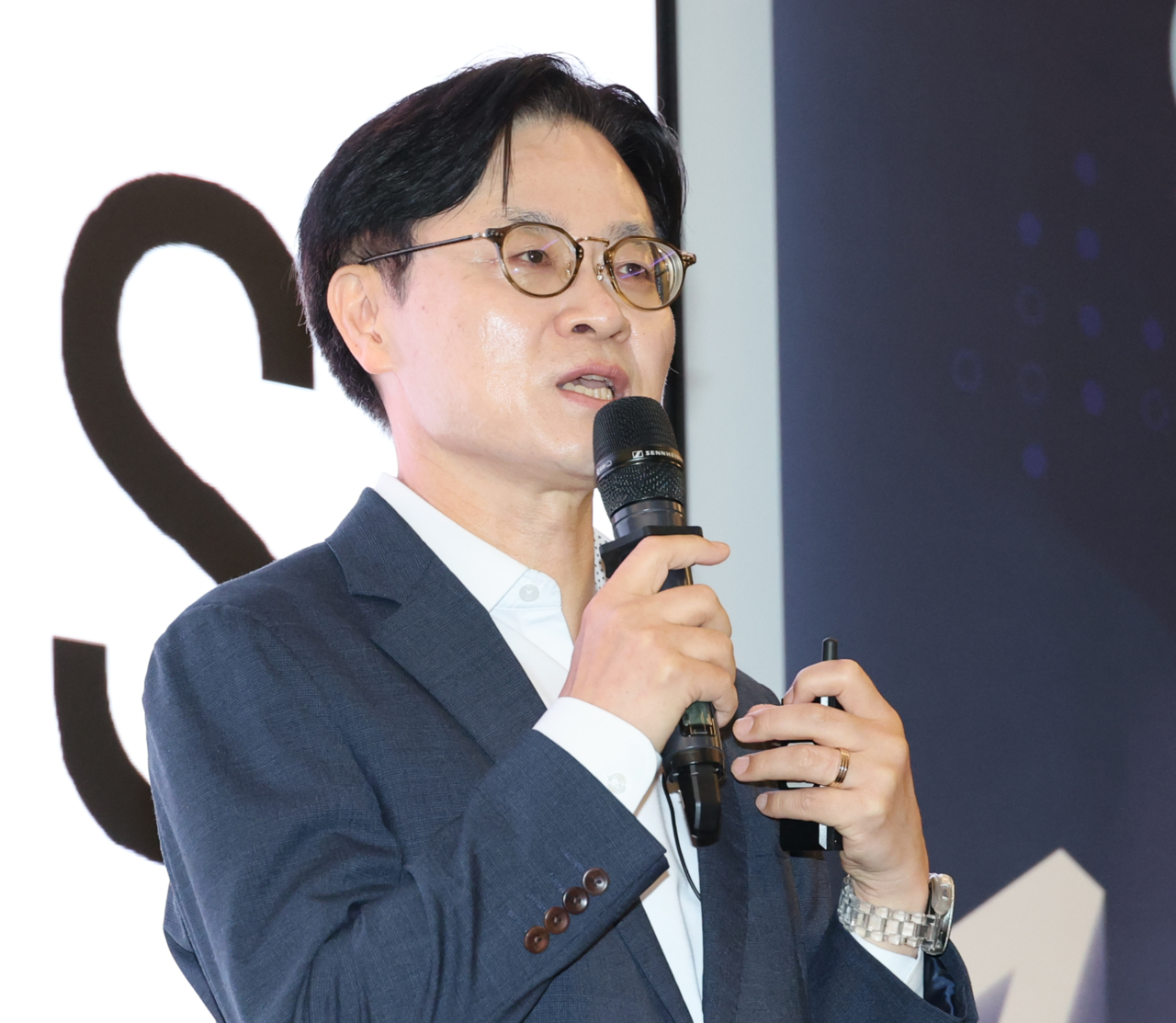
![Lee So-young, nominee for minister of SMEs and Startups, speaks to reporters after a tea meeting at the Korea Federation of SMEs in Yeouido, Seoul, on Thursday. Lee was one of the leading lawmakers behind the so-called Yellow Envelope Act. The federation had long called for the bill's repeal. The visit was Lee's first public outing after her nomination. [Yonhap]](https://wimg.heraldcorp.com/news/cms/2026/09/14/rcv.YNA.20260904.PYH2026090406650001300_P1.jpg)
'Exaggerated' labor fears, years of SME opposition
From 'anti-share-suppression bill' to calls for a slower delisting pace
'Deregulation minister' pledge sits uneasily with a record of regulatory bills
With her National Assembly confirmation hearing set for Tuesday, questions are mounting over whether Lee So-young, nominee for minister of SMEs and Startups, has shifted her policy positions since leaving the legislature. As a lawmaker, Lee championed the Yellow Envelope Act, pushed for amendments to the Commercial Act and sponsored legislation aimed at boosting share prices — a reform-minded agenda that now sits in tension with some of her recent statements.
Since her nomination, however, Lee has said the venture industry's calls to ease the 52-hour workweek cap "have a point," and has raised the need to slow down and carve out exceptions to tighter Kosdaq delisting standards and mandatory treasury-share cancellation rules. How she reconciles her past legislative philosophy with the interests of small and medium-sized enterprises and the venture sector is expected to be a central issue at Tuesday's hearing.
Accountability for the Yellow Envelope Act called 'absurd' — but SME groups opposed it for years
The first flashpoint is the Yellow Envelope Act. Lee was one of the key Democratic Party members who helped push the bill through a full plenary vote. In 2023, she described it as a "law guaranteeing lawful union activity" and said she would "pursue passage of the law guaranteeing lawful union activity for labor-management coexistence and the protection of workers' rights." She also called it "a bill that must pass in September" and "a core task for the September regular session of the National Assembly."
Her personal stance remained consistent after the bill passed. On Aug. 27, 2025, responding to business community concerns that the law could reduce jobs, she said such fears were "truly an exaggeration." She pointed to the stark gap in treatment and legal standing between directly and indirectly employed workers, arguing that "it is not the right direction to push out workers — who make up more than half the population — so that they cannot even have their basic constitutional rights protected."
As recently as this past May, in a broadcast interview on a terrestrial network, she dismissed opposition-party claims linking the Samsung Electronics union strike to the Yellow Envelope Act as "a forced argument." In the same interview, she personally explained the bill's core provisions — the right of subcontracted workers to demand bargaining with the primary contractor, an expanded scope for labor disputes, and limits on damage claims against workers engaged in lawful industrial action. She also said workers in special-employment and freelance arrangements were being left outside existing labor law protections, adding: "The time has come to change this labor law, with its very high threshold that we fought for and won over a long time."
The arc is clear: "must pass" in 2023, "exaggeration" in 2025 when business groups warned of job losses, and "forced argument" in 2026 when asked about accountability for the law. Lee has consistently framed the Yellow Envelope Act as a necessary institutional reform to protect labor rights.
The business community's position has been the polar opposite. When the bill cleared a National Assembly subcommittee in February 2023, the Korea Federation of SMEs warned that it would "increase illegal industrial action at workplaces, causing enormous damage to corporate and national competitiveness and bringing irreparable breakdown to labor-management relations." The Korea Federation of Mid-sized Enterprises labeled it a "bill that strangles businesses."
![Lee So-young, nominee for minister of SMEs and Startups, answers reporters' questions after a tea meeting at the Korea Venture Business Association in Yeongdeungpo-gu, Seoul, on Thursday. As a lawmaker, Lee sponsored the so-called anti-share-suppression bill and showed strong interest in lifting share prices. After her nomination, however, she said the pace of tighter Kosdaq delisting rules needs to be slowed and pledged to debate the issue directly with the FSC chairman. The government's current push to tighten Kosdaq delisting standards is itself aimed at boosting share prices over the long term. [Yonhap]](https://wimg.heraldcorp.com/news/cms/2026/09/14/rcv.YNA.20260910.PYH2026091011700001300_P1.jpg)
Sponsor of anti-share-suppression bill now calls for slower delisting pace
Among the legislative causes Lee pursued most aggressively as a lawmaker, observers inside and outside political circles point to share-price policy. In 2025, she sponsored the so-called anti-share-suppression bill, which would require that when a listed company's share price falls below 80 percent of its net asset value, the shares inherited or gifted by the largest shareholder be valued using the unlisted-company assessment method rather than the market price alone. The bill addressed the concern that, because a higher share price means a larger inheritance tax bill, controlling shareholders have little incentive to return value to shareholders through dividends or treasury-share cancellations.
In a radio appearance this past May, Lee said that "from the perspective of major shareholders, a rising share price is not welcome," and argued that companies with abnormally depressed valuations should have fair value applied during inheritance and gift transfers to remove that perverse incentive.
President Lee Jae Myung also backed the bill directly. In January this year, he hosted Democratic Party members of the "Kospi 5000 Special Committee" for lunch at Cheong Wa Dae. Lee presented the anti-share-suppression bill to the president in person and said she received his response: "Let's push ahead with it." Lee was widely seen as one of the lawmakers most focused on enhancing shareholder value.
Her perspective shifted somewhat after she was nominated to lead the Ministry of SMEs and Startups. Visiting the Korea Venture Business Association on Thursday, she said that even when "the broad direction and thrust are right, the pace and specific method matter enormously," in reference to the financial authorities' push to tighten Kosdaq delisting standards and introduce a promotion-and-relegation system. She said it was necessary to examine whether the pace of the tightened delisting criteria — in effect since this year — was manageable for the market and whether existing shareholder protections were adequate, and indicated she was willing to debate the issue directly with the FSC chairman if needed.
Lee also said that "because venture companies sometimes hold treasury shares over the long term to compensate executives and employees, there is clearly an aspect that needs to be viewed differently from large conglomerates," and said she would review the need to add exception provisions. Both the anti-share-suppression bill and the tighter Kosdaq delisting standards are, in broad terms, policies aimed at lifting share prices.
![Lee So-young, nominee for minister of SMEs and Startups, arrives at her confirmation hearing preparation office at the Korea Technology and Information Promotion Agency for SMEs (TIPA) in Yeouido, Seoul, on Aug. 31. Lee declared on her first day that she would serve as a "minister of deregulation." Many of the bills she sponsored as a lawmaker, however, placed the emphasis squarely on regulation. [Yonhap]](https://wimg.heraldcorp.com/news/cms/2026/09/14/rcv.YNA.20260831.PYH2026083105080001300_P1.jpg)
Lee pledges to be a 'deregulation minister' — but her legislative record tells a different story
The third issue is the "deregulation minister" label Lee has attached to herself. On Aug. 31, her first day reporting to the preparation office the day after her nomination, she said: "If appointed minister, I will go beyond support policies for small and medium-sized enterprises and venture companies, and ease unreasonable regulations with the mindset of a minister of deregulation." When she visited the venture business association on Thursday, she again said that most regulations blocking companies from trying new things fall under other ministries' jurisdiction, and that she would debate and persuade the relevant ministers directly when necessary.
Her legislative record as a lawmaker, however, includes numerous bills that imposed new constraints on business activity. In 2020, she sponsored an amendment to the Trade Insurance Act that would bar the Korea Trade Insurance Corporation (K-SURE) from participating in or providing financial support for overseas coal-fired power generation projects. While framed as a climate and environmental policy measure, critics argued it could shrink the overseas contracting base not only for large engineering, procurement and construction firms but also for small and medium-sized supplier companies.
In 2023, she sponsored an amendment to the Food Sanitation Act that would impose a blanket ban on imports of food, seafood and processed products from countries that have experienced nuclear power plant accidents. The Ministry of Food and Drug Safety said at the time that a ban unrelated to actual safety risk was excessive, while the Korea Food Service Industry Association warned of higher ingredient costs and added burdens on the restaurant sector.
A bill she sponsored on Aug. 22 of that year — an amendment to the Act on Support for Environmental Technology and Environmental Industry — extended the regulatory reach a step further. Existing law restricted false, exaggerated or deceptive advertising related to a product's environmental performance; Lee's bill would have expanded that scope to cover a company's service provision and business operations as well.
A bill she sponsored on Aug. 26 last year amending the Greenhouse Gas Emissions Trading Act also contained provisions that could directly affect costs for companies covered by the emissions trading scheme. Her bill would have capped the total free-allocation ratio for the fourth emissions trading plan period at 80 percent or below, and would have removed the existing ceiling of 100,000 won ($74) per ton on penalty surcharges imposed on companies that fail to meet their emissions submission obligations.
hong@heraldcorp.com