Gang helped investment-fraud group clean dirty money
Set up fake gift-card company to disguise proceeds
No actual transactions made; funds returned to criminals
Cash withdrawn by check or converted to virtual assets
![The Gyeonggi Nambu Provincial Police Agency said Monday it had arrested seven people who laundered 93.4 billion won ($69.4 million) in criminal proceeds by setting up a ghost gift-card company. Photo for illustrative purposes. [Generated by AI]](https://wimg.heraldcorp.com/news/cms/2026/09/14/news-p.v1.20260914.adb8f4ad76d4413784fd4cba02d28149_P1.png)
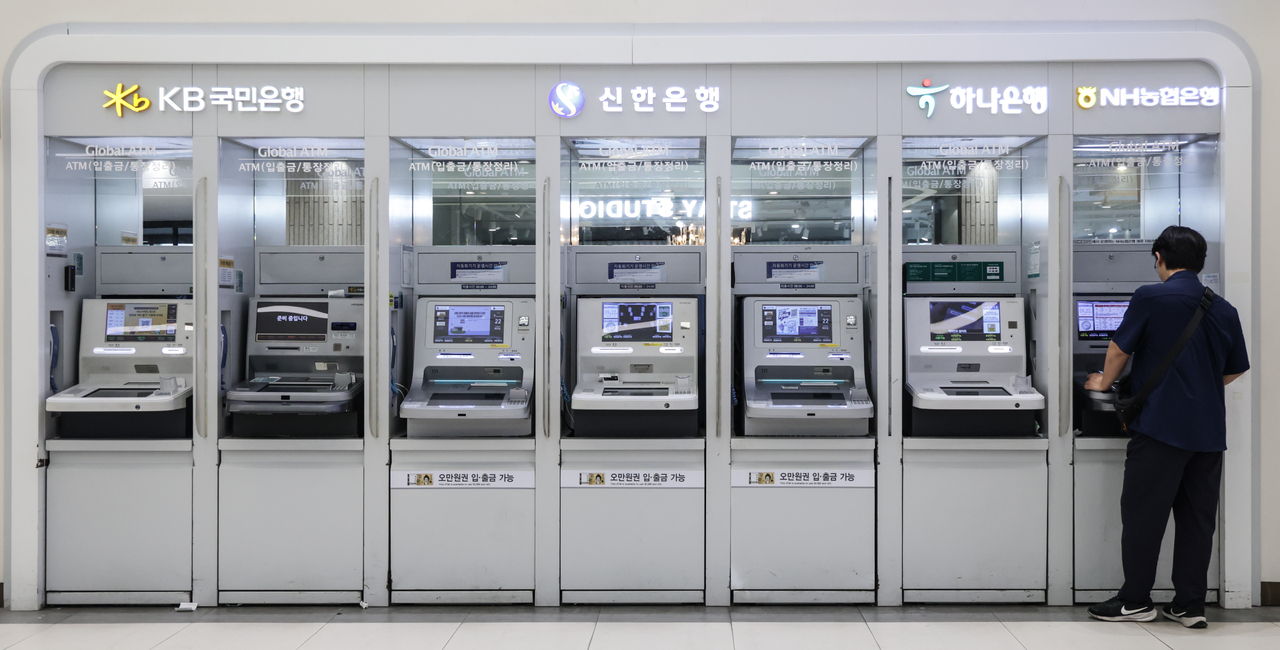
Police have arrested a seven-member gang that laundered 93.4 billion won ($69.4 million) in criminal proceeds through a ghost gift-card company. The front company never conducted actual gift-card transactions; instead, it disguised the funds as payment records on paper, then withdrew the money as checks or purchased virtual assets before returning the proceeds to criminal organizations.
The Gyeonggi Nambu Provincial Police Agency's cyber investigation unit said Monday it had detained seven people — including the head of the front company — on charges of violating the Act on Special Cases Concerning the Prevention of Telecommunications and Financial Fraud and the Restitution of Damage to Victims, as well as the Act on the Regulation and Punishment of Concealment of Criminal Proceeds. The group is accused of setting up a gift-card business for the purpose of money laundering and washing approximately 93.4 billion won in criminal proceeds.
The gang established what appeared on the surface to be a legitimate gift-card distributor and operated five branches across the country. A genuine gift-card business would hand over gift cards to buyers and receive payment equal to their face value — but this group did neither.
Rather than conducting any gift-card transactions, the gang laundered proceeds generated by fraudsters and other criminal groups. They received criminal funds ranging from tens of millions to hundreds of millions of won at a time and disguised the money as trade payments. The proceeds were then either withdrawn as large-denomination checks or used to purchase virtual assets.
The money-laundering operation came to light while police were tracking an investment-advisory fraud ring. Investigators detected a separate laundering outfit working in support of the fraud group and subsequently obtained more than 30 account seizure warrants to trace the network.
That work allowed investigators to identify all five gift-card branches, including the headquarters, and arrest the cash-withdrawal operatives. Using information obtained from an already-detained member, police then arrested a manager in his 30s, identified only as A, who had been on the run for about two months.
After analyzing evidence on the organization's scale and specific criminal activities, the investigative team tracked down the ringleader, a man in his 40s identified only as B, who had been hiding at an acquaintance's home, dismantling the operation entirely.
The misuse of department store gift cards and similar instruments in criminal schemes remains a persistent problem. While the gang arrested in this case did not use actual gift cards, police noted that innocent citizens have been drawn into similar cases in other investigations.
A police official warned the public to exercise caution when buying or selling gift cards at prices far below market value or with unusually generous benefits, saying criminal proceeds could be deposited into their accounts and trigger a payment freeze.
The official also warned that part-time jobs advertised on job-search sites or social media involving cash deposits and withdrawals, gift-card purchases, or virtual asset procurement carry the risk of criminal prosecution as accomplices — specifically as cash-withdrawal or delivery operatives — in money-laundering schemes.
20ki@heraldcorp.com