A single-pole flagpole is a physical liability — and the countries racing to build the tallest ones tend to be authoritarian states. Korea's divided peninsula is a different story.
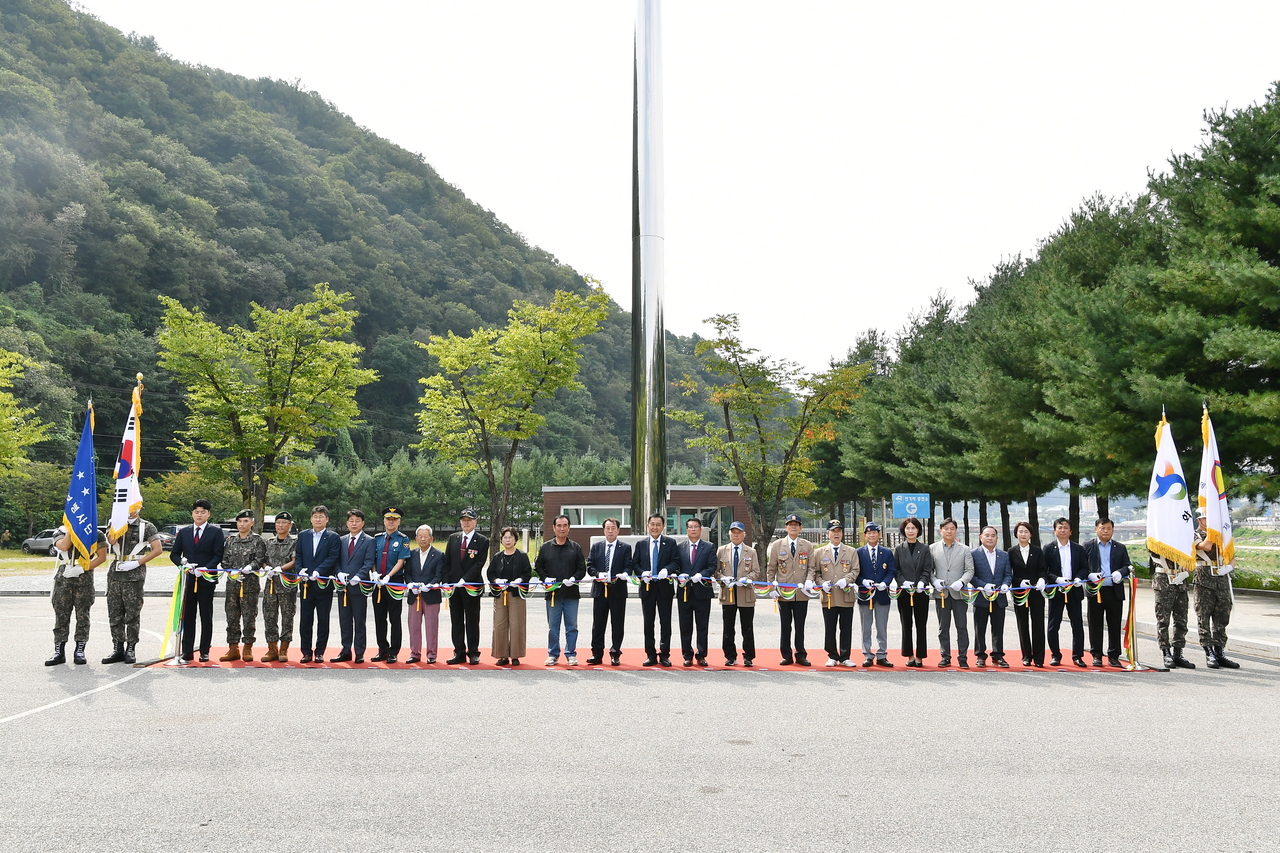
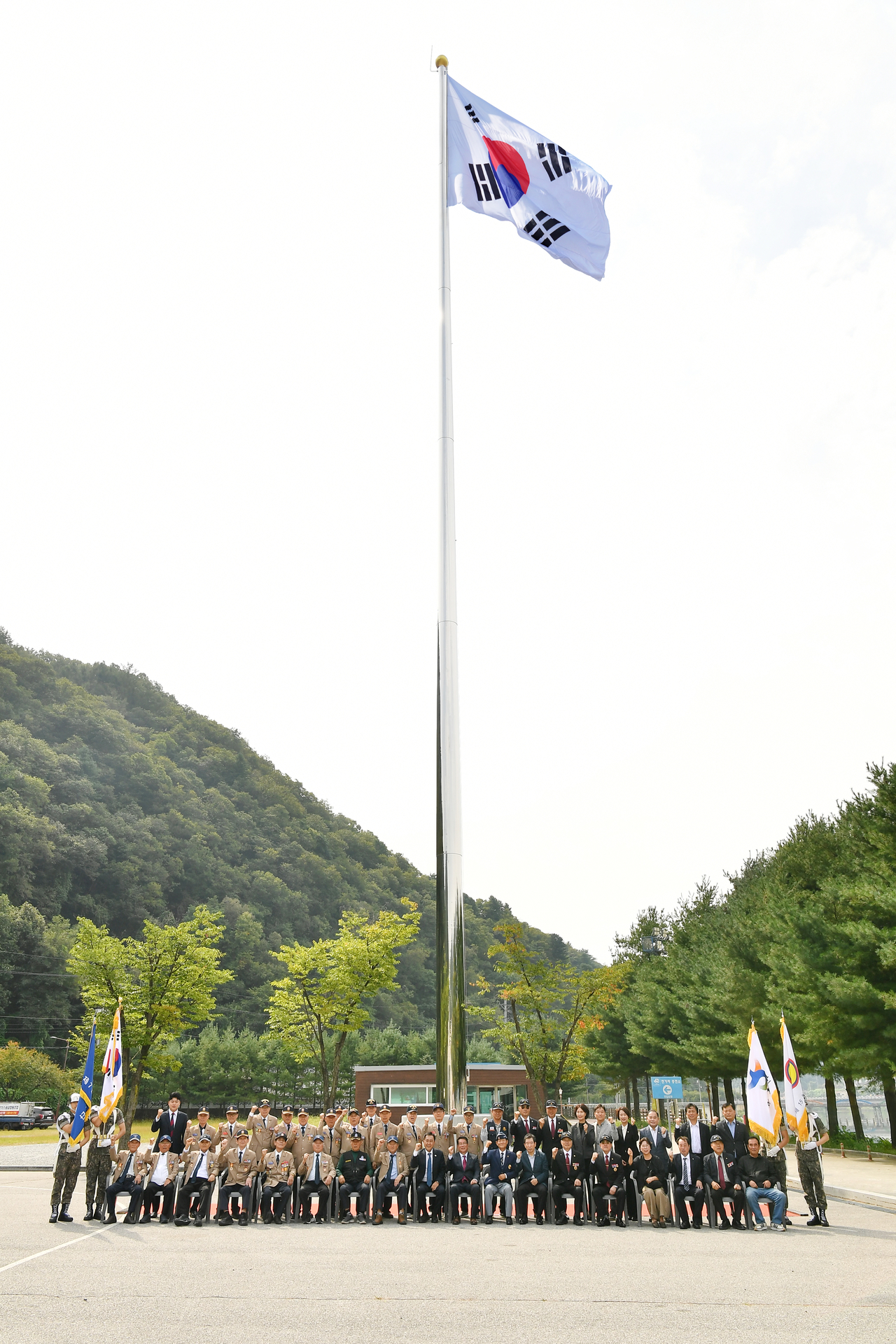
A new 60-meter flagpole has risen in Hwacheon as a landmark for the county, with a flag-raising ceremony held Monday.
South Korea already has a 99.8-meter flagpole in Paju and a 50-meter one at Baengma Ridge in Cheorwon — the latter so tall that fitting the flag and any nearby monument or companion into the same photograph is nearly impossible.
Seoul Mayor Oh Se-hoon has pledged for the past two years to erect a 100-meter flagpole at Gwanghwamun Square, though no visible progress has been made.
Nations do compete, to some degree, over tower heights and the length of cable cars and bridges. But flagpoles — single columns where a large flag at the very tip must bear the full force of strong winds — are a different matter. Countries rarely race to build the tallest ones.
The reason is simple: if the flag were ever torn, blown away, or the pole snapped, it would rank among the most humiliating national disgraces imaginable. From a physics standpoint, the drive to build ever-taller single-pole flagpoles borders on recklessness.
Even among advanced nations and major powers — the United States, the United Kingdom, Russia and China — the tallest flagpoles reach only about 50 to 70 meters.
Countries with flagpoles exceeding 100 meters are, unfortunately, mostly those with authoritarian political systems.
In Jeddah, on the Red Sea coast of the Arabian Peninsula — where the House of Saud consolidated power roughly one to two centuries ago and established the political entity known as Saudi Arabia — a flagpole stands 171 meters tall, visible from nearly any street in the city. At that height, the base diameter is comparable to a mid- to large-sized building.
Ashgabat, the capital of Turkmenistan — a descendant state of the Turkic peoples — has a 133-meter flagpole. Azerbaijan, a neighboring Turkic nation, has a 105-meter pole in its capital Baku. Qatar's capital Doha follows with one at 102 meters.
Travelers to Malaysia typically head first to Merdeka Square in Kuala Lumpur — the namesake of the Merdeka Cup football tournament. The square's independence-commemorating flagpole soars as if it has no end, yet stops at 100 meters. North Korea's flagpole in Pyongyang also stands at 100 meters.
One might expect populous giants like China and India to push higher, but both stay in the 70-to-80-meter range typical of leading Western nations.
For border counties like Paju, Cheorwon and Hwacheon, tall flagpoles make sense. As a divided nation unlike any other in the world, South Korea has a particular reason to fly its flag high — even as an advanced country.
The goal is to keep the image of the Taegukgi — the flag that represented the undivided Korean nation before the division — alive in the minds of compatriots in the North.
Outside that specific purpose, however, a 100-meter flagpole at Gwanghwamun in Seoul feels out of place. South Korea's civic maturity is widely regarded as exceptional even among advanced nations — a far cry from countries that rely on policies designed to keep their populations uninformed and compliant.
abc@heraldcorp.com