Nominee accused of lobbying drug safety chief over COVID-19 treatment approval
Family cooperative also under scrutiny
Kim vows to complete criminal justice reforms 'in the field' if confirmed
![Kim Seung-won, nominee for justice minister, answers reporters' questions as he arrives at his confirmation hearing preparation office in the Jeokseon Hyundai Building in Jongno-gu, Seoul, on Sept. 3. [Yonhap]](https://wimg.heraldcorp.com/news/cms/2026/09/15/news-p.v1.20260905.dd41e4b3d1434621b87c32db0a4b0edf_P1.jpg)
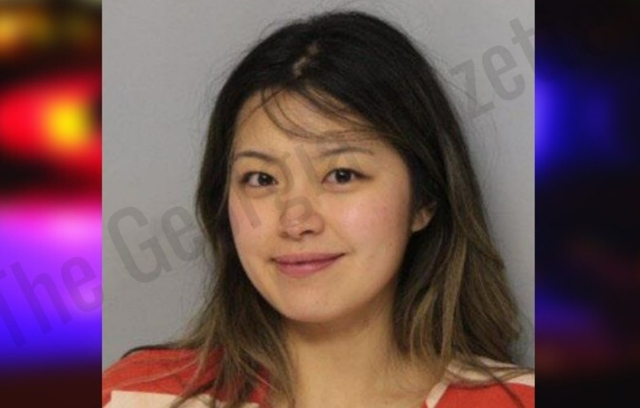
Justice minister nominee Kim Seung-won said Tuesday he was "deeply sorry for causing concern to the public" over the allegations surrounding him, opening his National Assembly confirmation hearing with an apology for the controversies that have dogged him since President Lee Jae Myung named him to the post — most notably allegations that he lobbied for approval of a new drug.
In his opening statement at the hearing, Kim said he felt "a weighty sense of responsibility to protect the rights and safety of the people" as the nominee for justice minister under what he called the Lee Jae Myung people's sovereignty government, adding that while preparing for the hearing he had reflected on his career and its shortcomings.
Kim argued in his opening remarks that his background as a sitting lawmaker with experience as both a judge and a lawyer made him well suited for the role. "As a judge, I tried to understand the circumstances of citizens who stood before the court. As a lawyer, I worked to help neighbors left outside the protection of the law," he said. "As a lawmaker, I devoted myself to resolving people's hardships through institutional reform."
He went on to say that as the Democratic Party's lead negotiator on the Legislation and Judiciary Committee, he had spearheaded amendments to the Code of Criminal Procedure aimed at separating investigation from prosecution and ensuring each institution fulfills its responsibilities. "If given the opportunity to serve as minister, I will complete in the field the reforms that have been laid out through legislation," he said.
Kim outlined four priorities for his tenure: establishing an accountable criminal justice system that the public can trust and rely on; protecting citizens from crime and supporting victims in rebuilding their daily lives; safeguarding the socially vulnerable and ensuring everyone has access to legal assistance; and supporting people's livelihoods, the economy, regional growth and social cohesion.
"I will use the authority entrusted to me by the people solely for the people," Kim said. "I will be strict with power and capital, and will run a justice administration that stands firmly behind victims and the socially vulnerable." He also pledged to correct the shortcomings pointed out during the hearing and to faithfully reflect the views of Legislation and Judiciary Committee members in his work.
The central issue at the hearing is expected to be the drug-approval lobbying allegations. The allegations center on claims that Kim, then a sitting lawmaker, passed along a request in 2021 — at the behest of a broker surnamed Yang, with whom he had maintained a close relationship for years — to Kim Gang-rip, then commissioner of the Ministry of Food and Drug Safety, seeking approval for a clinical trial of a COVID-19 treatment developed by Genencell, a natural-product pharmaceutical firm whose representative is Kyung Hee University professor Kang Se-chan.
The Seoul Western District Prosecutors Office investigated Kim and in 2024 declined to indict him, issuing a deferred prosecution — a disposition that acknowledges the charges are substantiated but stops short of filing them. Independent lawmaker Han Dong-hoon has been raising the allegations daily since Kim's nomination, releasing records of communications among Kim, Yang and the former commissioner. Han has also labeled the affair the "oppa gate," noting that Yang referred to Kim using the Korean term "oppa," a familiar form of address.
The controversy has also touched the judge who rejected an arrest warrant for Kang in 2023. After Kim's nomination, a photograph emerged showing Kim, Yang and the judge — identified by surname Jeong and serving at the Seoul Western District Court at the time — dining together at a restaurant in Yeongdeungpo-gu, Seoul, in 2022. It also came to light that the judge's son had worked as a legislative aide in Kim's parliamentary office.
Police have recently launched a reinvestigation following complaints filed by civic groups. Police requested the prosecution's case files, but prosecutors provided only the indictment document. The Democratic Party has pushed back, accusing Han of leaking internal prosecution materials, including a charging plan related to Kim's case. Democratic Party lawmaker Kim Dong-a filed a complaint with police against Han and was recently questioned as the complainant.
Kim also faces allegations involving a social cooperative where his spouse and other family members work. People Power Party lawmaker Ju Jin-woo has claimed the cooperative provided preferential treatment in hiring and salary increases for Kim's spouse and children. Kim's camp has denied the allegations, saying the cooperative's representative is someone other than his spouse.
Kim previously served as co-chair of a group that called for the withdrawal of charges against President Lee. His nomination has therefore drawn scrutiny, with some viewing it as groundwork for a future dismissal of those charges. His position on the matter is also expected to emerge at Tuesday's hearing.
Attention is also focused on what Kim will say about the establishment of a new prosecution office to replace the current Prosecution Service, which is set to be dissolved on Oct. 2. The Democratic Party has argued that the proposed organizational structure for the new office — which includes a judicial oversight division to review cases police decline to refer for prosecution — runs counter to prosecutorial reform. The party has also called for reducing the number of prosecutors. The legal community, however, largely holds that the number of prosecutors should be maintained or increased, alongside measures to support and check the police.
bell@heraldcorp.com