Price stability, job creation anchor livelihood agenda; MSCI inclusion and won internationalization to follow WGBI; supply chain diversification and deregulation to strengthen economic fundamentals
Lee Hyung-il, nominee for deputy prime minister and minister of the Ministry of Economy and Finance, said Tuesday he expects the South Korean economy to grow 3 percent this year and per capita national income to cross the $40,000 threshold, pledging to ensure the benefits of the recovery reach ordinary citizens.
He outlined plans to stabilize prices and expand the employment and income base while completing three major mega-projects and advancing seven frontier technologies — including clean energy, aerospace and advanced biotech — under an initiative he called 7-SEED, aimed at creating new engines of growth.
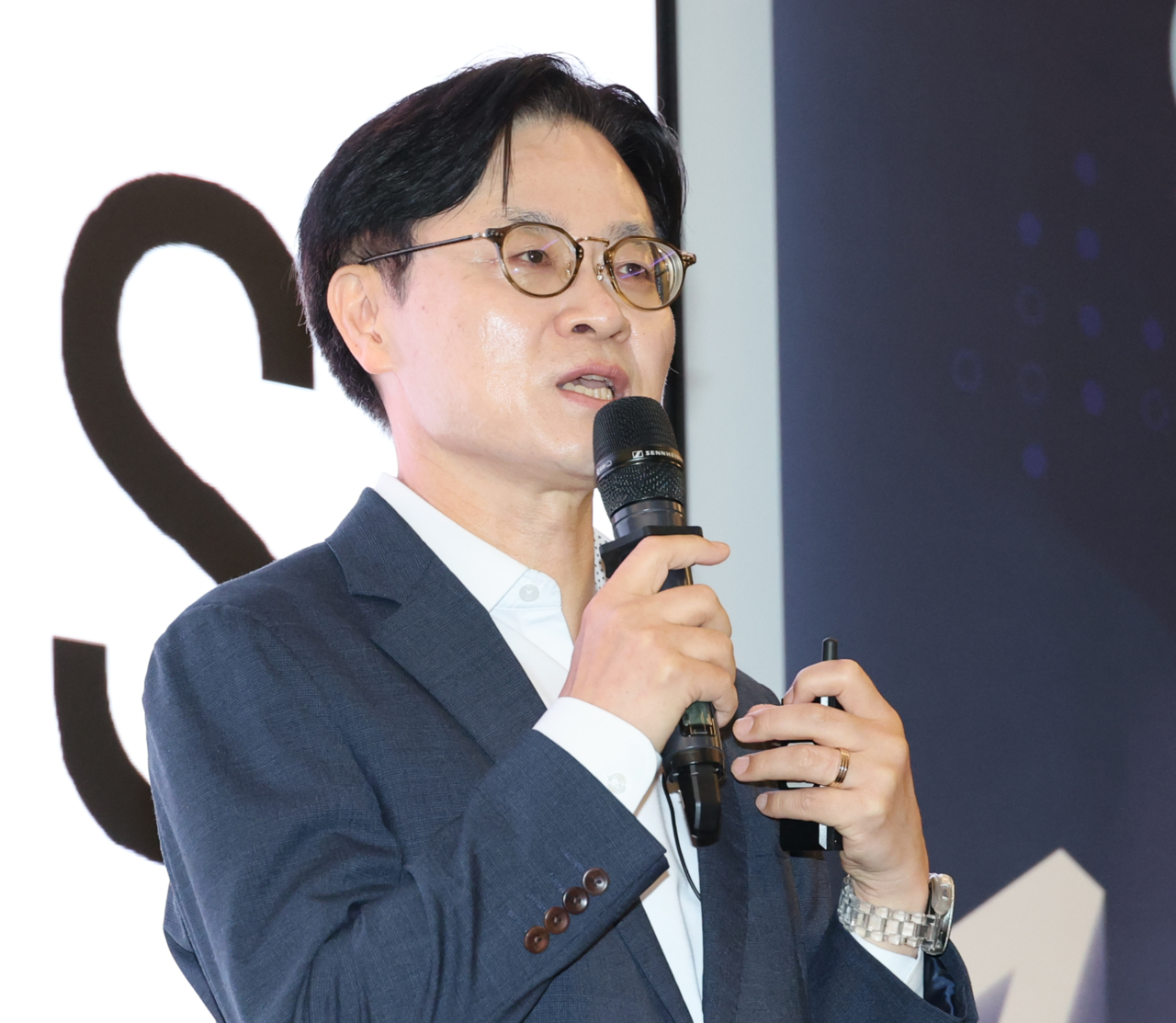
![Lee Hyung-il, nominee for deputy prime minister and minister of the Ministry of Economy and Finance, arrives Monday at his confirmation hearing preparation office at the Korea Deposit Insurance Corporation in Jung-gu, Seoul. [Yonhap]](https://wimg.heraldcorp.com/news/cms/2026/09/15/rcv.YNA.20260914.PYH2026091401620001301_P1.jpg)
Speaking at his confirmation hearing before the National Assembly's Finance and Economy Planning Committee on Tuesday, Lee said South Korea stands at a critical turning point. "Key economic indicators including exports and investment are improving, driven by a semiconductor boom fueled by surging AI demand, and the momentum of economic recovery is becoming increasingly clear," he said.
"With consumption and employment also improving with some lag, 3 percent growth this year is coming into view, and per capita national income is expected to rise to the $40,000 range," he added.
However, Lee cautioned against complacency. "Rather than resting on current opportunities, we must prepare for future threats," he said. "We need to further upgrade existing industries and discover new growth engines that can outpace rival economies, turning that into sustainable growth."
He said the economy must be made resilient against uncertainty in the global trade order and geopolitical threats such as the war in the Middle East. "We must upgrade the economic structure so that the warmth of growth spreads to all citizens and leads to an even higher stage of growth — by resolving accumulated structural problems including polarization across industries, regions and generations," he said.
On his economic philosophy, Lee said he believes in upholding the principles of a market economy that respects creativity and vitality, while ensuring the government plays an active role in protecting the socially vulnerable and stabilizing livelihoods.
He said he would focus on three priorities: stabilizing livelihoods and the macroeconomy while sustaining the recovery, and strengthening global competitiveness and external policy.
On the first priority, Lee said he would work to spread the benefits of the economic recovery evenly across all areas of daily life. "Price stability is the foundation of the livelihood economy and the starting point for resolving polarization," he said, pledging to ease the burden on household budgets and stabilize prices for agricultural, livestock and petroleum products. Over the medium to long term, he plans to improve the retail distribution structure to address the structural drivers of inflation.
Expanding the employment and income base will proceed in parallel. Lee said he would strengthen regional industrial and investment foundations, reform the dual structure of the labor market, and broaden social mobility and opportunity so that differences in starting conditions do not harden into permanent gaps in life outcomes. He also committed to providing bold support for sectors facing particular hardship, including youth, small business owners and small and medium-sized enterprises.
On macroeconomic stability, Lee said he would closely monitor potential risk factors — including shifts in the semiconductor industry cycle, global interest rates and capital flows — and manage the macroeconomy in a stable manner to prevent market volatility from widening.
On growth drivers, he said he would complete the three mega-projects currently underway and advance the 7-SEED initiative — seven frontier technologies the government considers core strategic national assets, spanning clean energy, aerospace and advanced biotech — to create new growth opportunities.
Lee also identified high-value-added service industries as another pillar of growth. Citing the expanding global influence of Korean culture, he said he would nurture not only leading sectors such as content and food but also tourism, mobility and other diverse fields. To support corporate ambition, he pledged to overhaul outdated regulations and directly engage with businesses on the ground to boost economic vitality.
Strengthening global standing and pursuing a resilient external policy were also among his stated priorities. Lee said he would build on the credibility gained from South Korea's inclusion in the World Government Bond Index by pursuing entry into the MSCI Developed Markets Index, while pressing ahead with efforts to internationalize the won.
"I will do my utmost to manage South Korea's external credibility so that global credit rating agencies continue to assess our country as an attractive destination for investment," he added.
Lee also said that securing supply chains has become a matter of survival given heightened geopolitical risks. "I will do everything possible to eliminate the Achilles' heel of our economy through expanding stockpiles and securing alternative import sources," he said.
On managing the economic team, Lee stressed the importance of unity. "As deputy prime minister for economic affairs, I will do my best to bring together the capabilities of each ministry and lead the economic team as one," he said. "I will strive to build an economic team that takes responsibility for and acts on policy decisions that serve the public, transcending inter-ministry interests." He added that the team would listen closely to the voices of the public and markets and follow through responsibly until policies work as intended on the ground.
"If entrusted with the important responsibility of deputy prime minister for economic affairs, I will devote all my energy to building the foundation of an irreplaceable Republic of Korea, drawing on more than 30 years of accumulated expertise and experience overcoming crises," Lee said.
y2k@heraldcorp.com