Six free shuttle bus routes linking subway stations to be deployed as Wednesday strike looms
Extended Seonggong Bus hours, increased village bus frequency aim to minimize commuter disruption
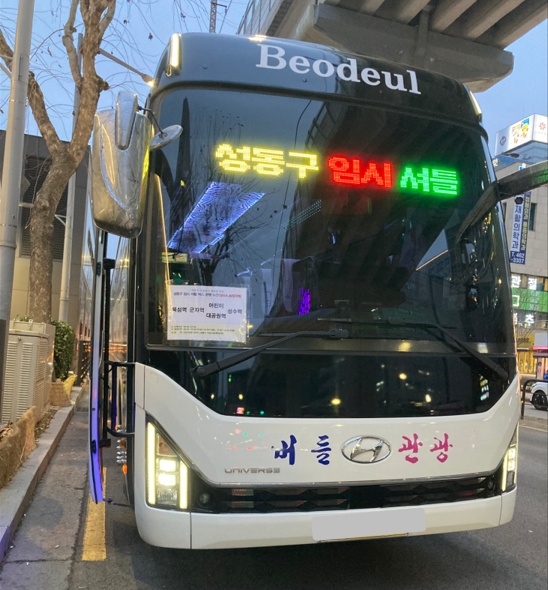
Seongdong-gu in Seoul has drawn up an emergency transport plan to minimize commuting disruptions for residents ahead of a citywide bus strike set for Wednesday, with all measures to take effect from 6 a.m. the moment a strike begins, the district said.
Labor-management negotiations are still ongoing and whether the strike will proceed remains uncertain, but the district is preparing for all contingencies. Its response plan includes free shuttle buses connecting key subway stations, extended operating hours for the Seonggong Bus — the district's public facility shuttle service — and increased frequency on village bus routes to cover any gaps left by suspended city bus service.
As the centerpiece of the plan, the district will deploy six free shuttle bus routes using chartered jeonse buses. The shuttles will run from 6 a.m. to 10 p.m. on Wednesday at roughly 15-minute intervals, linking the neighborhoods of Seongsu, Songjeong, Sageun, Majang, Sangwangsimni and Geumho with major subway stations. The routes are designed to bridge the gap left by suspended city bus service and allow residents to reach the nearest subway station with ease.
The Seonggong Bus will also extend its first and last departures by one hour each. Route 1 connects Singeumho, Eungbong and Seongdong-gu Office (Wangsimni Station) to Seongsu; Route 2 links Yongdap, Majang, Sageun, Seongdong-gu Office (Wangsimni Station), Sangwangsimni and the public health center; Route 3 runs between Songjeong and Seongdong-gu Office (Wangsimni Station); and Route 4 connects Seongdong-gu Office (Wangsimni Station) to Oksu-dong.
During the strike, the Seonggong Bus will go beyond its usual role of improving access to public facilities and serve as a key link between major neighborhood hubs and subway stations including Wangsimni, supporting residents' mobility throughout the emergency.
Village buses will also increase service frequency during peak commuting hours. The district said it has coordinated with local village bus operators to concentrate runs during the morning and evening rush hours on Wednesday, aiming to keep disruptions to a minimum.
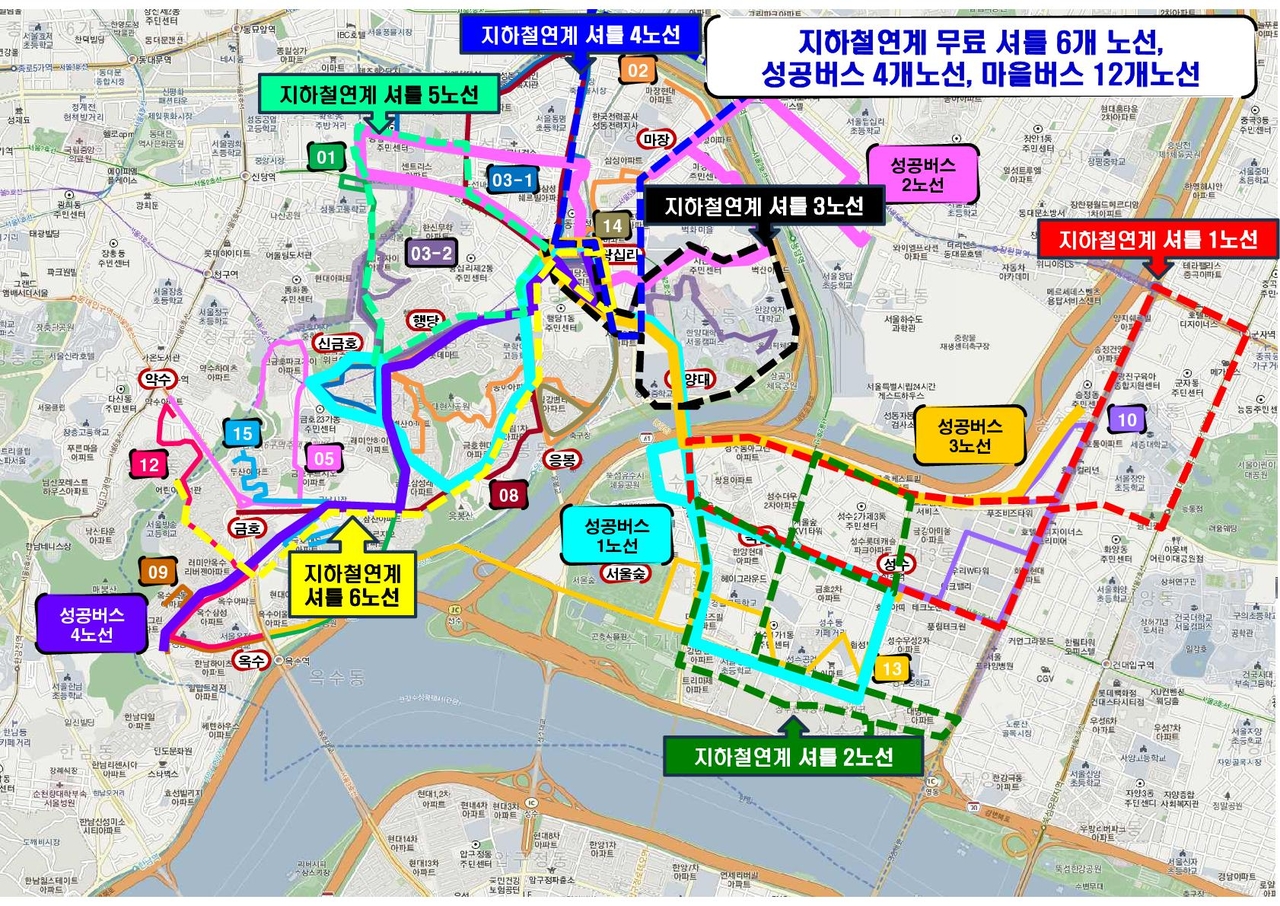
Alongside these measures, the district said it will continuously monitor the strike situation and traffic conditions, and will promptly share updates on the emergency transport plan and route-by-route schedules through its website, social media channels, smart shelter notice boards and in-building announcements to apartment residents.
"If the bus strike goes ahead, we expect significant inconvenience for residents, particularly during commuting hours, so we plan to deploy every available means of transport — including free subway-linked shuttle buses, the Seonggong Bus and village buses," District Mayor Yoo Bo-hwa said. "We will keep a close eye on conditions on the ground until the strike is over and do our utmost to ensure residents can get around without disruption."
seouldream01@heraldcorp.com