Spending falls more than 10% when transport costs are stripped out
'Let foreign students showcase Gangwon to their home countries'
Tourist numbers in Gangwon Province are rising, but visitor spending is falling — and the provincial council has called on authorities to build a tourism strategy that keeps visitors longer and encourages them to spend more.
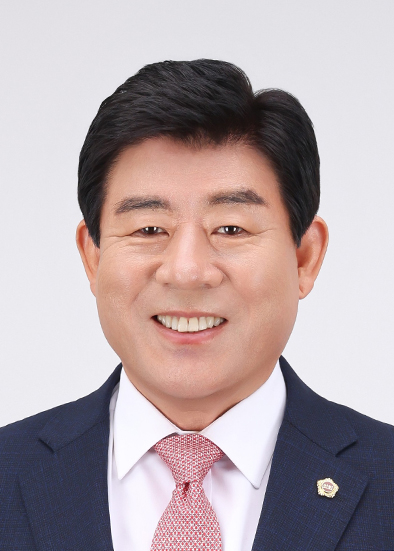
Kim Ki-cheol, a People Power Party lawmaker on the Gangwon Special Self-Governing Provincial Council representing Jeongseon, raised the concern during a field inspection held Wednesday through Friday as part of the 348th regular session's Economy, Industry and Tourism Committee. The delegation visited the Gangwon Tourism Foundation, the Bukpyeong Second General Industrial Complex and the Gangwon Free Economic Zone Authority to review the progress of major projects and identify areas for policy improvement.
At the Gangwon Tourism Foundation stop, Kim focused on data showing that growth in visitor numbers has not translated into meaningful gains for the local economy or tourism spending.
Big data analysis by the foundation showed that Gangwon Province received about 154.6 million tourists in 2025 — up 3.2 percent from the previous year — but tourism spending fell 9.7 percent to about 1.78 trillion won ($1.33 billion).
Spending on food, accommodation and leisure all declined, while transport spending alone rose 18.1 percent, a trend analysts attributed to a surge in day trips and short-distance travel.
The pattern continued into the first half of 2026: visitor numbers edged up 0.9 percent year-on-year to about 72 million, while tourism spending dropped 8.7 percent to about 786.2 billion won.
Day-trippers and visitors staying one or two nights increased, but those staying three nights or more declined. Accommodation spending fell particularly sharply, down 14.6 percent, underscoring that higher visitor counts have not led to longer stays or greater overall spending.
"The core measure of tourism policy should no longer be how many tourists came, but how long they stayed and how much they spent," Kim said. "We need to shift from quantity-driven growth focused on visitor numbers to quality-driven growth that deepens stays and raises spending."
Kim also addressed the Untan Godo trail, a flagship tourism asset in the coal-industry transition zone. "The Untan Godo project cannot be an end in itself," he said. "There must be a 'plus-alpha' element that connects the trail to the region's history, culture, food, hands-on experiences and festivals. Tourism and culture need to work together organically so visitors have a reason to stay longer in the area."
Kim also proposed using international students living in Gangwon Province as tourism ambassadors. "If foreign students studying here personally experience Gangwon's tourist sites, food, festivals and leisure activities and then introduce them on YouTube and social media in their own languages and from their own perspectives, the content will be far more vivid and impactful than conventional one-way promotional campaigns," he said.
Kim further argued that the MICE industry — meetings, incentives, conventions and exhibitions — should be actively developed as a high-value segment of Gangwon tourism. The goal, he said, is to go beyond simply attracting visitors by expanding MICE demand to extend average stays, boost tourism spending and amplify the economic ripple effect on the region.
After the tourism-focused visits, Kim inspected the Bukpyeong Second General Industrial Complex, where he reviewed the construction of hydrogen production infrastructure, including an electrolysis-based hydrogen production base.
At the Gangwon Free Economic Zone Authority, Kim checked on development and investment attraction progress in the Mangsang, Bukpyeong and Okgye districts, urging officials to ensure each project delivers tangible results in business recruitment and job creation.
"This field inspection was not just about confirming project status through reports — it was a process of seeing firsthand what results policies and projects are actually producing on the ground," Kim said. "I will continue my legislative work by finding answers in the field and proposing practical policy alternatives."
abc@heraldcorp.com