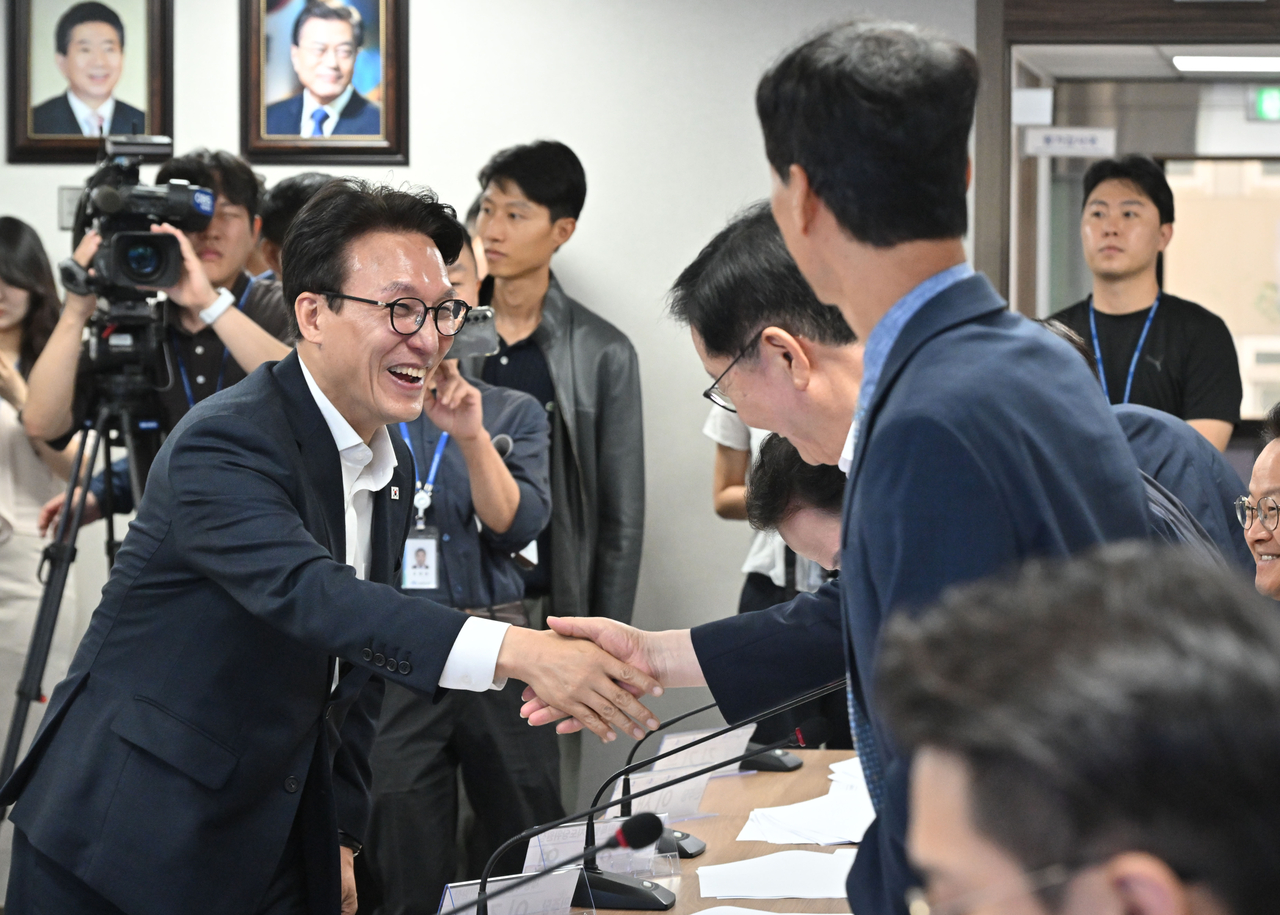
Democratic Party of Korea leader Kim Min-seok said Wednesday he would pursue discussions on electoral reform — including lowering the threshold for recognized floor groups in the National Assembly — as part of a broader effort to strengthen solidarity within the progressive camp. The move is widely read as an attempt to soothe progressive allies after Kim effectively pushed for the voluntary withdrawal of Yong Hye-in, a Basic Income Party lawmaker who had been nominated as minister of the gender equality and family ministry.
Kim made the remarks Wednesday on "Minti07," a program on the party's official YouTube channel, Democratic Party TV. "As the elder brother of progressive political forces, we have reached the stage where we must now present a vision for how to make this a reality — and actually deliver on it," he said. "I have been focusing intensely on this issue lately."
"Looking at the situation with nominee Yong, we faced criticism, but at the same time I came to see the reality of a fragile progressive movement," Kim said. "Easing the floor-group threshold is something the Progressive Party, the Social Democratic Party, the Basic Income Party, the Rebuilding Korea Party and civil society groups have all been calling for. For example, reducing the current requirement from 20 seats to 15 — wouldn't that be politically realistic and acceptable?"
He added that discussions were needed on how best to reform the current semi-proportional representation system under the single-member district framework. "On runoff voting, it should at minimum apply to presidential elections — some have even suggested extending it to certain regional government head races, but the presidential election must come first," he said.
When the host asked whether electoral reform could translate into higher approval ratings for the broader pro-government bloc, Kim said overall approval depended on improving public sentiment across all areas of governance. "We are making a certain degree of effort on personnel issues, policy matters, real estate and other contentious areas," he said.
In addition, Kim said the party was working to address the concerns of more right-leaning constituencies. "In the recent floor-leader address, I raised many topics that could appeal to centrists and even conservatives," he said. "I think the way forward is to maintain internal unity while reaching out evenly to both sides."
bigroot@heraldcorp.com