MOU with US expected around Friday; Foreign Minister Cho heads to Washington
Alaska LNG project under review for energy security despite commercial doubts
Westinghouse stake emerges as key sticking point; voting rights seen as dealbreaker
Concerns are mounting over the scale, project selection and profit-recovery terms of a planned memorandum of understanding on South Korean investment in the United States, as the two sides prepare to sign the deal. The Donald Trump administration is pressing Seoul for additional commitments and unfavorable conditions beyond what was originally agreed, with midterm elections approaching in November. Analysts say Washington is exploiting South Korea's vulnerability — the fact that the negotiations are intertwined with trade and security issues, making it impossible to evaluate the deals on commercial merit alone.
The government is set to brief the National Assembly on the outcome of the US investment negotiations on Thursday, then sign the MOU with Washington as early as Friday, according to sources familiar with the matter. Foreign Minister Cho Hyun has traveled to the United States ahead of the signing for last-minute consultations. However, the signing could be delayed depending on how the negotiations proceed.
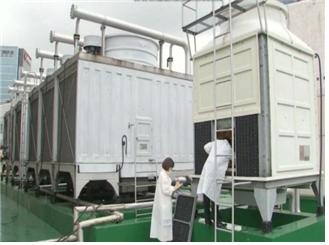
The US investment projects currently under discussion include a gas combined-cycle power plant in Encinal, Texas, and a large-scale nuclear power plant construction project on American soil. The Alaska liquefied natural gas project has since emerged as an additional investment candidate, and a potential equity stake in US nuclear company Westinghouse has surfaced as a central variable in the talks.
According to political and government sources Wednesday, Seoul has settled on an approach that keeps the Alaska LNG project on the table without committing to it immediately, opting instead to conduct further reviews of its commercial viability and participation terms.
The project has long been viewed as a question mark for profitability, given high construction and transportation costs, US labor costs and inflation, and environmental regulations. But with the ongoing conflict in the Middle East deepening fears of a global oil and gas supply disruption, the project is now being reconsidered as part of a broader push to diversify energy procurement away from the Middle East.
Shipping LNG from Houston — close to shale gas fields in Texas — to South Korea or Japan takes at least three weeks, and up to a month if the Panama Canal is blocked. From Alaska, the journey takes about a week. Large LNG carriers in particular struggle to transit the Panama Canal, meaning they must take the route around Africa's Cape of Good Hope, which can add 45 to 50 days to the voyage.
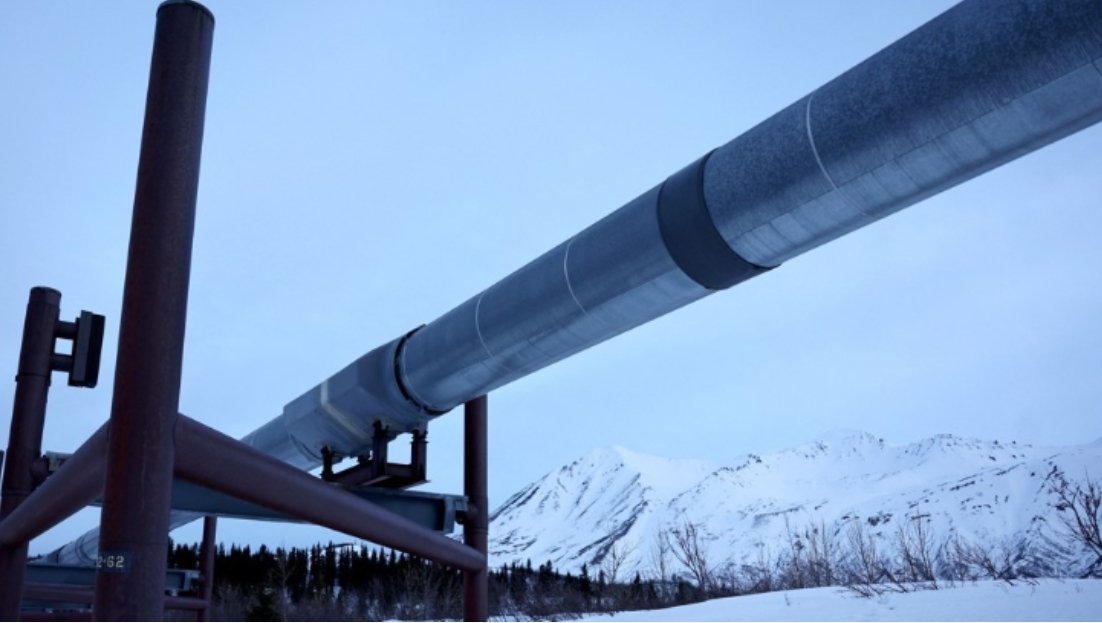
The project is, however, a mega-investment expected to cost $44 billion, and expenses could balloon as a 1,300-kilometer pipeline is laid across frozen permafrost. Political risk is another concern: the project's fate has already swung dramatically with changes in administration. Originally pursued during Trump's first term, it was halted under the Joe Biden administration over climate change concerns, threats to wildlife refuges, and opposition from Alaska's Indigenous communities and environmental groups.
Finding a suitable Korean company to lead the project is also a challenge. Korea Gas Corporation, a state-owned enterprise, is in serious financial distress — its debt swelled to 47 trillion won ($34.7 billion) after it was hit hard by surging international energy prices during the Russia-Ukraine war, leaving it in no position to raise additional funds.
A potential equity stake in Westinghouse has also emerged as a central issue in the negotiations. The US government is said to have proposed that South Korea acquire a stake in the nuclear company, with the apparent aim of combining South Korea's nuclear construction capabilities with Westinghouse's core technology to support the expansion of nuclear power in the United States.
Washington is receptive to Korean investment and project participation, but cautious about allowing management involvement such as board representation. South Korea is simultaneously a business partner of Westinghouse and a competitor in the global nuclear market, analysts say.
The US side is said to have proposed that South Korea take only a minority stake of 5 to 10 percent. Westinghouse is currently owned by Canadian private equity fund manager Brookfield, which holds 51 percent, and Canadian uranium miner Cameco, which holds 49 percent.
"The Westinghouse stake percentage is still being negotiated, but the figure of 15 percent will not be on the table," a political source said. "The prevailing view on the US side is that they will not give Korea a stake that carries voting rights."
South Korea's investment in Westinghouse is expected to run into the trillions of won. Applying the market-cited valuation range of $15 billion to $20 billion, a 15 percent stake would be worth $2.25 billion to $3 billion. Westinghouse currently has six board members, with Brookfield and Cameco each nominating three. If South Korea secures the right to nominate a board member, it would alter the governance structure the two companies have divided between themselves.
South Korea and the United States originally agreed last year during trade negotiations on a total of $350 billion in Korean investment in the US. Of that, $150 billion was earmarked for shipbuilding cooperation and $200 billion for strategic investment.
The problem is that the projects currently under discussion could consume a substantial portion of the strategic investment budget on their own. The cost of the Encinal gas combined-cycle power plant has reportedly risen from an initial $16.8 billion to $20 billion, and then again to around $22.3 billion. Adding the plan to build eight nuclear reactors in the United States, total investment could exceed $140 billion.
The government maintains that investment will not exceed the agreed cap or annual remittance limits. Even so, if individual projects are structured with unfavorable profitability terms or risk-sharing arrangements, South Korea's financial burden could grow significantly.
"Commercial rationality" is not a condition South Korea unilaterally imposed — it is a principle embedded in the domestic special legislation governing US investment and in the bilateral investment framework itself.
"South Korea and the US agreed last year to select US investment projects based on commercial rationality, but now, just before the final announcement, that is being overridden by security and other considerations," said a source with direct knowledge of the negotiations. "With the US sending Korea bill after bill ahead of its midterm elections, I wonder whether the officials actually at the negotiating table are failing to hold their ground."
oskymoon@heraldcorp.com