Military rules out separate probe into causes
Ministry pledges expanded testing opportunities
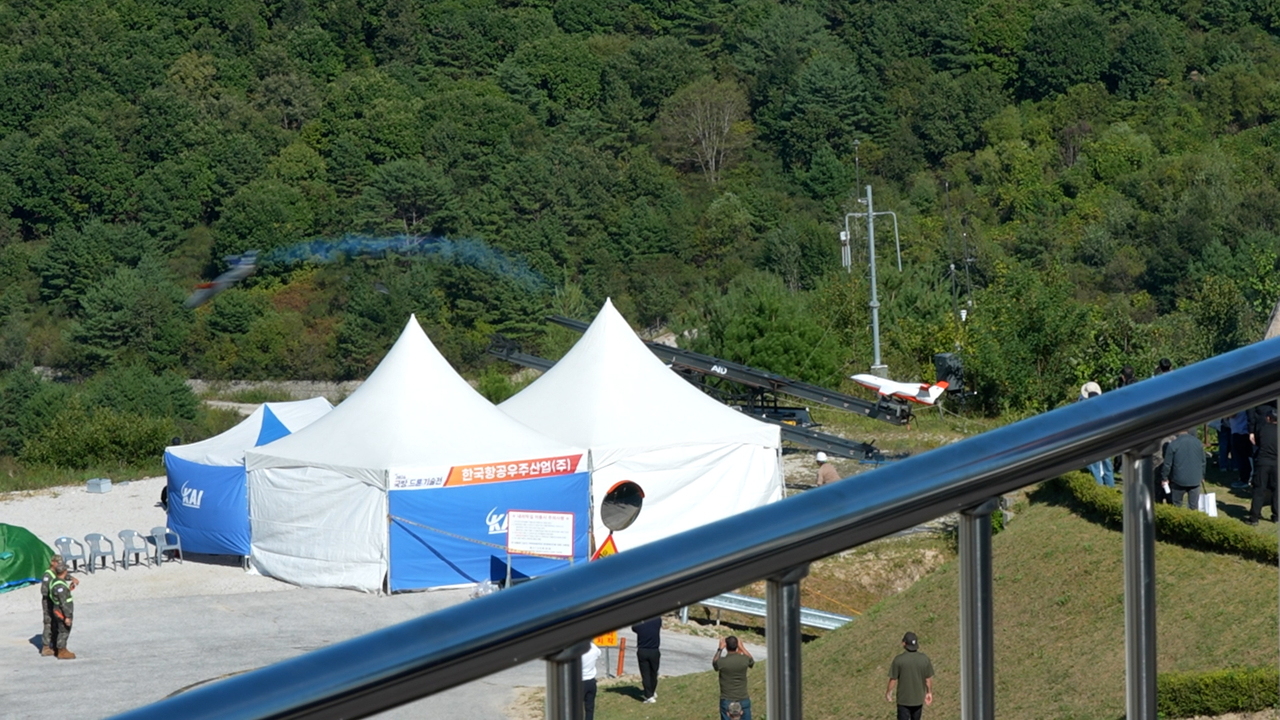
The Ministry of National Defense said Wednesday that six unsuccessful demonstrations out of 17 drone and counter-drone system showcases at a defense expo were "not failures, but part of the process of developing better technology." While some participating companies suggested frequency interference as a possible cause of the setbacks, the military said it would not conduct a separate investigation.
Defense Ministry spokesperson Jeong Bit-na said at a regular briefing Thursday that 11 of the 17 demonstrations at the 2026 Defense Drone Technology Exhibition, held Wednesday, were successful, and that all drones currently operated by the military performed without issue. She added, however, that even those military-operated drones are not fully fielded equipment but systems being tested by pilot units.
The event, held for the first time this year, was designed to assess the military applicability of drone and counter-drone systems being independently developed by domestic private companies and to incorporate military feedback into their development.
"Although some private companies' prototypes did not succeed in their demonstrations, we view this not as failure but as part of the process of developing better technology," Jeong said. "Since actual battlefield environments involve a wide range of variables — including frequency conditions, weather and terrain — it is important to identify unexpected technical challenges during the testing process."
On the causes of the unsuccessful demonstrations, Jeong cited the possibility of frequency interference, while noting this was based on the companies' own assessments.
"After hearing from the companies, it appears that frequency jamming on-site is suspected," she said, adding that companies relying primarily on civilian frequency bands may have been affected by unexpected variables at the venue. It has not been confirmed, however, whether crowd activity or mobile phone use actually caused the disruptions.
The ministry pushed back against reports that the military would investigate the causes. "There is no separate investigation being conducted into the causes," Jeong said. "The companies need to analyze the issues themselves and achieve further technological advancement."
At the briefing, questions were raised about whether it was appropriate to leave cause analysis and improvements entirely to private companies, given that the technology is intended for military use. The underlying point was that the Ministry of National Defense, the armed services, the Agency for Defense Development (ADD) and the Defense Acquisition Program Administration (DAPA) should all be actively involved, since the event was meant to evaluate equipment for military use.
"The Ministry of National Defense will actively support companies so they can receive better feedback and develop the best possible drones," Jeong said.
The ministry said participating companies had made meaningful technological progress during their preparations and expressed a desire for additional demonstration and testing opportunities. On that basis, the ministry said it plans to expand such opportunities so that companies can press ahead with development without being discouraged by setbacks along the way.
rimsclub@heraldcorp.com