First sign language broadcast manual built on deaf voices
Special advisory member Jeong Ga-eun, 20, speaks out
'Sign language needs expression, gaze and movement — not just hands'
'I want to be a human rights lawyer — change is slow, but it's coming'
Last August, the Korea Communications Commission and the Korea Audience Media Foundation released the country's first practical guidelines for sign language interpretation in broadcasting — covering everything from core principles and genre-specific practices to how interpreters should handle unexpected situations. It was the first manual of its kind for a field that had long operated without clear standards.
For many in the broadcast industry, the document may read as just another set of professional guidelines. But for the deaf community, it represents a long-held wish to fully access media — and, more significantly, it was built from the ground up with deaf voices at its center, a departure from how such work had typically been done.
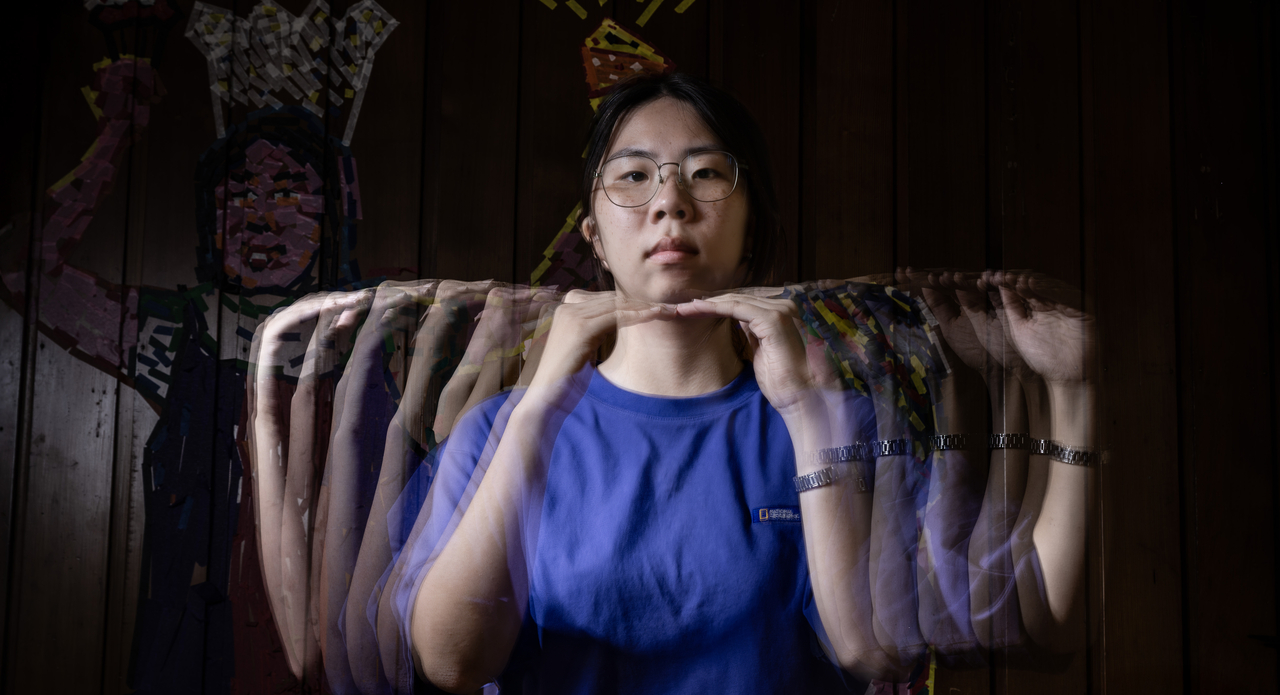
Among the advisory committee members assembled to develop the guidelines was an unusual contributor: Jeong Ga-eun, a 20-year-old preparing for university entrance exams. Surrounded by field professionals, interpreters and academics, Jeong consistently brought a perspective that only someone who had grown up using sign language as a first language could offer. "Sign language only becomes a complete language when facial expression, eye contact, body movement and the use of space all come together — not just the hands," she said. With that opening remark, a long-standing misconception — that sign language is simply a language of the fingertips — quietly dissolved.
To meet Jeong, this reporter visited Sorireul Boyeojuneun Saramdeul, a deaf alternative school in Gangbuk-gu, Seoul, and the only institution in the country centered on sign language instruction. The interview was conducted in sign language with simultaneous interpretation by the school's principal, Kim Ju-hee.
The mandatory sign language broadcast quota system was introduced in 2011. Since then, the volume of sign language programming has grown, but critical information has repeatedly been omitted or mistranslated. There were also no meaningful standards for how interpreters should handle breaking news or the wide range of program genres. Confusion on the ground was inevitable, and the burden fell squarely on deaf viewers.
Jeong's involvement in developing the guidelines grew directly from her own frustrations as a deaf viewer. Born to deaf parents and raised with sign language as her mother tongue, she had often struggled to follow broadcasts because of poor interpretation. Subtitles exist, but they are simply a written transcription of spoken Korean — a hearing person's language — and differ meaningfully from sign language, the native language of the deaf.
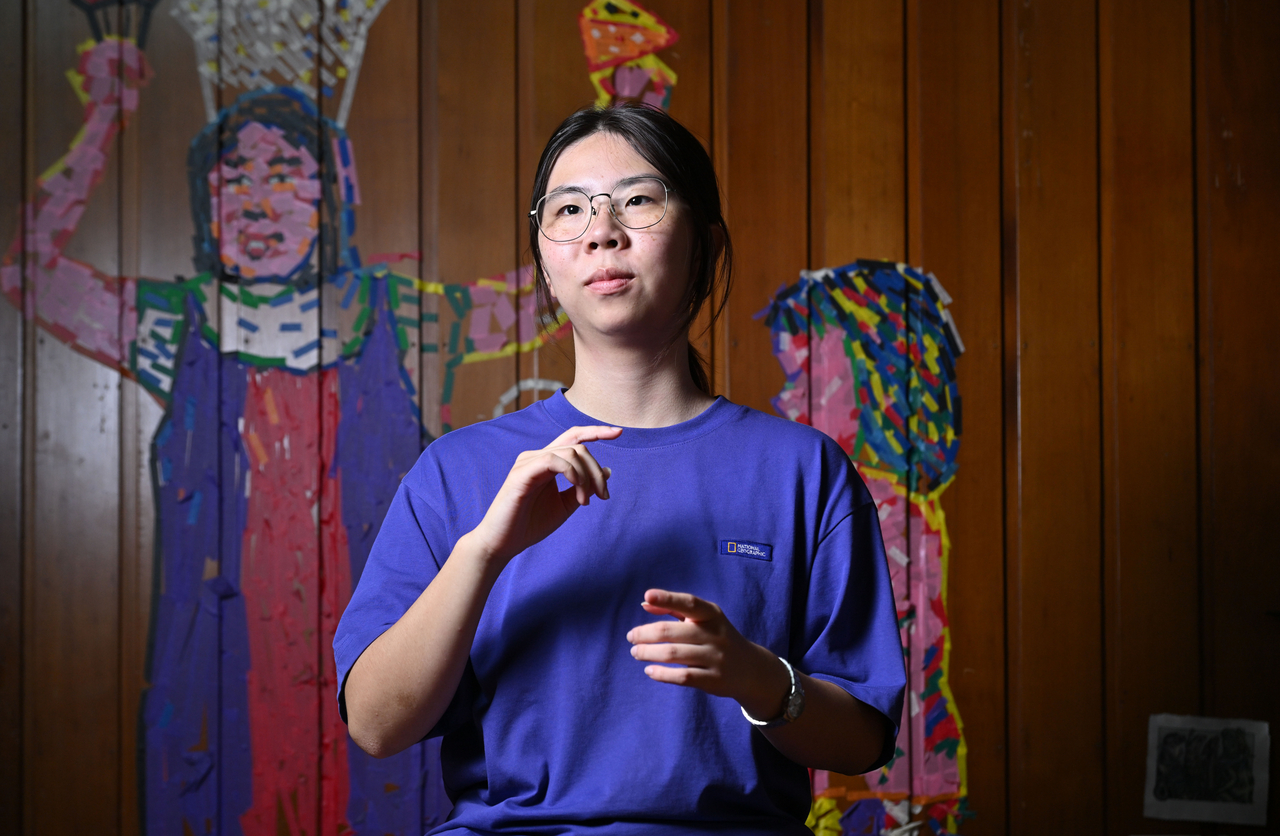
"Even when a broadcast shows both subtitles and sign language interpretation at the same time, the two often say different things," Jeong said. "And even when a drama series has sign language interpretation, it's hard to receive the emotion." She added that her parents, who cannot read subtitles, had no choice but to accept incorrect information whenever the interpretation was wrong.
She traces the root of frequent interpretation errors to the narrow way society understands sign language. "Most people think sign language is hand gestures," she said. "But sign language only becomes a complete language when facial expression, eye movement, body movement and the use of space all come together — not just the hands."
That is precisely where interpretation errors most often occur. Jeong said hearing interpreters frequently miss the grammar unique to sign language — the way space and the whole body are used alongside hand movements.
A deeper problem, she said, is the lack of understanding of deaf culture. When hearing-centric expressions from variety shows or drama series are carried over into sign language as-is, words and phrases that feel natural to hearing viewers can land as something foreign and unfamiliar to deaf audiences. "You cannot simply convert hearing culture into something that belongs to deaf people," she said. She offered the Korean slang term "kangaroo tribe" — referring to adult children who remain financially dependent on their parents — as an example. "When hearing people first hear 'kangaroo tribe,' they immediately picture a joey inside a kangaroo's pouch," she said. "But if you translate it directly into sign language, deaf people cannot intuitively grasp the meaning. In the deaf community, the same concept has long been expressed with a hand gesture mimicking a baby sucking on a bottle."
Jeong said she wishes interpreters had more firsthand experience within the deaf community. Still, she welcomed the fact that society has begun, even now, to listen to deaf people's voices on media accessibility. "Whose sign language is this for?" she said. "If we are excluded, who is it being evaluated by?" What she hopes for is that this shift in attitude will spread, leading to a culture where deaf people naturally participate in sign language interpretation.
Sign language interpretation, she believes, should not be a field perfected by hearing experts alone — the lived experiences of deaf people must be the standard.
Jeong's dream, as she prepares for university, is to become a human rights lawyer and take a leading role in advocating for deaf rights. She said the simple fact that she and other deaf people were part of creating the guidelines gave her hope that society, however slowly, can change. "This was the first time I experienced working on the ground to advance the rights of deaf people," she said. "Just knowing that someone like me was there — even if society cannot change all at once, I felt hope that it can change, little by little."
Having completed her compulsory education through an equivalency exam, Jeong is set to enter university next year. The excitement is matched by anxiety. "Will I be able to manage as a deaf person among hearing students?" she said. She already senses that it will not be easy — having to advocate for her own language and identity from a position that is not yet equal.
More children are receiving cochlear implants, and the elders who have long preserved sign language are passing away one by one. How to protect sign language — a language that belongs wholly to the deaf — is another challenge she carries with her.
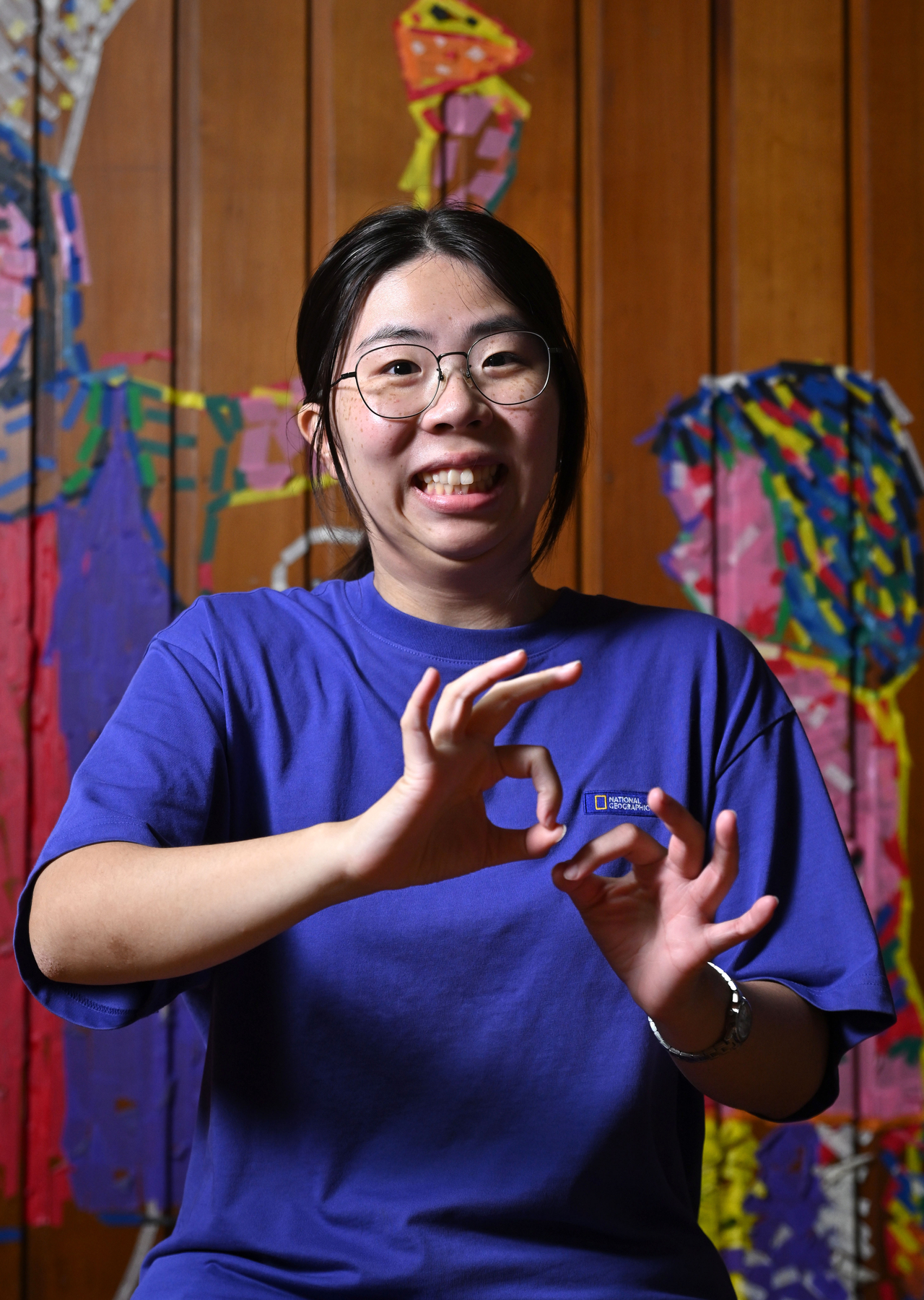
Yet the last thing she shared in the interview leaned far more toward joy than weight. "Life as a deaf person is fun — it's so enjoyable," she said. "I want to share that joy with others." Her eyes lit up as she explained that sign language carries expressions and rhythms that spoken language simply cannot match. She sees sign language as a world created by the non-manual signals unique to the deaf — and she finds it a shame that the humor only that world can hold has not been shared more widely.
"It's such a pity that so many people don't know that," she said. It is not the simple humor of a funny face, she explained, but the kind of immersive pull that makes you feel as though you are being drawn into a film — and that, she said, is the charm of sign language, the living language of the deaf community, a charm that words alone cannot fully describe.
balme@heraldcorp.com