Monthly rent deduction rate raised to 17%, IRP to 15%
Youth ISA offers 10% income deduction on contributions
Youth employment rate at 43.6%; 410,000 'resting' and not seeking work
Korea Institute of Public Finance urges parallel direct spending on jobs, training and housing
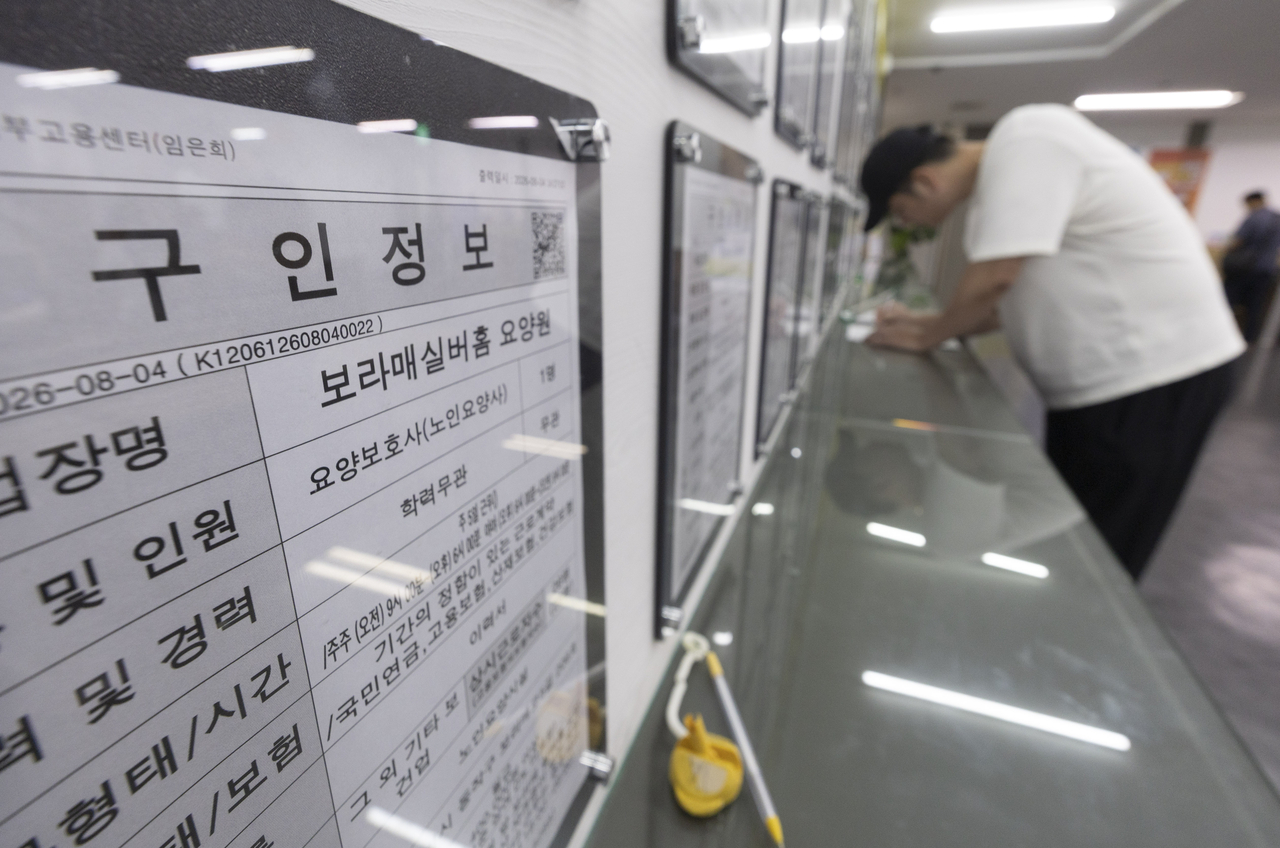
The government has rolled out a series of preferential tax breaks for young people covering monthly rent, retirement pensions and individual savings accounts, but a state-run research institute says the measures offer limited relief to the low-income and tax-exempt youth who need help the most. Because tax credits and exemptions only benefit those who owe taxes or can afford to save, the Korea Institute of Public Finance said direct fiscal support for employment, vocational training and housing must accompany the tax measures.
The institute's assessment appeared in a report evaluating the government's 2026 tax reform package, published Monday in the September issue of its Fiscal Forum. The report found that the reform contains a broad array of tax incentives aimed at helping young people with housing costs, asset accumulation and retirement preparation.
Researcher Ko Ji-hyeon noted that the youth employment rate fell 1.5 percentage points — from 45.1 percent in the first half of last year to 43.6 percent in the first half of this year — and that the number of young people neither working nor looking for work has remained around 410,000. Against that backdrop, she said the intent behind expanding youth tax support is sound.
Youth perks extended to rent, retirement accounts and ISA
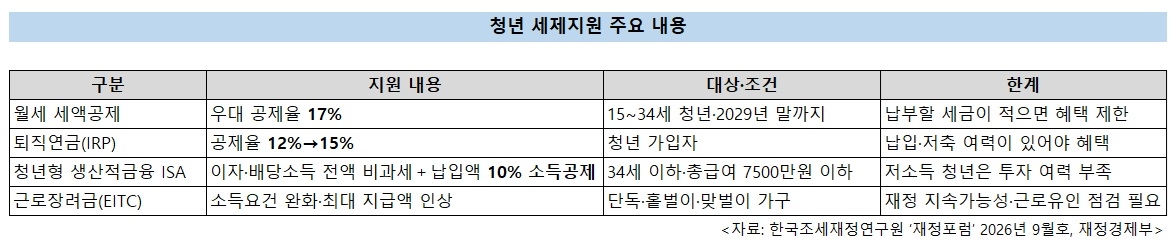
The government will apply a preferential tax credit rate of 17 percent to monthly rent payments claimed by young people between the ages of 15 and 34, with the benefit running through the end of 2029. The tax credit rate on contributions to individual retirement pension accounts for youth will also rise from 12 percent to 15 percent.
A new youth-oriented productive finance ISA will also be introduced. Young people aged 34 or under with total annual wages of 75 million won ($54,200) or less who invest in domestically listed shares, domestic equity funds or national growth funds will receive full tax exemptions on interest and dividend income, along with a 10 percent income deduction on contributions. The annual contribution limit is 20 million won, with a total cap of 200 million won. Unused annual contribution room can be carried over to the following year, and concurrent enrollment in the youth future savings account will be permitted.
Alongside this, the value-added tax exemption on dormitory services at public university residences will be made permanent, and the tax exemption on interest income from the military service savings account will be extended by three years.
The government will also expand the Earned Income Tax Credit. The total income thresholds will be raised — from 22 million won to 26 million won for single-person households, from 32 million won to 37 million won for single-earner households, and from 44 million won to 52 million won for dual-income households. Maximum payouts will increase to 1.8 million won, 3.1 million won and 3.6 million won, respectively.
'Benefits limited for vulnerable youth with no tax liability or savings'
The core problem lies in how the support is structured. Monthly rent and IRP tax credits only deliver their full value to those who already owe income tax. ISA and retirement pension incentives similarly favor young people who have money to put into financial products.
The institute said tax credits, exemptions and financial-product-centered support only translate into real benefits for youth who have a tax liability or the capacity to save. For those who need help most — young people with low incomes or those below the tax threshold — the policy impact may be limited.
The eligibility ceiling for the new youth ISA, set at total annual wages of 75 million won, is also broad enough to warrant scrutiny over who actually captures the benefits. The standard productive finance ISA already exempts all interest and dividend income regardless of income level. Without income-based buffers — such as the non-taxable limits that existed under the previous ISA or enhanced benefits for lower-income tiers — the gains risk flowing disproportionately to high-income, high-asset account holders.
"On top of tax support, it is important to clearly define the division of roles with fiscal support for employment, training and housing," Ko said. Expanding tax breaks alone is not enough, she added — a support framework that can reach vulnerable groups directly, including tax-exempt youth and those who have given up on finding work, must be built alongside it.
fact0514@heraldcorp.com