First justice appointed under Lee Jae Myung administration begins term Saturday
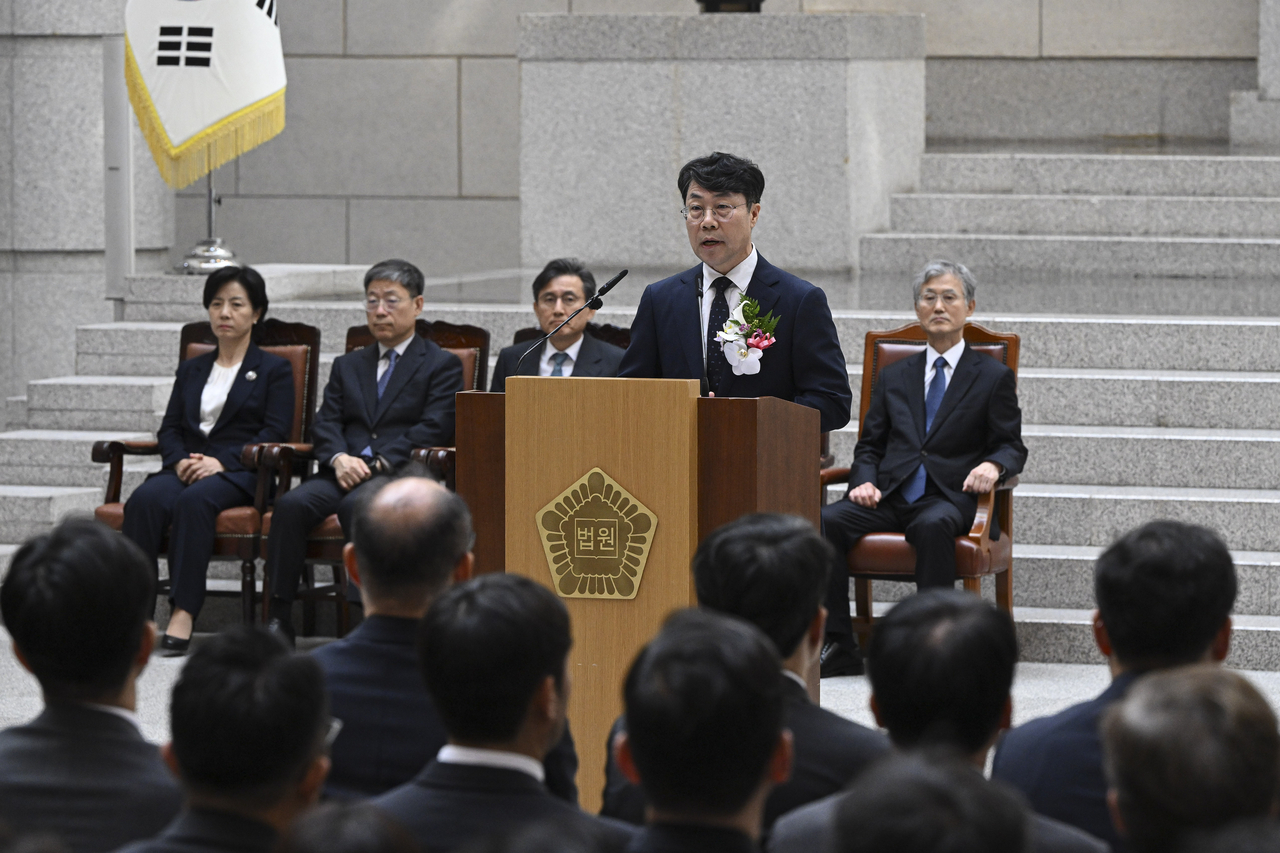
Newly sworn-in Supreme Court Justice Kim Sung-soo pledged Monday to uphold the principle of judicial independence, saying he would do his utmost so that "the people can feel assured that the judiciary is steadfastly fulfilling the weighty responsibilities entrusted to it by the sovereign people."
Speaking at his inauguration ceremony that afternoon at the Supreme Court in Seocho-gu, Seoul, Kim said he was taking "the first step toward fulfilling the weighty duties of a Supreme Court justice" and expressed gratitude to those who supported him. "It is thanks to the help and encouragement of many people that someone as lacking as myself has been able to stand in this position," he said.
Kim succeeds former Justice Lee Heung-gu, who retired Sept. 7, and is the first Supreme Court justice inaugurated since the launch of the Lee Jae Myung administration. President Lee approved Kim's appointment Friday, and Kim began his term the following day, Saturday.
"Along with deep gratitude, I feel a heavy sense of responsibility to fulfill the mission given to me," Kim said. "Just as I always have, I will faithfully carry out my duties by leaning on and supporting my colleagues, seniors and juniors as we work together as one team."
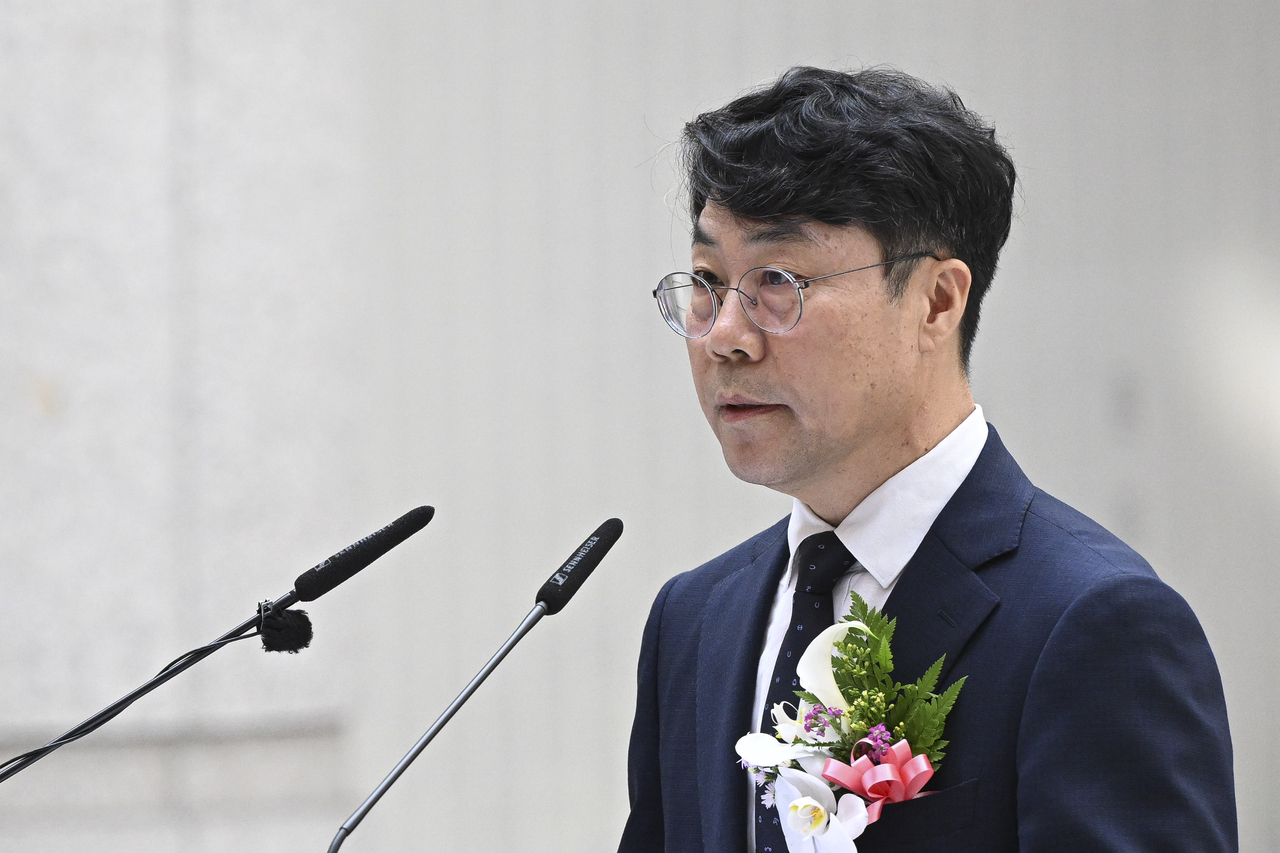
Kim said he was using the occasion to publicly declare commitments he had long held privately, hoping the declaration would give him the drive to follow through on them.
He said he would work to address trial delays, which he identified as a leading cause of public distrust in the judiciary. "Meaningful progress will require sustained internal efforts to improve court procedures, as well as human and material support from the National Assembly and the government," he said. "But before all that, as a member of the judiciary, I will devote myself wholeheartedly to resolving cases swiftly."
Kim also pledged to pay close attention to ensuring that citizens' right to a fair trial — and their procedural rights in particular — are fully protected. "The Supreme Court must focus on legal interpretation as prescribed by the Constitution and statutes, and the factual findings of lower courts must be duly respected," he said. "I will keep this clearly in mind as I carry out my judicial duties."
He added, however, that exceptions would be warranted in cases where procedural rights had not been properly observed and factual findings had strayed from the truth. "If parties come to believe their procedural rights were not guaranteed, they may also lose faith in the outcome of the trial," he said.
Kim said the court must also prepare for the legal challenges posed by rapid societal change — from the accelerating climate crisis to technological breakthroughs in AI and humanoid robots. He said the judiciary should proactively research and analyze the potential impact of such developments and emerging types of disputes, so that it can offer rational and consistent standards early on and minimize unproductive debate when conflicts arise. "This is not something a few people can accomplish alone," he said. "It will require the collective wisdom of all members of the judiciary."
yg@heraldcorp.com