From a five-minute floor speech to a joint agency meeting, talks on restoring the aging facility gain momentum
Seoul Metropolitan Government, Songpa-gu and national sports foundation gather to work out funding, scope and management
Talks have begun in earnest on reviving the long-dormant musical fountain at the Mongchon Moat in Olympic Park, Songpa-gu, Seoul. Discussions are moving beyond simple repairs to explore whether the fountain could be reimagined as a new attraction linking the moat's waterfront scenery with the park's broader tourism offerings.
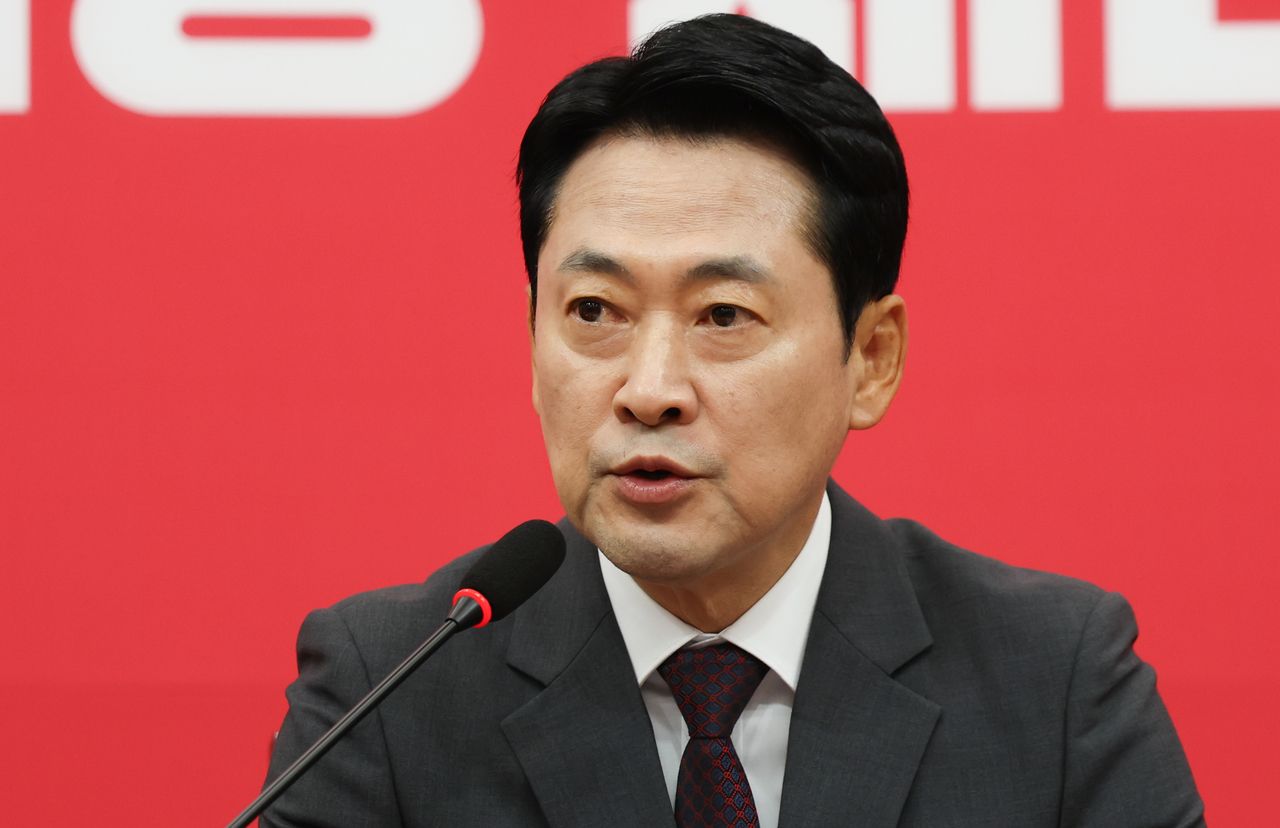
Driving the effort is Seoul Metropolitan Council member Kim Gwang-cheol of the People Power Party, who represents Songpa District 2. After raising the issue at a plenary session of the council last month, Kim brought together the Seoul Metropolitan Government, Songpa-gu and the Korea Sports Promotion Foundation to begin working through concrete solutions covering funding, installation and operations.
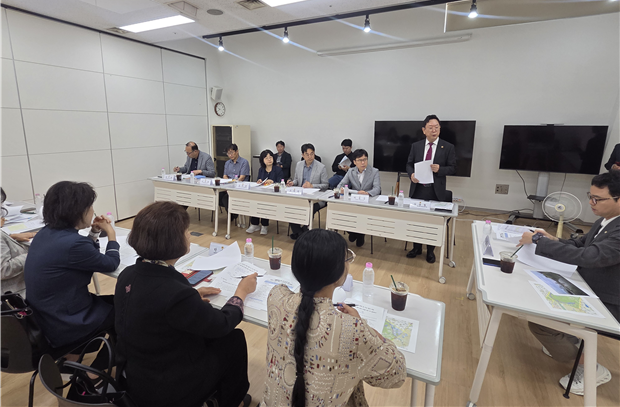
According to the Seoul Metropolitan Council, Kim convened a joint agency meeting Friday at the Hanseong Baekje Museum to discuss options for reinstalling the musical fountain at the Mongchon Moat.
The meeting came roughly three weeks after Kim used a five-minute open-floor speech at the 339th extraordinary session of the Seoul Metropolitan Council on Aug. 27 to raise the problem of the aging fountain.
At that session, Kim proposed that the fountain should not be viewed simply as a worn-out structure, but rather as a potential tourism asset capable of connecting Songpa-gu's attractions — Olympic Park, the Hanseong Baekje cultural heritage sites and Seokchon Lake — into a single visitor experience.
At Friday's meeting, the conversation moved from ideas to the practical questions of funding and administrative procedures needed to actually advance the project.
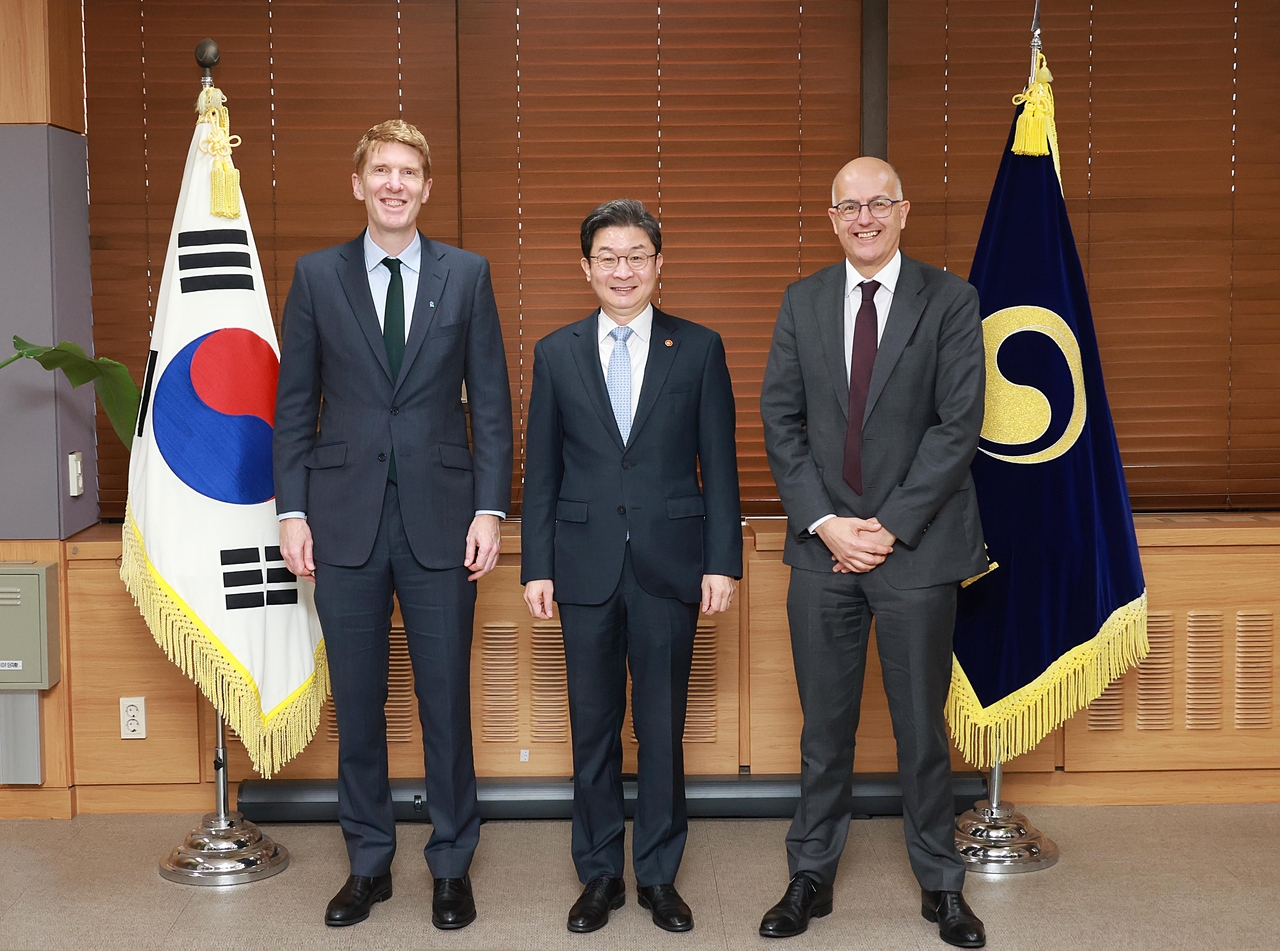
Attendees included National Assembly member Park Jeong-hun, Jeon Jeong, chair of the Songpa District Council's administrative and civil affairs committee, Park Sun-ok, vice chair of the fiscal and welfare committee, and Kim Eon-ju, a member of the urban construction committee.
From the Seoul Metropolitan Government, Ha Dong-jun, head of the tourism policy division, Jo Hyeon-beom, team leader of the waterfront policy team under the waterfront city division, Kim Deok-sun, team leader of the river ecology team under the flood control and safety division, and Ko Su-bong, head of the general affairs division at the Hanseong Baekje Museum, attended. Songpa-gu sent Kwon Sun-yeong, head of the cultural heritage division, and Kang Dae-yang, head of the flood control division. Kang Gi-won, head of the legacy projects division at the Korea Sports Promotion Foundation, also participated.
The breadth of representation — spanning tourism, waterfront management, rivers, cultural heritage and park administration — reflected the reality that reinstalling the fountain is not a problem any single agency can solve on its own.
More than a fountain: funding, ownership and management all tangled up
The meeting centered on three main questions: what to do with the existing aging structure, where to secure funding if a new fountain is to be built, and who would operate and maintain it once completed.
The first option examined was whether the project could be linked to the Seoul Metropolitan Government's Seoulmulbitnaru waterfront initiative.
The city has been developing a network of waterfront hubs designed to transform riverbanks and waterways into spaces where residents can rest and enjoy cultural activities. In 2026, it unified the branding of its existing waterfront hubs under the name Seoulmulbitnaru and has been expanding the network across the city.
The 19th Seoulmulbitnaru site, Nowon Uimaru, already features an indoor musical fountain and rest areas. The city has been developing Seoulmulbitnaru as a waterfront platform where people and culture converge around waterways.
Kim proposed examining whether that policy framework could be applied to the Mongchon Moat. If the site could qualify through the Seoulmulbitnaru candidate application process, he argued, it would allow the project to secure the large-scale funding needed for a major facility while also improving the surrounding waterfront area.
However, several hurdles remain before that approach could be applied.
Participants noted that under current application criteria, use of existing water features may be permitted, but new installations or repairs to aging water structures could fall outside the eligible scope. Further administrative review is needed to determine whether reinstalling the Mongchon Moat fountain fits within the program's stated purpose and boundaries.
Kim's office said the criteria should not be applied mechanically, noting that the Mongchon Moat serves not only Songpa-gu residents but Seoul citizens and tourists visiting Olympic Park — a particular character that warrants special consideration.
If the program application proves unworkable, the meeting agreed that alternative funding sources would need to be explored at the same time.
Dividing responsibilities among city, district and foundation
Alongside funding, the question of how to divide responsibilities among the agencies proved equally significant.
Songpa-gu said the project's scope and management structure would need to be clearly defined in light of existing urban planning designations and administrative arrangements. The Korea Sports Promotion Foundation acknowledged that while it has managed existing facilities, institutional and procedural constraints make it difficult to cover the large capital costs of a new fountain from its own funds.
The Seoul Metropolitan Government's tourism policy division said directly funding the construction of a musical fountain through its tourism budget would be difficult, but said there was room to explore linking the surrounding area to tourism special-zone programs once a facility was in place.
The emerging consensus was that reinstalling the Mongchon Moat fountain would be most feasible not as a solo project by any single agency, but as a collaborative effort in which the Seoul Metropolitan Government, Songpa-gu and the Korea Sports Promotion Foundation each take on defined roles covering funding, facility management and tourism programming.
National Assembly member Park also attended and said the agencies should move beyond explaining their individual mandates and institutional constraints, and instead focus on finding workable solutions from the perspective of residents and citizens, with follow-up consultations to continue.
No single conclusion was reached at the meeting, as questions remain over whether the Seoulmulbitnaru program can be applied, how construction costs would be shared, and who would install and operate the facility.
However, participants reached a shared understanding that leaving the aging fountain as it is is not an option, and that the agencies involved must work together to find a path forward.
A notable aspect of the meeting was how quickly an issue raised on the council floor translated into working-level consultations among the relevant agencies.
Since his floor speech last month, Kim has been in contact with the Seoul Metropolitan Government, Songpa-gu and the Korea Sports Promotion Foundation to bring them to the table. The plan going forward is to reassess whether the Seoulmulbitnaru application route is viable, and if not, to identify a separate funding mechanism.
Further consultations will also address the demolition of the existing fountain structure, the question of who will own and manage any new facility, and how annual maintenance costs will be shared.
If the project moves forward, the fountain's role could look quite different from what it once was. Rather than simply restoring a decorative water feature, discussions could expand to envision a waterfront cultural space combining nighttime lighting, performances and tourism programming — a place where people come and linger.
The Seoul Metropolitan Government is already pursuing a broader policy through Seoulmulbitnaru to transform existing riverside areas from walking-focused corridors into multifunctional waterfront hubs offering rest, culture and extended stays. How the Mongchon Moat fits into that wider shift in waterfront planning is expected to be the central question in the discussions ahead.
"Because the Mongchon Moat is a space used by so many Songpa-gu residents and Seoul citizens, it is difficult to solve this problem by simply asking which agency is responsible," Kim said. "I will continue working with the Seoul Metropolitan Government, Songpa-gu, the Korea Sports Promotion Foundation and other relevant agencies to find a realistic way to make this a space that people will want to come back to and spend time in."
7toy7@heraldcorp.com