20 billion won dedicated fund, 10% TIPS allocation set for this year
Impact funds and guarantees to expand capital supply
Public institution preferential purchasing to open new markets
Social solidarity economy firms more than doubled in 8 years, from 15,000 to 35,000
The government plans to establish a dedicated fund for social solidarity economy enterprises and strengthen stage-by-stage support through programs such as the Early Startup Package and TIPS. It will also help expand market access through preferential purchasing by public institutions and cooperation with large conglomerates.
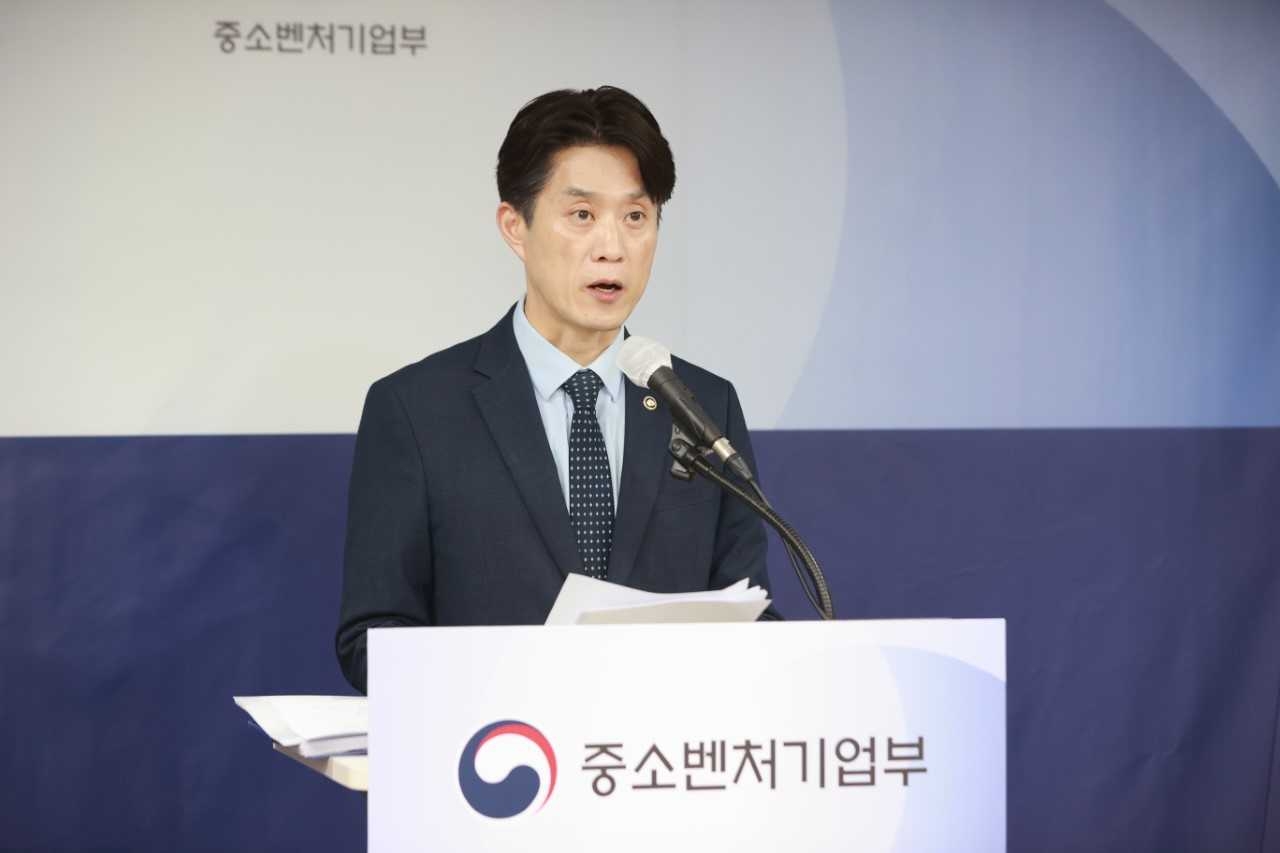
The Ministry of SMEs and Startups said Tuesday it held a "Social Solidarity Economy Growth Forum" at the Glad Hotel in Yeouido, Seoul, bringing together representatives from the National Assembly, government and the private sector to discuss measures to support the growth of social solidarity economy enterprises.
Social solidarity economy enterprises are companies that conduct economic activities based on cooperation and solidarity to pursue the common interests of community members and realize social values. The forum was the first event focused on the growth of such enterprises since the enactment of the Framework Act on Social Solidarity Economy on Sept. 15 and the announcement of a comprehensive development plan for the social solidarity economy last June.
The government said it will deploy policy tools held by the Ministry of SMEs and Startups in line with the growth stages of social solidarity economy enterprises. It will support tailored scale-up through programs including the Early Startup Package and TIPS, and maintain a steady supply of capital through impact funds and guarantees. A dedicated fund will also be established to help these enterprises secure financing on a stable basis.
Specifically, the government will create a 20 billion won ($14.5 million) dedicated fund for social solidarity economy enterprises within the Small Merchants and Market Promotion Fund this year, with plans to supply another 20 billion won next year. It will also pursue the creation of a 36.7 billion won impact fund through a 10 billion won contribution to the Fund of Funds this year, and will supply more than 150 billion won in impact guarantees annually from 2026 through 2030. Special guarantee support for the social solidarity economy through regional credit guarantee foundations will reach 67.5 billion won this year.
The government will also expand cooperation with global companies and major domestic conglomerates. It plans to hold networking events bringing together domestic and international social solidarity economy experts and enterprises in conjunction with COMEUP, a global startup festival. Cooperation between large companies and social solidarity economy enterprises will also be pursued through joint projects under the mutual growth cooperation fund.
The government will establish market access and a growth foundation through legislation and institutional reform. It will operate a preferential purchasing regime for public institutions created under the newly enacted Framework Act on Social Solidarity Economy, and will support the growth of consumer cooperatives, which will come under the ministry's jurisdiction in November.
Village enterprises and self-sufficiency enterprises will be included within the definition of small and medium-sized enterprises. The government will also push to enact a Social Venture Act to clarify the concept of social ventures and the legal basis for supporting them.
The government will systematize social solidarity economy policy at the pan-government level. Building on the enactment of the Framework Act on Social Solidarity Economy, it will establish a pan-government implementation framework, including a presidential committee, and consolidate the support infrastructure covering social solidarity finance, public market access and statistics. Five-year master plans and annual implementation plans will also be prepared.
The number of social solidarity economy enterprises more than doubled, from about 15,000 in 2016 to about 35,000 in 2024. The share of enterprises that recorded average annual growth of 5 percent or more in either sales or employment over the past three years stood at 53.4 percent, comparable to the 55 percent recorded by general small and medium-sized enterprises.
"Social solidarity economy enterprises are an important pillar of our economy, having addressed a wide range of social problems alongside their own growth," said Noh Yong-seok, first vice minister of the Ministry of SMEs and Startups. "We will work to support the growth of these enterprises so that social values can spread alongside them."
boo@heraldcorp.com