Finance and industry committees receive closed-door briefing
Cho Seung-rae: negotiators from both parties, government to coordinate follow-up steps
Kim Jung-kwan: necessary follow-up procedures to proceed without delay
The construction of a gas-fired combined-cycle power plant in Encinal, Texas, has been confirmed as South Korea's first project under its US investment commitment. Negotiations are ongoing over a 5 to 10 percent equity stake in US nuclear company Westinghouse, and the government told the National Assembly it would not invest beyond an annual cap of $20 billion in US-bound investment.
The National Assembly's Finance and Economy Planning Committee and the Trade, Industry and Small and Medium Ventures Committee held plenary sessions Tuesday morning to receive briefings from the Ministry of Economy and Finance and the Ministry of Trade, Industry and Energy on the progress and details of the investment negotiations. The briefings were part of a mandatory prior-reporting procedure under the Special Act on Korea-US Strategic Investment. The two countries agreed last year during trade negotiations to commit $350 billion in investment to the United States, of which $200 billion is designated as strategic investment.
People Power Party lawmaker Choi Su-jin, who spoke to reporters at the scene, said the government reported the Westinghouse equity acquisition rate "not as a fixed figure but as a range of 5 to 10 percent." The government appears to be narrowing that range with the US side, taking into account factors including the resolution of intellectual property disputes and cooperation on global nuclear power exports.
The government also reported that "it will not invest if US-bound investment exceeds the annual cap of $20 billion," Choi said. Major projects including nuclear power plants and gas fields — apart from the Texas gas-fired combined-cycle power plant, for which terms with the US side have been finalized — are still being negotiated with the United States over specific conditions.
Deputy Prime Minister and Minister of Economy and Finance Lee Hyung-il, who led the briefing, said in his opening remarks just before the session went into closed session that he felt "a heavy sense of responsibility" regarding the US investment projects and pledged to "do his utmost in both the negotiations and the briefing."
People Power Party lawmaker Bae Jun-young, who leads his party's side on the Finance and Economy Planning Committee, said before the session began that "it would be unacceptable for the two governments to treat the implementation of these projects as a foregone conclusion following Tuesday's National Assembly briefing," and asked that it be reaffirmed that "this briefing is merely a precondition for the project plans to be reported going forward."
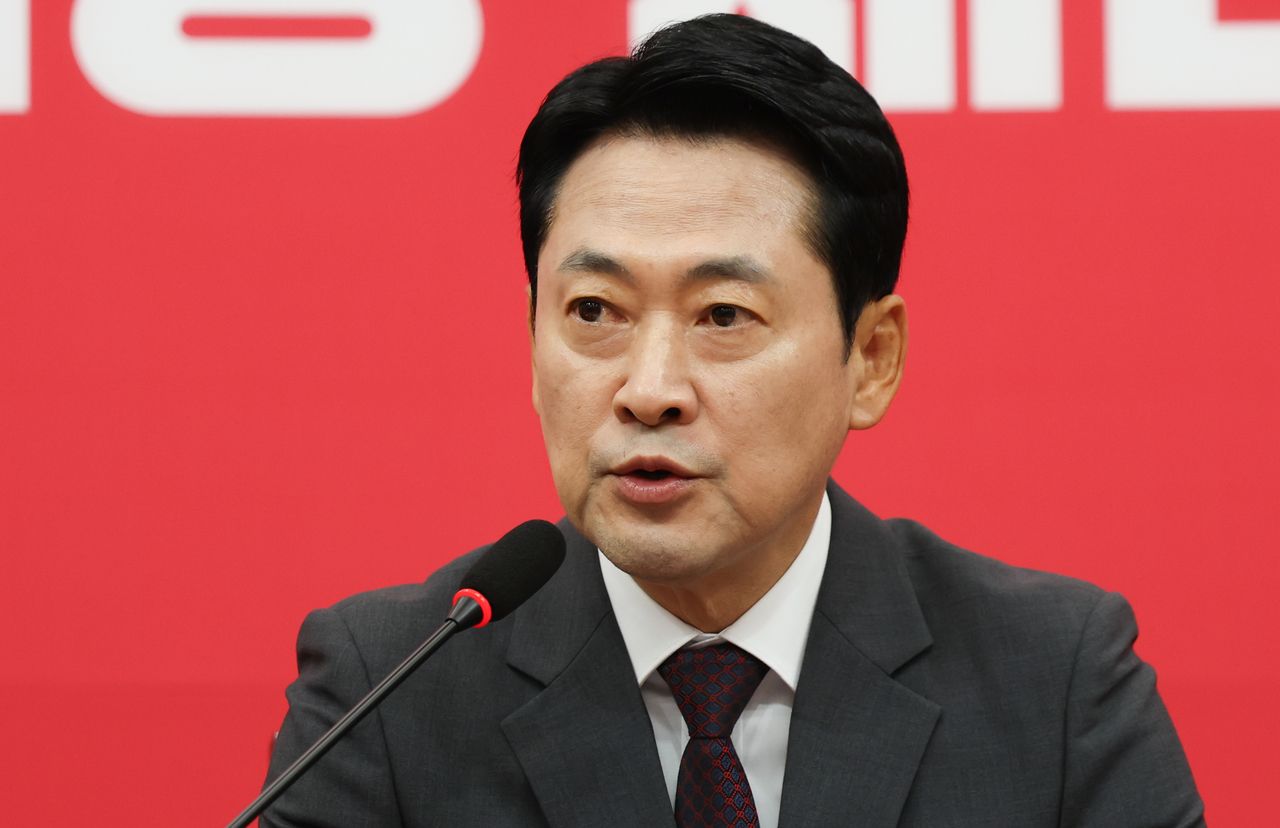
Democratic Party of Korea lawmaker Cho Seung-rae, who chairs the Finance and Economy Planning Committee, said in response that US investment "is a national undertaking requiring massive financial resources and is expected to have a significant impact on our economy, industry and fiscal affairs," adding that "the National Assembly needs to thoroughly examine the necessity and feasibility of the projects, financing and risk management plans, and their impact on our economy and industry." Cho said he did not want the briefing "to become a perfunctory or formalistic procedure," and that he would work with negotiators from both parties and the government on follow-up measures after the briefing.
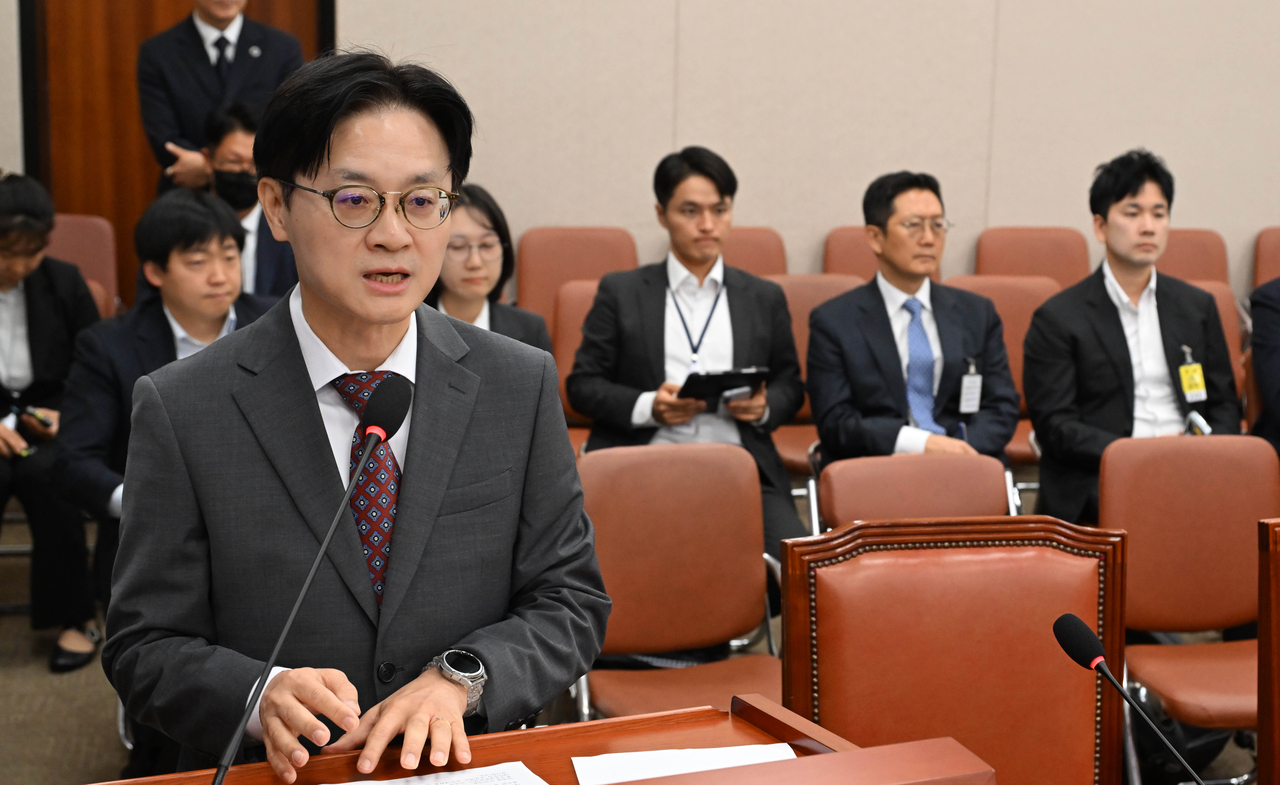
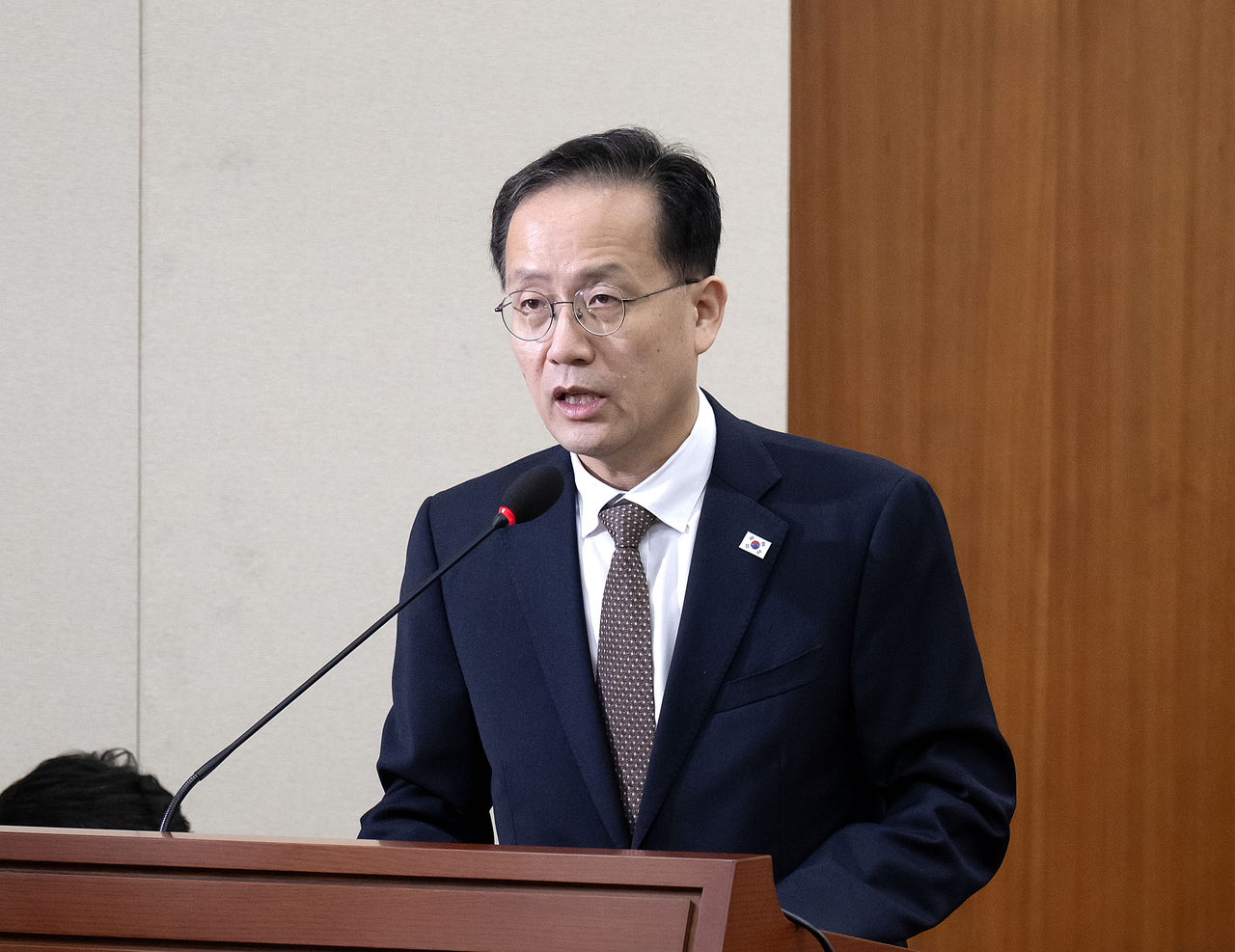
At the same time, Minister of Trade, Industry and Energy Kim Jung-kwan and Trade Negotiation Headquarters chief Park Jeong-seong appeared before the Trade, Industry and Small and Medium Ventures Committee to deliver their briefing.
In his opening remarks, Kim said he would report on one project the government had decided to pursue — having gone through the project management committee chaired by the trade minister and the operations committee chaired by the finance minister on Tuesday — and would also present plans for two additional projects "that have not yet been formally decided upon but reflect the interests of both countries."
Kim said the government "has actively identified and discussed projects that serve our national interests, and has carefully examined projects proposed by the US side based on the consistent principle of commercial rationality." He added that it was necessary to approach US investment "in a balanced manner from the perspective of national interest — going beyond the simple deployment and recovery of capital to create opportunities that expand Korean companies' access to the US market and further serve as a springboard for entering global markets."
Kim said the government would "listen carefully to the opinions of lawmakers and faithfully reflect them in the future project implementation and execution process," and pledged that the government would "put national interests first, scrutinize US investment projects carefully, and push forward with the necessary follow-up procedures without delay."
Kim also requested that the session be closed to the public, saying Tuesday's briefing "contains sensitive information including matters agreed upon between Korea and the United States and specific investment terms for the projects," and that disclosure "could affect significant national interests including national security and diplomatic relations, and could also harm companies' trade secrets and legitimate business interests."
The briefing was attended only by government officials and lawmakers serving on the respective committees. Committee professional staff and legislative aides were barred from attending for security reasons, given that negotiations with the US side are still ongoing.
bigroot@heraldcorp.com
thanks@heraldcorp.com
raining@heraldcorp.com