Interview with Lee Jae-wook, director of Seoul National University's AI Institute
Discussing joint AI and robotics research projects with Nvidia
Diagnosing Korea at a crossroads between 'component nation' and 'full-stack nation'
Calling on government, industry and academia to strengthen AI competitiveness
GPUs as a talent-attraction tool; computing capacity must expand
The right 'colleagues' as the ultimate weapon in the AI talent war
Keynote address at Herald Business Forum 2026 on Tuesday
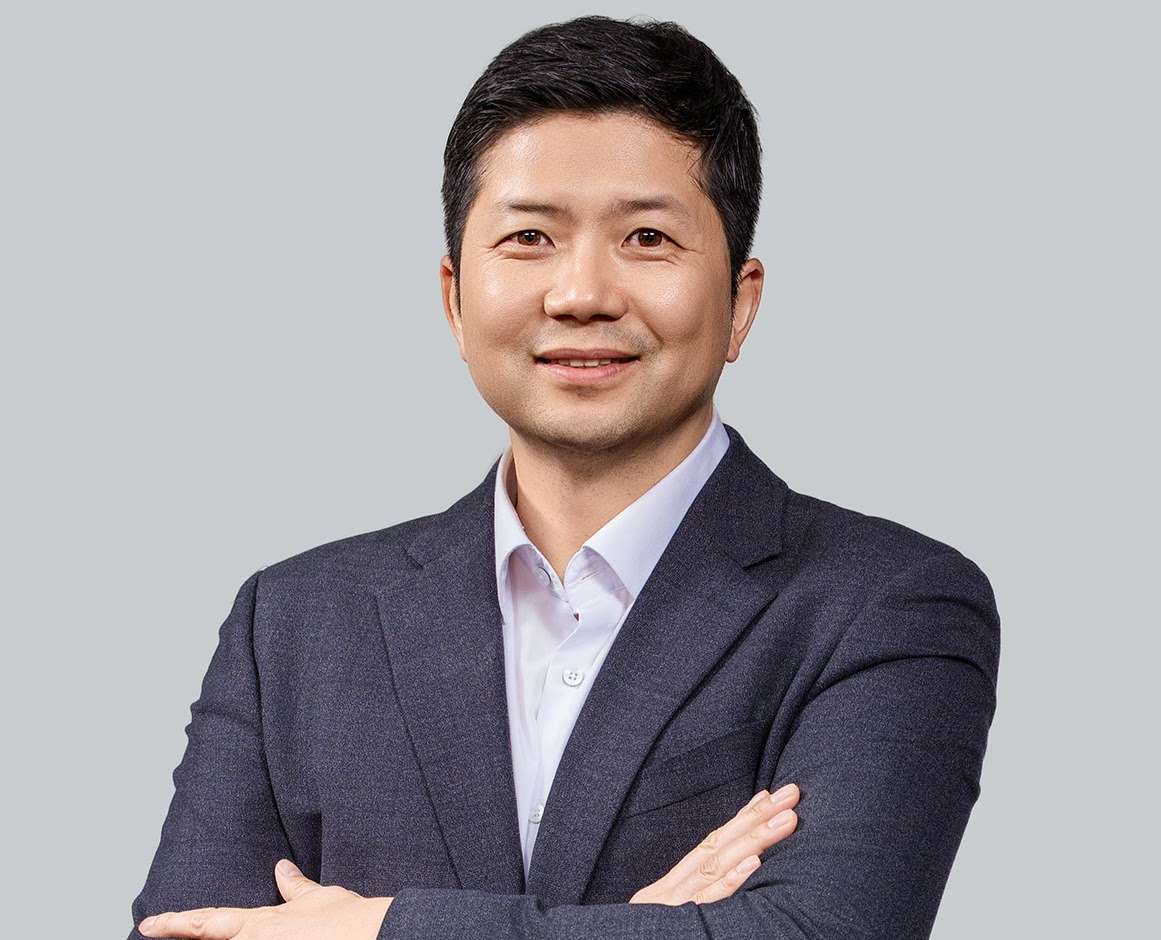
"We plan to open a call for joint physical AI research projects with Nvidia soon and begin the matching process."
Lee Jae-wook, director of Seoul National University's AI Institute, said Wednesday that researchers from both sides had met directly to flesh out joint projects.
Cooperation between the two institutions accelerated after Nvidia CEO Jensen Huang visited Seoul National University in June, with the partnership focusing on joint research, talent development and support for building a sovereign AI testbed at the national level.
Lee said the collaboration aims to expand mutual visits and personnel exchanges among professors, students and Nvidia researchers. "The goal is for Seoul National University to become a hub in the global AI and robotics research ecosystem, with the ripple effects spreading across domestic industry," he said.
Lee assessed that Korea is one of the few countries with meaningful players at every layer of the AI industry's full stack — energy, chips, infrastructure, models and applications.
However, he said the links binding those layers into a single system remain weak. "There is a particular shortage of software talent that bridges chips and models, and of AI professionals who understand real-world conditions," he said.
Diagnosing Korea as standing at a crossroads — whether to remain a component nation or advance to a full-stack nation — Lee outlined the roles he believes government, industry and academia must each play to strengthen the country's AI competitiveness.
On government, he said the priority is clearing bottlenecks, citing power supply and permitting for data centers, regulations on the use of industrial data, and approval processes for testing robots and autonomous systems as the most pressing issues.
On industry, he urged companies to build a "Korean-style full stack" by uniting the strongest players in each sector. "Major corporations, as well as the public sector, need to become the first customers of domestic AI startups," he said.
He added that academia must research the frontiers AI has yet to reach while also cultivating talent capable of connecting the layers of the stack.
With AI talent development and recruitment emerging as the defining challenge across academia and industry, Lee said it is impossible to train or attract AI researchers without adequate computing resources.
"AI research cannot run on ideas alone. Frontier researchers do not grow at universities without GPUs," he said, calling for an expansion of national computing resources and testbeds accessible to universities and research institutions.
He also identified active exchange between corporate researchers and students as essential to developing AI talent. "The wall between industry and academia must come down," he said, adding that student internships, industry projects, faculty research semesters, dual appointments and faculty-led startups all need to become far more flexible.
Lee advised companies that want to attract top AI talent to start by expanding their computing resources. "Exceptional people go where there are computing resources and data capable of solving world-changing problems. Saying 'GPUs are a talent-attraction tool' is no exaggeration," he said.
He added that the best way to bring in top talent is to already have people in the organization that person wants to work with, stressing the importance of colleagues.
"If AI raises the intellectual baseline across the board, the human trust and personal appeal that make someone want to work alongside you will matter even more," Lee said. "The ultimate weapon in the talent war is that kind of culture."
He expressed concern about the growing corporate preference for experienced hires. "Organizations that only recruit experienced workers on a rolling basis may find it convenient in the short term, but in five years they will have a hollow middle," he warned.
"If young people lose the pathways to gain hands-on experience, the bottom of the talent pipeline runs dry," he added. "Organizations that deliberately design reskilling opportunities for junior staff are the ones that will secure talent over the long run."
He also called for actively creating an environment that can attract skilled talent from abroad to offset the outflow of top domestic researchers.
"The net inflow of talented people must exceed the net outflow. This is not just a matter of education — it is about visas, settlement conditions and building cities where young researchers want to live," Lee said.
Lee is set to deliver a keynote address at the Herald Business Forum 2026, to be held at the Shilla Hotel in Jung-gu, Seoul, on Tuesday, speaking on the theme "Korea's AI: Present, Future and Opportunity."
joze@heraldcorp.com