Police fail to meet one-month processing target set by investigative review panel
Supplementary probe needed before decision on re-arrest warrant or indictment referral
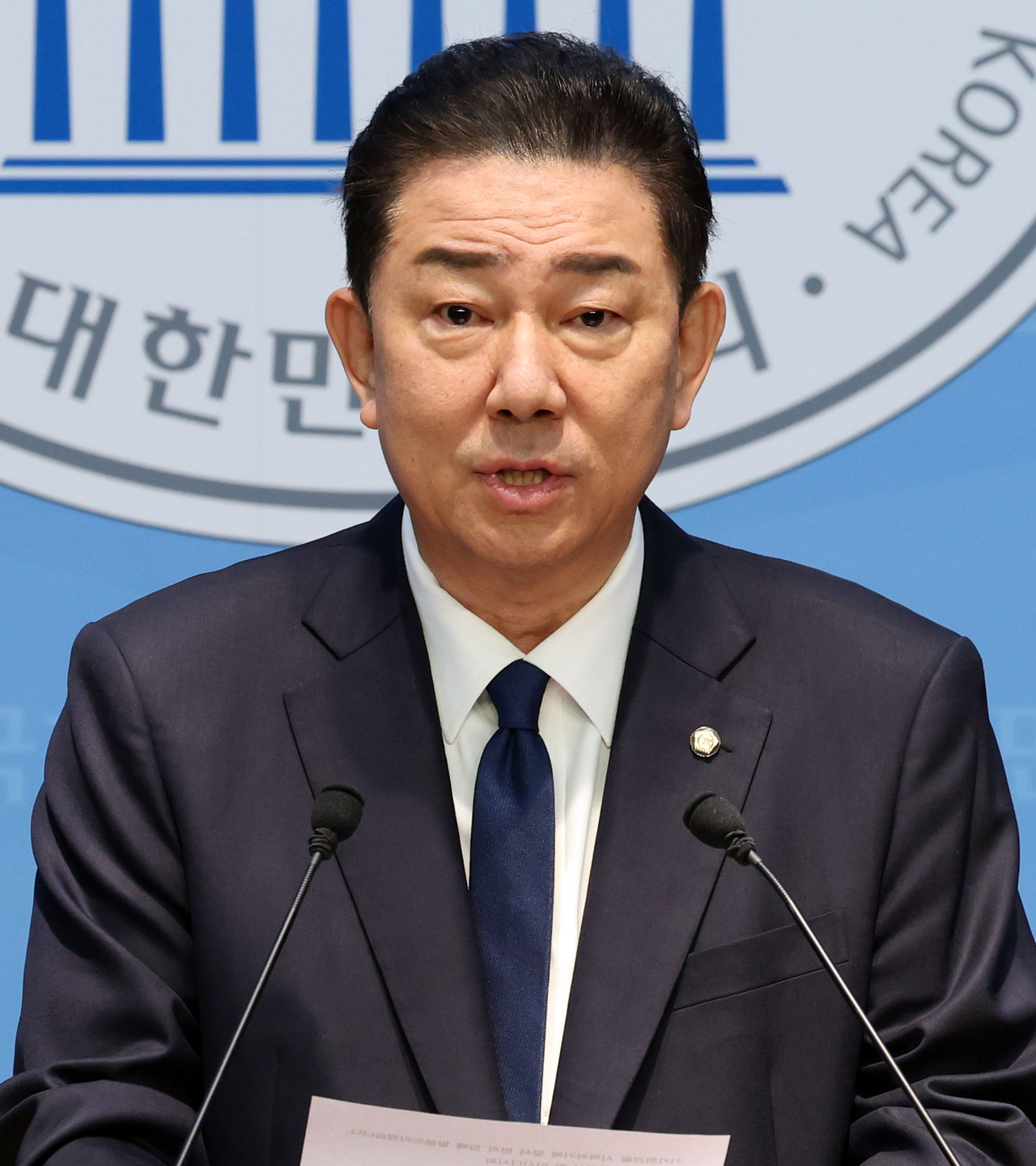
Police, who have spent nearly a year investigating independent lawmaker Kim Byung-kee — formerly the Democratic Party of Korea's floor leader — on a range of misconduct allegations, said Monday they will extend the investigation further after prosecutors demanded supplementary work.
Investigators had long argued they needed extra time to build a more complete case and minimize the risk of prosecutors sending it back. But the extension means police will also miss the one-month processing deadline recommended last month by an investigative review panel.
Critics say police, caught between the competing demands of speed and thoroughness, have ultimately failed on both counts.
Hong Seok-gi, head of the Korean National Police Agency's National Investigation Headquarters, addressed the Kim case at a regular press briefing Monday morning at the agency's offices in Seodaemun-gu, Seoul. "We thought we had prepared quite thoroughly, but I came to realize that the standards of the institution that files charges — the prosecutors — are very high," he said.
Hong added that he had been briefed the deadline could not be met. "We need to summon additional people for questioning and gather more materials, so I was told we will have to go beyond the original one-month period ending Sept. 30," he said. He indicated police would ask the investigative review panel Monday to extend the processing deadline.
On whether police would re-apply for an arrest warrant or refer the case without detention, Hong said the decision would depend on the outcome of the supplementary probe. "There must be a reason the prosecutor did not request a warrant. We will decide after the supplementary investigation looks into the level of substantiation and the risk of flight," he said.
Hong had addressed similar criticism at a press briefing on Aug. 3, saying police were examining even minor details to avoid having prosecutors demand additional work after the case was handed over. "If we wrap it up quickly and send it over, prosecutors can demand a supplementary investigation at their end — we are looking at every small detail to prevent that from happening," he said at the time.
He also noted then that police had faced widespread criticism for slow investigations since the 2021 redistribution of investigative authority between police and prosecutors. "The more important the case and the more prominent the suspect, the more our capabilities are put to the test — so the leadership's position is to raise rigor and completeness," he said.
Despite that emphasis on completeness, police ultimately could not avoid a supplementary investigation demand from prosecutors.
Police applied for an arrest warrant against Kim on Sept. 7 on charges including bribery and obstruction of business.
At that point, police selected only five of the 13 misconduct allegations they believed they could substantiate, and listed those five as the criminal facts in the warrant application.
The five charges were: turning a blind eye to lawmaker Kang Sun-woo's alleged payment of 100 million won ($74,000) in candidate-nomination money (obstruction of business); misappropriating Dongjak-gu council operating funds via a corporate card for personal use (breach of fiduciary duty); providing employment at Jinwoo Sanjeon and facilitating a transfer to Soongsil University for Kim's second son (aggravated bribery under the Act on the Aggravated Punishment of Specific Crimes); receiving hotel hospitality from Korean Air (bribery); and soliciting favorable treatment for Shilla Leisure during a national audit (bribery).
Four days later, on Sept. 11, the Seoul Central District Prosecutors Office demanded a supplementary investigation, citing insufficient substantiation of the need for detention and the need to reinforce evidence on some of the charges.
Even the charges police had carefully selected failed to clear the prosecutors' bar — underscoring the gap between the investigating agency and the body responsible for maintaining the prosecution.
kido@heraldcorp.com