Joint Chiefs: 'All options on the table' for proportionate response
Cheong Wa Dae: Field probe unrelated to president's UN speech
Unification Ministry: Will consult other agencies after final results
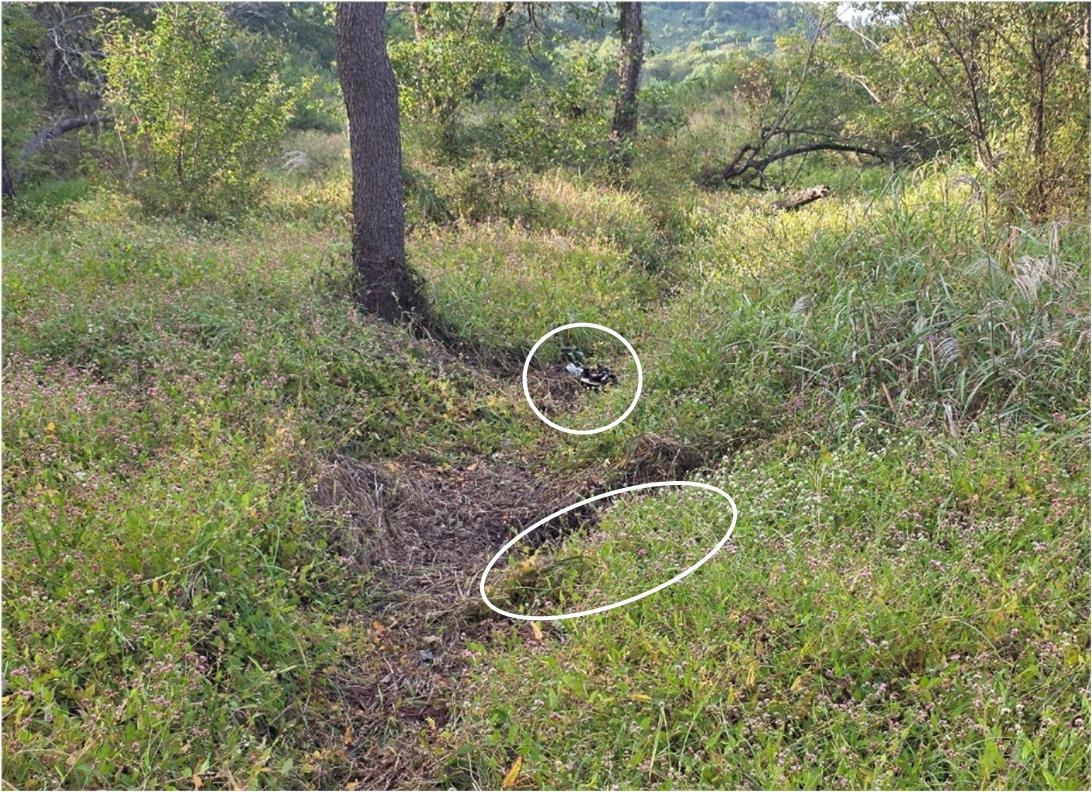
Interim military findings pointing to a North Korean mine as the likely cause of an explosion in the western demilitarized zone are expected to send ripples through both domestic politics and the broader situation on the Korean Peninsula. Military authorities said they would take "appropriate and proportionate measures" if the mine is confirmed to have been deliberately planted by North Korean troops. President Lee Jae Myung told a Cabinet meeting Tuesday that the truth must be transparently established through a swift and thorough investigation, and that necessary steps would be taken based on the findings.
If the final investigation confirms North Korean involvement, attention is turning to whether the military will resume loudspeaker broadcasts directed at the North.
Military sources said the Ministry of National Defense and the Joint Chiefs of Staff have not ruled out resuming loudspeaker broadcasts as one possible response, depending on the final investigation results. A government-level statement or a formal demand for an apology from Pyongyang is also under consideration. Gen. Yang Jin-hyeok, the Joint Chiefs' operations director, said Monday that "all military and policy options will be placed on the table" when asked about the direction of any future response.
A key variable, however, is that President Lee and his administration have been investing heavily in improving inter-Korean relations, with North America dialogue also in mind. The Lee Jae Myung administration halted loudspeaker broadcasts toward the North in June last year and removed fixed front-line loudspeaker installations in August. Two days after the mine explosion, Lee delivered a keynote address at the UN General Assembly early Wednesday (Korea time), outlining a blueprint for peaceful coexistence on the Korean Peninsula and pledging to "respect the North" and "do everything in our power to open and sustain the path to dialogue."
Regarding the incident, Cheong Wa Dae said the military's on-site investigation into the mine explosion has no connection whatsoever to the president's UN speech.
The Ministry of Unification is also watching the final outcome closely. When asked whether loudspeaker broadcasts might resume, a ministry official gave a measured response, saying the ministry would "review the direction of our response in consultation with other agencies after monitoring the final investigation results."
The ministry said Unification Minister Jeong Dong-young's European trip, which runs through Oct. 5, had been planned and prepared long in advance following an invitation received well before the incident, and that North Korea's involvement had not yet been established at the time of his departure.
Military authorities are leaning toward a North Korean mine as the cause, but the prevailing view is that it is difficult to characterize the planting as a deliberate act targeting South Korean troops — unlike the wooden-box mine provocation of 2015.
According to the Joint Chiefs, forensic analysis by the National Forensic Service detected TNT compounds and brownish foreign matter, and the absence of metal fragments led investigators to conclude the mine was not of South Korean origin. The blast site is located roughly 10 meters south of the MDL; two mines detonated and one more is believed to remain in the area.
The central question is when the mines were planted. Military authorities identified terrain changes in satellite imagery from around last September at a location roughly 10 meters from the blast site, and estimated that North Korean troops carried out work there between August and November of last year. However, it remains unclear whether the blast site falls within that area of terrain change. A Joint Chiefs official said the site could be part of the same planting operation identified at the time, or it could be a separate mine planted at an earlier date.
The identity of the mine has also not been confirmed. The military initially assessed it as a "resin anti-personnel mine" — structurally identical to the wooden-box mine but made of plastic — yet witness accounts from personnel at the scene varied, with descriptions ranging from red to brown to a wooden-box type. The physical mine has yet to be recovered.
The military has also revised some of its earlier statements. On Wednesday it described the distance between the blast site and the suspected planting location as "tens of meters," but has since corrected that figure to roughly 10 meters, attributing the discrepancy to communication interference and GPS error.
Questions over the delayed on-site investigation persist. The military moved up its timeline and launched a field probe Sunday — six days after the incident — but critics note this was significantly slower than the 2015 case, when investigators entered the site within two days.
youknow@heraldcorp.com
rimsclub@heraldcorp.com