Ministry of Climate, Environment and Energy presents grid innovation plan at Cabinet meeting
Flexible connections and ESS to expand grid capacity
2.6GW of additional solar to connect in Honam region alone
'Squatting' connection rights to be revoked to maximize efficiency
South Korea's congested Honam power grid, which has blocked new renewable energy connections for more than two years, will reopen. Rather than building new transmission and distribution lines, the government plans to maximize use of the existing grid through flexible connections and energy storage systems (ESS), while also revoking connection rights held by projects that have stalled or been delayed for extended periods. The move aims to unclog bottlenecks in the power system so that greater volumes of renewable energy can be absorbed and used to meet large-scale industrial demand.
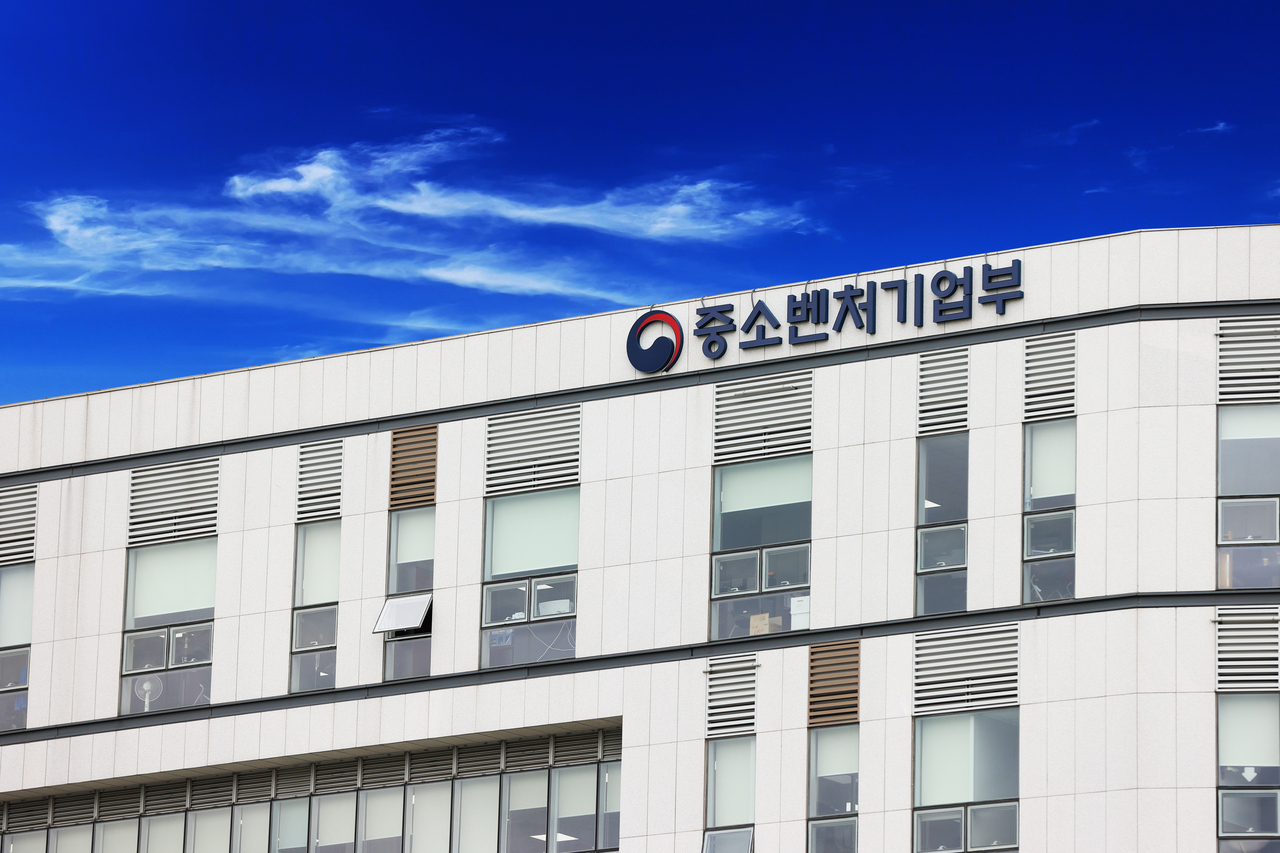
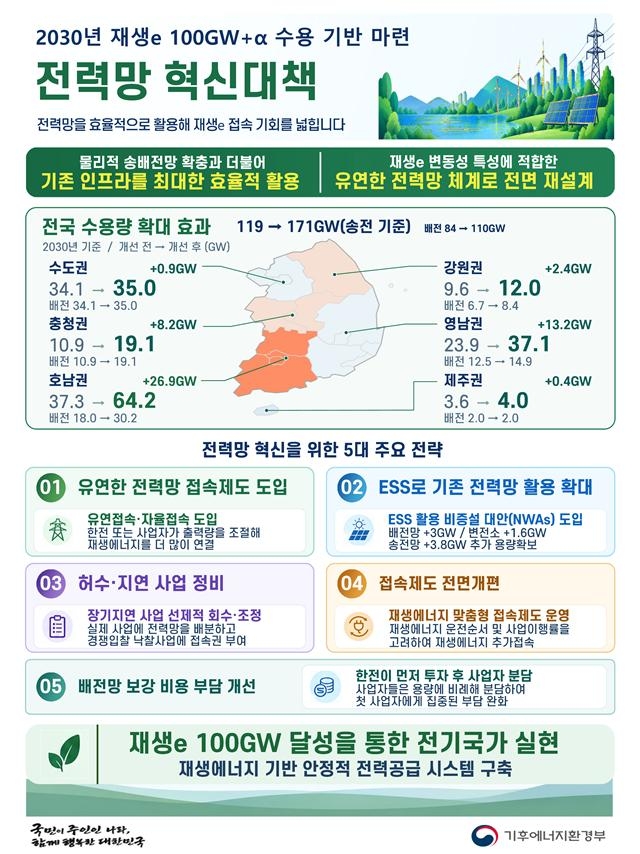
The Ministry of Climate, Environment and Energy said Tuesday it presented the "Grid Innovation Plan" at a Cabinet meeting. Through the measures, the government aims to build a grid system capable of accommodating more than 100GW of renewable energy by 2030.
As a first step, the designation of 164 grid management substations in the Honam region — 18 in Gwangju, 85 in South Jeolla Province and 61 in North Jeolla Province — that have restricted new renewable energy connections since September 2024 will be lifted Thursday. Grid management substations are facilities where new generator connections are restricted because the grid has reached saturation. With both transmission and distribution networks in Honam fully saturated, new renewable energy projects had in effect been shut out, leaving developers unable to connect until 2034 at the earliest.
Parts of the Chungcheong region are also expected to open to new connections by the end of this year. For the East Coast region, the government plans to lift the grid management substation designation in the first half of next year, when the first phase of the Donghae–Singapyeong HVDC line is completed.
The government has decided to increase renewable energy capacity by raising the utilization rate of the existing grid rather than building new infrastructure.
Currently, connection eligibility is assessed based on a plant's maximum annual output, or rated capacity. In practice, peak output occurs for only a few hours each year, yet using that figure as the benchmark has made it difficult to connect new generators even when the grid has spare capacity most of the time.
In response, the government will formally introduce "flexible connections," which allow generators to connect on the condition that they temporarily reduce output during peak congestion periods. The solar connection limit per distribution line will rise from 14MW to 16MW, and the limit per substation will increase from 50MW to 60MW.
The government estimates these changes will allow an additional 2.6GW of solar capacity to connect in the Honam region alone, without any new grid construction.
A "self-managed connection" scheme — under which operators build facilities two to three times larger than the grid connection limit and store surplus generation in on-site batteries before releasing it within the permitted threshold — will also be piloted before being rolled out from next year.
The government will also pursue the installation of large-scale ESS on the grid as an alternative to expanding transmission and distribution networks. The system would store electricity generated during peak solar hours in the daytime and release it at night.
By 2030, the government plans to connect an additional 3GW of solar through distribution-grid ESS, and to add a further 1.6GW by installing ESS at 41 saturated substations in the Honam region.
Transmission line capacity kept in reserve as an emergency buffer — similar to a highway shoulder — will also be put to regular use for power transport, backed by fault-response ESS.
Projects that have secured grid connection rights but made no progress — a practice known as "squatting" — will be cleared out. The government has already reviewed phantom projects and reclaimed connection rights totaling about 9GW. Going forward, connection timelines for long-delayed projects, not just phantom ones, will be adjusted to align with actual development schedules.
Through this process, the government expects to reclaim more than 10GW of connection rights from delayed projects — including offshore wind — in the Honam region alone by 2030. For projects entering the queue from 2031 onward, grid capacity will be allocated based on the actual renewable energy project completion rate of 67.2 percent.
The criteria for reviewing connection applications will also change. In actual grid operations, renewable energy is dispatched before coal and LNG, yet the review process has applied the reverse order. Aligning the criteria with real-world operations is expected to open up an additional 20GW of capacity nationwide, including in the Yeongnam and Gangwon Province regions.
The first-come, first-served system for allocating connection rights will also be reformed. From January 2027, connection rights will be granted to projects that win competitive bids under a revamped Renewable Portfolio Standard system.
The cost of reinforcing distribution networks will shift from a model in which the first connecting operator bears the full expense to one in which Korea Electric Power Corporation makes the initial investment and subsequent operators share the cost in proportion to their installed capacity.
Under the plan, the grid's renewable energy capacity by 2030 is projected to expand by 52GW on the transmission side — from 119GW to 171GW — and by 26GW on the distribution side, from 84GW to 110GW. In the Honam region specifically, transmission capacity is set to grow from 37GW to 64GW, and distribution capacity from 18GW to 30GW.
The additional capacity secured through these measures will be allocated first to projects already in the queue. Early connection applications from existing applicants will be accepted from Thursday, with connection support to follow. New applicants will be accommodated from January next year under the revised connection regime. Details on available capacity by substation and year, grid reinforcement plans and application procedures will be available through Korea Electric Power Corporation's "Hanjeon-on" portal.
"This plan is not about waiting for new grid infrastructure to be built — it is about using the grid we already have as efficiently as possible," Climate, Environment and Energy Minister Kim Sung-hwan said. "Within one year of the ministry's launch, we have lifted the renewable energy grid constraints that took effect in September 2024 and reopened new connections for renewable energy in the Honam region."
oskymoon@heraldcorp.com