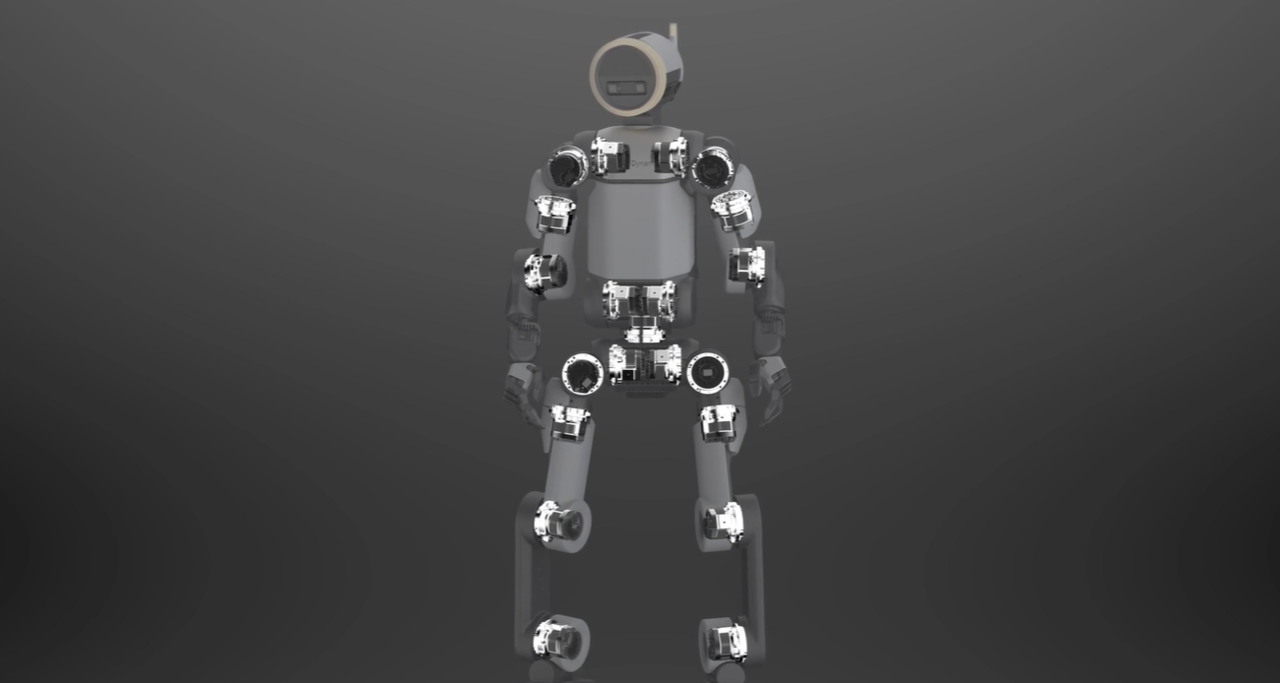
Dongtoo Tech, LimX Dynamics jointly develop robot
All components — from AI chips to OS — built on Chinese technology
'A viable alternative to foreign solutions,' state media says
Move accelerates amid US tech restrictions on China
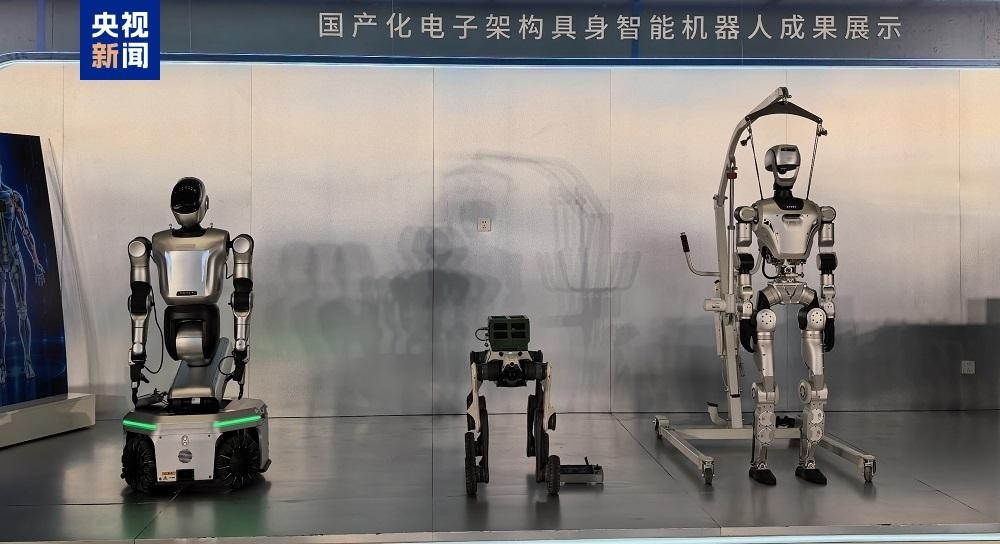
China has unveiled what it describes as the first physical AI robot built entirely on domestically developed technology — from AI computing chips and operating systems to networking and software. The move signals China's accelerating push to secure its own core technologies and supply chains in the humanoid robot and physical AI sector, which Beijing views as a next-generation growth industry alongside semiconductors and AI, even as US technology restrictions continue to mount.
According to China Central Television, Dongtoo Tech unveiled the robot Monday at a launch event in Yichang, Hubei Province, developed jointly with robotics firm LimX Dynamics. CCTV described it as the first physical AI robot to build its entire electronic architecture — including the operating system, networking, software and AI computing chips — on Chinese technology.
Physical AI refers to technology in which AI moves beyond the digital realm and is embedded in physical devices such as robots, enabling them to perceive their surroundings, make judgments and act autonomously. Unlike conventional industrial robots that simply carry out human commands, physical AI robots perceive real environments and move based on their own decisions — making the semiconductors, software, and communications and control systems that power them the critical technologies in the field.
What China emphasized this time was not the robot's appearance or movement performance, but the complete domestic development of its internal electronic systems.
CCTV said the domestically developed electronic architecture "achieves the separation and integration of control and AI intelligent computing," adding that it "establishes a fully homegrown technology foundation across the entire process from AI decision-making to physical execution." It added that the system "provides a viable technological alternative that can fully replace foreign solutions."
Chinese authorities also highlighted the robot's security and control capabilities. CCTV said testing by China's National Industrial Information Security Development Research Center showed the robot maintained real-time control, fault isolation and attack-defense functions even under conditions including joint damage, network attacks and virus intrusion — problems that had caused circuit failures, momentary power cuts and loss of system control in robots using conventional electronic architectures. The new robot passed rigorous security evaluations, CCTV said.
CCTV said the fully homegrown electronic architecture "guarantees the robot's intrinsic safety and industrial sovereignty security," meaning that even as AI acts autonomously, it can be kept from disrupting production or threatening human safety by straying outside defined safety parameters.
China is framing the development as more than the domestication of a single robot product — linking it to securing "sovereignty" over the broader physical AI industry. As AI spreads into factories, logistics centers and homes, Beijing has concluded that relying on foreign technology for the chips, operating systems and networks that power robots poses a risk to both industry and national security.
CCTV said China has "built a safe system to control physical AI so that it operates safely, reliably and in a controllable manner in the physical world," adding that it has "fully realized industrial sovereignty security for the intelligent robotics industry."
China has been cultivating its robotics industry — including humanoid robots — as a core pillar of future manufacturing, pursuing self-sufficiency across the supply chain in components, software and AI models. CCTV said cross-industry collaboration around foundational technologies for domestic robots "has been accelerating in recent years," describing a qualitative leap "from the development of individual components, through the systematic integration of software and hardware, to the construction of an entire industrial ecosystem."
sjy@heraldcorp.com