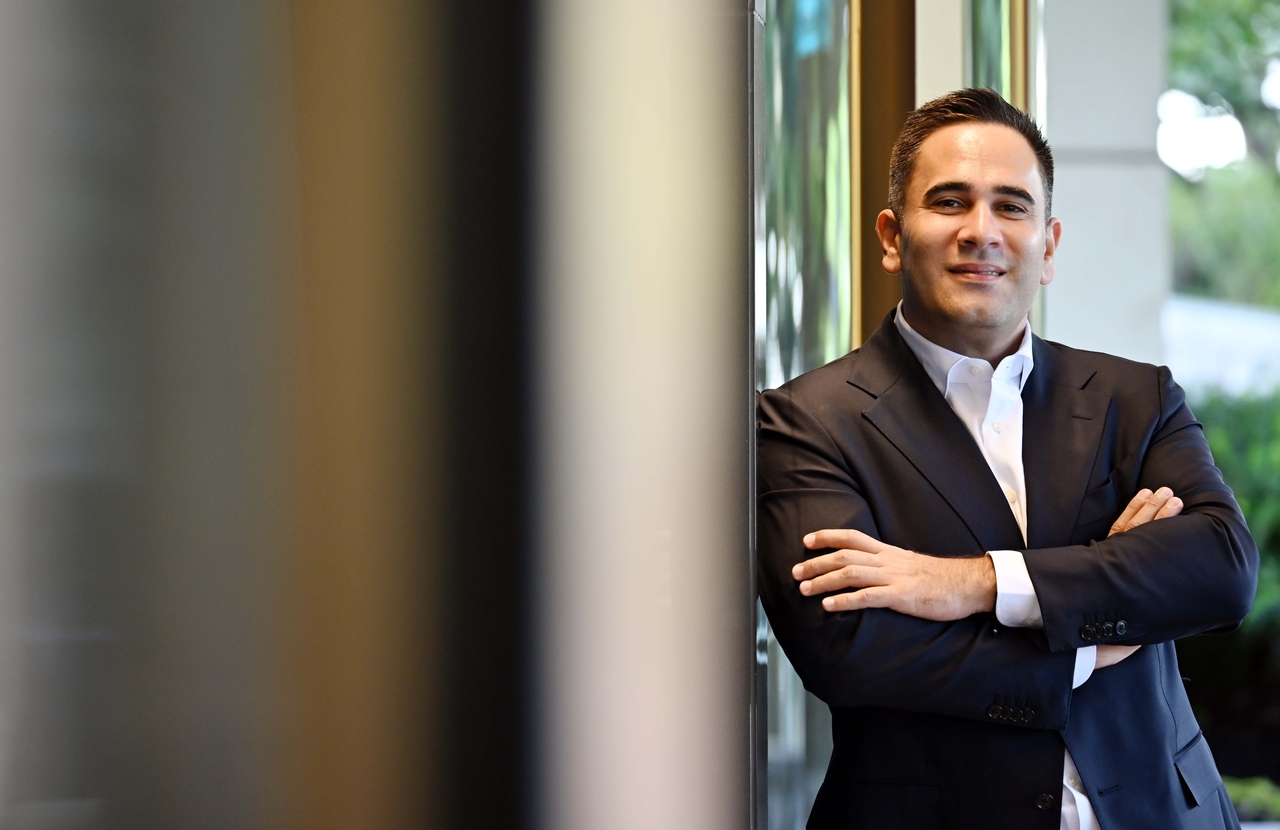
Jung Jun-cheol, president of Hyundai Motor and Kia's manufacturing division, delivered a keynote at the Herald Business Forum 2026 on Tuesday, outlining the group's roadmap to automate factories with AI and robotics while keeping human workers at the center of the process.
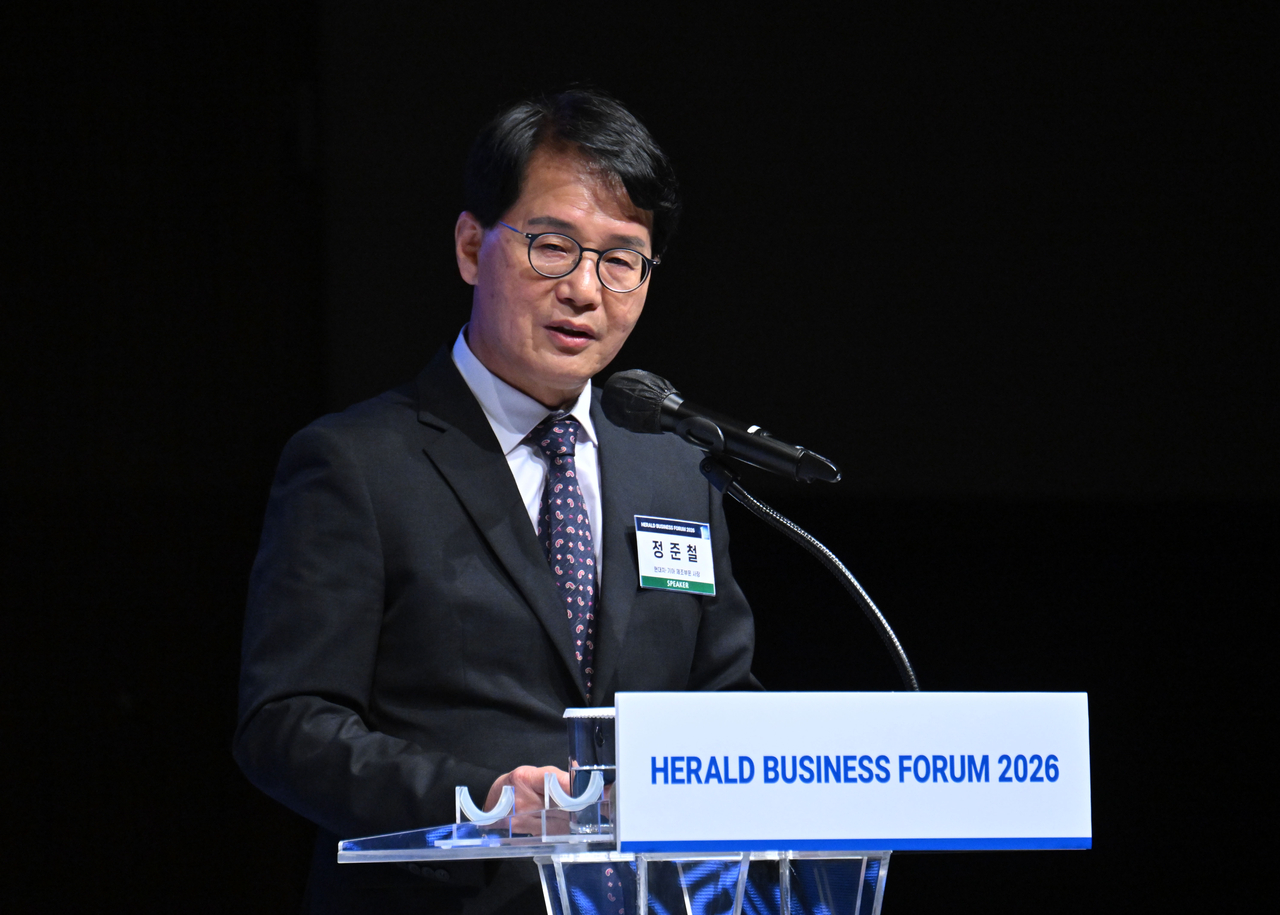
"The direction and goal of Hyundai Motor Group is to lead the global market by building an environment where people can work more safely and more meaningfully through world-class manufacturing competitiveness."
Jung Jun-cheol, president of Hyundai Motor and Kia's manufacturing division, made the remarks Tuesday as a keynote speaker at the Herald Business Forum 2026, held at the Dynasty Hall of Shilla Hotel in Jung-gu, Seoul. "The only way to survive in a rapidly changing market environment is to strengthen product and manufacturing competitiveness," he said.
Jung, who oversees the manufacturing operations of Hyundai Motor and Kia, is regarded as an expert with broad experience spanning product design, production technology and global manufacturing operations. He has led future manufacturing innovation initiatives — including the construction of the smart factory E-FOREST, the Hyundai Motor Group Innovation Center Singapore (HMGICS), and the expansion of global production bases — while contributing to the competitiveness of South Korea's automotive manufacturing and exports through electrification and supply chain stabilization.
In recognition of those contributions, he received the Gold Tower Order of Industrial Service Merit at the 62nd Trade Day ceremony last year. He currently oversees manufacturing solutions, procurement and HMGICS, and is expanding the group's scope beyond the vehicle value chain into robotics — advancing production systems and the robot industry ecosystem to secure competitiveness in future mobility and robot manufacturing.
Speaking under the theme "Manufacturing Innovation: From Vision to Execution," Jung first traced the evolution of manufacturing technology and introduced Hyundai Motor Group's current efforts in future mobility manufacturing, with the "Dark Factory" strategy as the central pillar.
"When the company was founded in 1967, most work was done by hand — there was no such thing as manufacturing technology," Jung said. "When we built the Asan factory in 1997, we became the first to operate the body welding line with 100 percent automation, and then in 2012 we established the first standardized factory system at Beijing's third plant in China, laying the groundwork for growth."
The turning point that brought manufacturing technology to the next level was HMGICS, completed in 2023. "HMGICS serves as a base that combines manufacturing technology development with small-scale production," Jung said. "The automation technologies developed and verified there were fully applied to Hyundai Motor Group Metaplant America in 2024 and to the Ulsan EV factory construction this year."
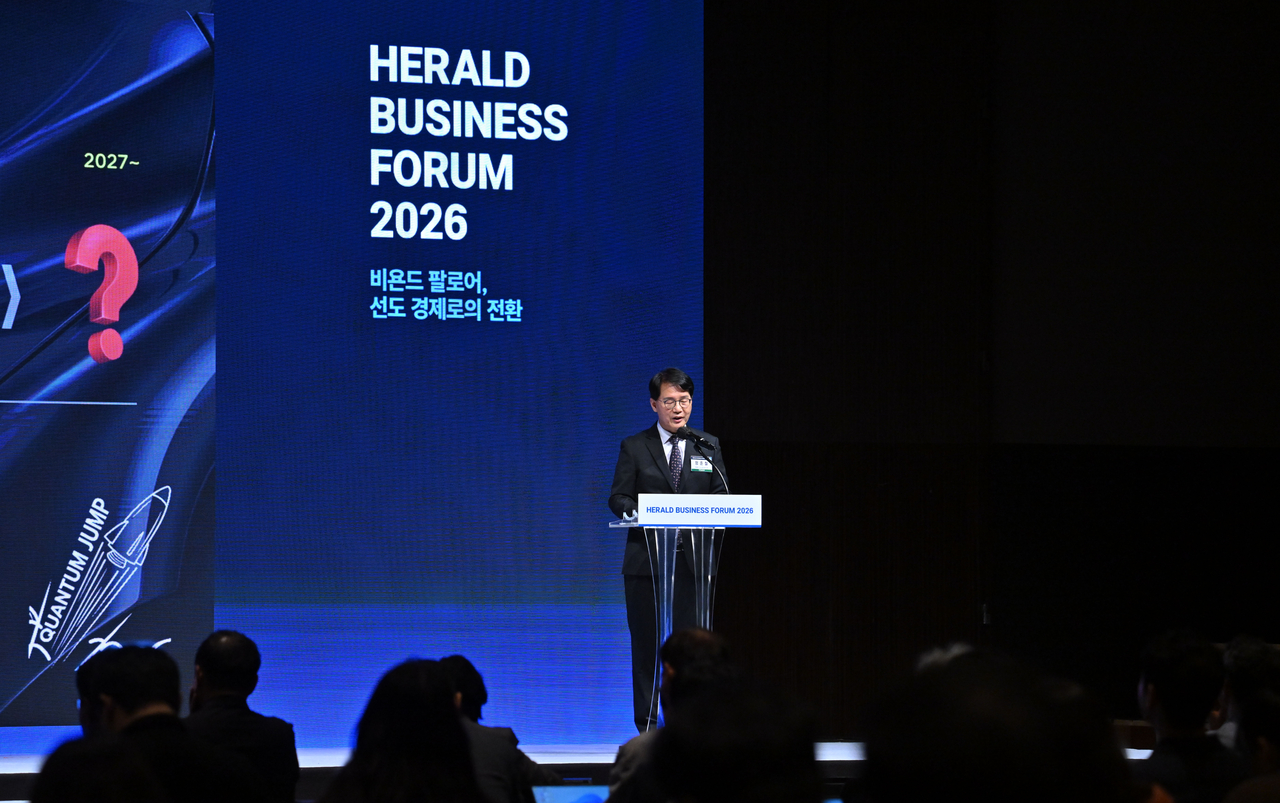
HMGICS has achieved an automation rate of 60 percent, while HMGMA and the Ulsan EV factory — both mass-production facilities — have reached 40 percent and 44 percent, respectively.
Jung drew particular attention when he screened footage showing the GV90 — Genesis's first full-size flagship electric SUV — moving through the automated production line at the Ulsan EV factory.
In the press process for forming body panels, a 6,800-ton servo press and precision panel inspection equipment were introduced to achieve the smooth, flowing curves inspired by the traditional Korean moon jar. In the body assembly process, four new joining techniques were applied — bonding aluminum, steel and other dissimilar materials separately by section — to firmly connect a body with a significantly higher aluminum content, maximizing production precision and efficiency.
"The current automation rate at HMGMA and the Ulsan EV factory is in the 40 percent range, but we plan to raise it to as high as 55 to 56 percent by integrating AI and robotics technology to overcome technical limitations," Jung said.
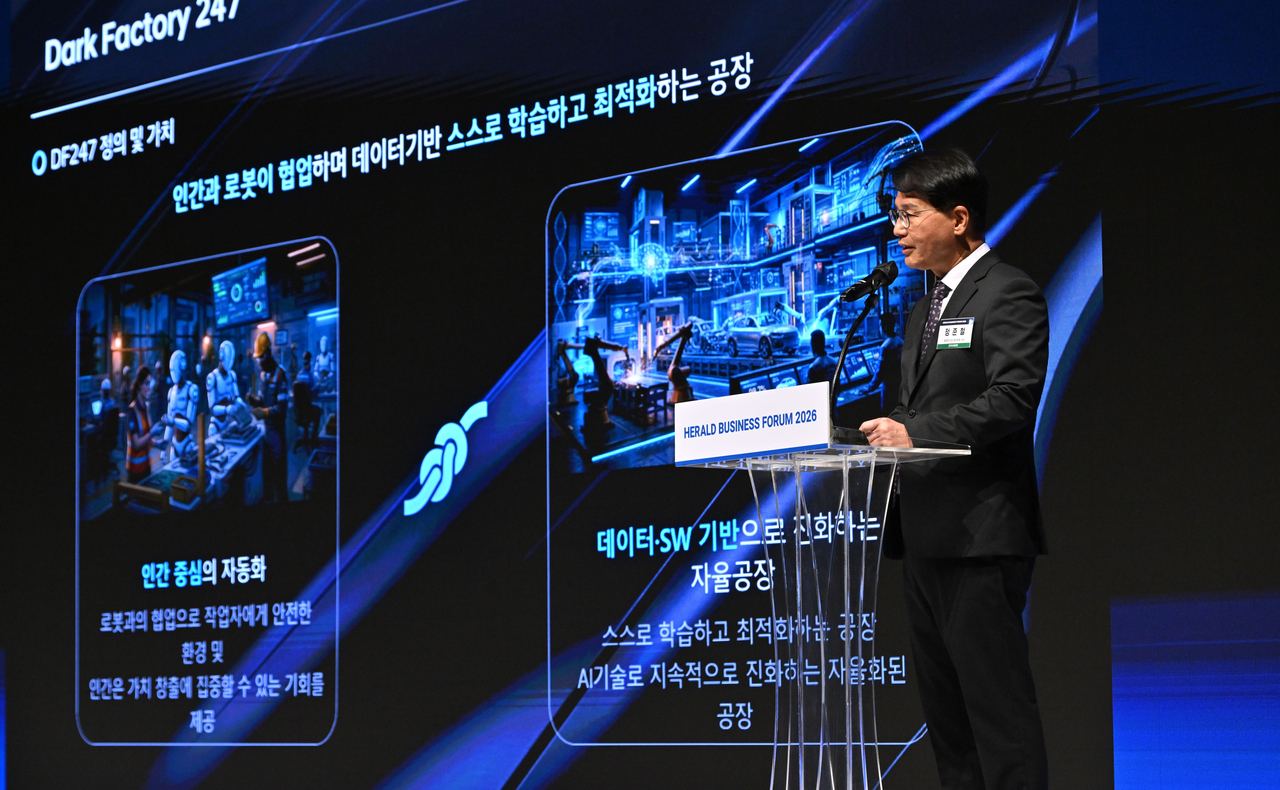
The future factory vision Jung presented to achieve that goal is "Dark Factory 247," or DF 247.
"DF 247 is a factory where humans and robots collaborate, learning and optimizing autonomously based on data," he said. "It is built on two core pillars — human-centered automation and a data- and software-driven autonomous factory — where humans and robots work together in a self-learning, self-optimizing environment."
Jung stressed that automation through robotics "is not a technology to replace people, but a technology to enhance human safety and expand human potential." He added that robots would take over dangerous tasks on the factory floor to ensure safety and drive quality innovation through data-based operations, while the human role would evolve from repetitive, uniform labor into the domains of judgment and management.
Enabling that shift is the introduction of physical AI. The group plans to deploy physical AI-based robotics across three categories of tasks: simple repetitive work such as sequencing trim components, high-difficulty work such as interior wiring, and hazardous work in harmful environments such as offline touch-up in paint booths — dramatically expanding the scope of automation while broadening human potential. Beyond simply deploying humanoid robots, the group also plans to develop physical AI optimized specifically for the manufacturing environment.
Hyundai Motor Group is targeting the introduction of physical AI on factory floors by 2028. Toward that end, it opened the Robot Metaplant Application Center in the United States in June, where it is testing AI manufacturing robots in an environment that closely replicates an actual vehicle production line.
The group is also accelerating the AI transformation and digital transformation of its new-vehicle launch process, as well as the integration of manufacturing data. "We are building a system that autonomously manages the entire lifecycle — from new vehicle development through production, sales and quality feedback — through AI transformation and digital transformation," Jung said. "We are also focused on building a tech foundation that standardizes data collected on the factory floor and integrates it through connected systems."
Hyundai Motor Group is also actively sharing its proprietary manufacturing innovations with suppliers to extend their benefits across the broader industry. The initiative aligns with the co-prosperity management philosophy of Hyundai Motor Group Chairman Euisun Chung, who has identified the development of "technologies that save lives" as a key priority.
In practice, Hyundai Motor Group has built a dedicated co-prosperity center for suppliers in Gyeongju, offering all education programs free of charge. "We are providing consulting and joint proof-of-concept validation for suppliers that want to adopt smart factory technology, and supporting the rollout of those technologies," Jung said. "We also plan to establish a robotics proof-of-concept line and a production factory in the Saemangeum area, and to work with the government to build a robotics supply chain ecosystem."
In closing, Jung said Hyundai Motor Group "will lead the future of manufacturing on the strength of AI and robotics technology," adding that the group "will continue to make sustained efforts so that South Korea can emerge as a global hub for manufacturing innovation."
likehyo85@heraldcorp.com