Student attempted suicide the day after verbal and physical abuse
Professor challenged dismissal, citing 'apprenticeship-style' education
Both first and second courts ruled dismissal justified
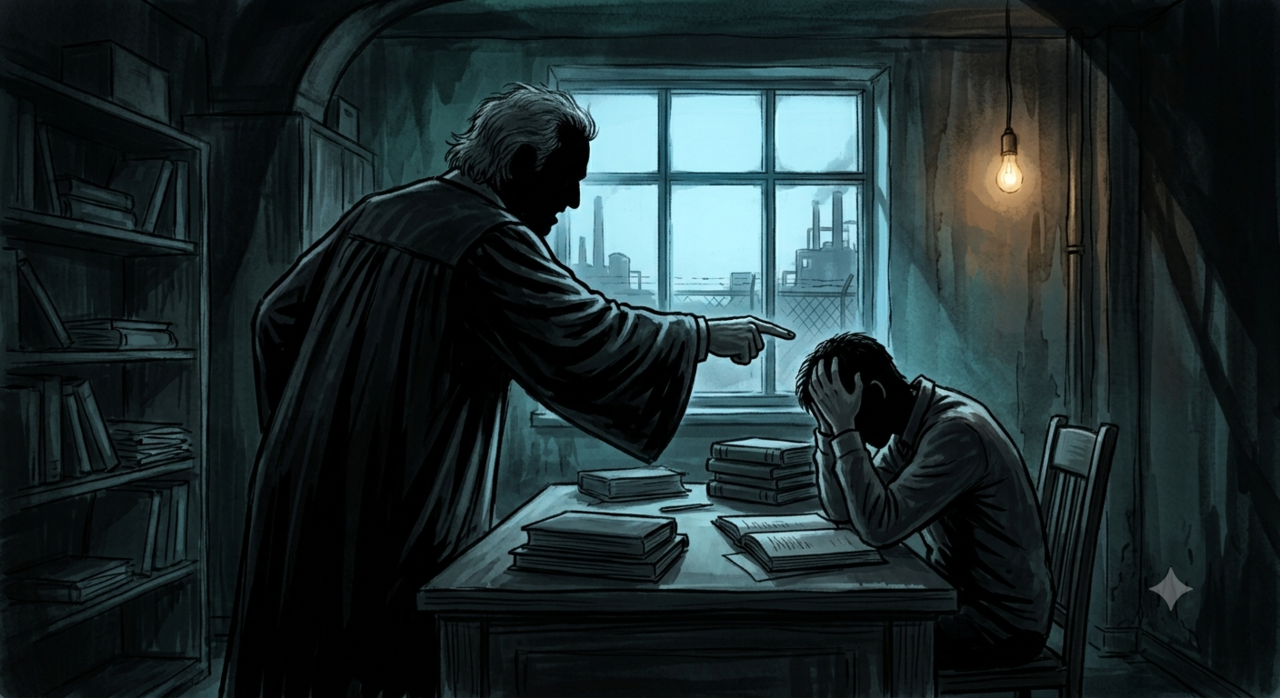
A university professor who hurled verbal abuse at a doctoral student — telling him he was fit only for day labor and calling him incompetent — and drove the student to attempt suicide has been found to have been rightfully dismissed, with an appeals court upholding the original ruling. The professor had challenged the dismissal, arguing the remarks were nothing more than feedback given in the course of research supervision under the tradition of apprenticeship-style education, but lost the case.
According to legal sources Wednesday, Seoul High Court's Administrative Division 10-3, presided over by Chief Judge Won Jong-chan, ruled against Professor A in a second-instance lawsuit seeking to overturn the dismissal. The ruling, handed down late last month, mirrored the first-instance decision. The court said it could recognize that the professor had demeaned the student's dignity while threatening to suspend thesis supervision, ultimately driving the student to attempt suicide.
According to the facts established by the court, Professor A verbally abused the doctoral student around February 2022 during a discussion about carrying out a research project. The professor called the student someone who "lives by his mouth alone," told him to "go do day labor," and used other demeaning language. He also demanded obedience, telling the student to "just do as you're told" and "don't talk back to me," and threatened to stop supervising the student's thesis.
Professor A also tore a sheet of paper while scolding the student and threw the paper and a pen at him. He was also found to have sharply reprimanded the student when the student asked for a photo of a corporate credit card to process an expense. The following day, Professor A continued to berate the student, telling him not to "send excuses." The student subsequently attempted suicide.
The student survived after police, responding to a report of a suspected suicide attempt, visited his home. In the subsequent investigation by the university's human rights center, Professor A attempted to minimize his wrongdoing. He was found to have obstructed the probe by pressuring the student to revise his written statement nine times, and to have violated a confidentiality pledge.
The university's disciplinary committee dismissed Professor A in June 2023. After an appeal to the review board was rejected, he filed a lawsuit in July last year. During the trial, Professor A's side acknowledged that the remarks in question had been made but argued that, given the circumstances, they could not be considered psychological or emotional violence.
The court rejected the professor's argument.
The first-instance court ruled in July last year that the dismissal was justified.
The first-instance panel said that even taking into account the circumstances and context in which Professor A became angry or scolded the student, the remarks went beyond legitimate criticism and amounted to statements that demeaned the student's dignity. It said such remarks and conduct constituted psychological and emotional violence and a violation of the student's dignity, and that they breached the professor's duty to maintain the decorum expected of an educator.
The panel added that the severity of the misconduct warranted dismissal, noting that Professor A had repeatedly made remarks demeaning the student's dignity, had pressured the student to revise his statement multiple times, had disclosed the contents and progress of the complaint to third parties, and had shown a consistent failure to empathize with the student's suffering.
Professor A appealed the first-instance ruling, but the second court reached the same conclusion.
The appeals court also said the remarks could not be dismissed as mere educational reprimands or momentary, impulsive expressions. It added that given the power dynamic between a thesis supervisor and a student, the fact that the student had smiled or appeared to agree during some exchanges did not negate the insulting or coercive nature of the statements.
The court further noted that over a period of roughly six months, Professor A had repeatedly used harsh language that directly belittled the student's abilities and standing, and had at times delivered one-sided tirades lasting more than an hour, well beyond the scope of any legitimate work guidance.
The appeals court concluded that Professor A had continued to minimize his responsibility, and that when weighing the extent of the harm, the need to protect students, and the importance of restoring public trust in the teaching profession, the public interest served by the dismissal was by no means outweighed by the disadvantage suffered by the professor.
The ruling has not yet been finalized. Professor A has filed a further appeal, and the case is now pending before the Supreme Court.
If you're thinking about self-harm or suicide, dial the Suicide Prevention Hotline at 109, available 24 hours a day, seven days a week. Please request a translator for English-language services.
notstrong@heraldcorp.com