Ministry of Health and Welfare releases second national health workforce survey
About 2.32 million hold health licenses; only 67% are active, with doctors concentrated in greater Seoul and aging workforces outside the capital
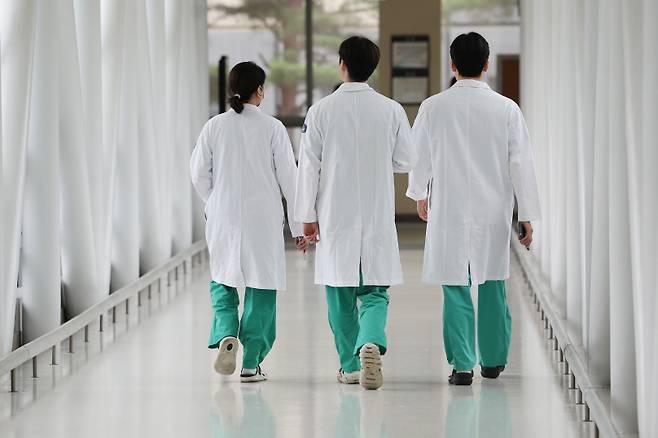
Doctors earn the highest average annual pay among all health workforce categories in South Korea, at 285.18 million won ($210,000), with those working at hospitals topping the scale at 354 million won, according to a government survey released Tuesday.
The Ministry of Health and Welfare published the results of its second national health workforce survey Tuesday, analyzing the employment status and compensation of about 2.324 million licensed or certified workers across 20 health occupations.
Based on 2023 data, average annual pay by profession ranked as follows: doctors at 285.18 million won, dentists at 202.77 million won, traditional Korean medicine doctors at 103.68 million won, pharmacists at 84.26 million won and nurses at 51.95 million won.
Among doctors, those at hospitals earned the most at 354.27 million won per year, followed by those at clinics at 325.99 million won, those at general hospitals at 251.45 million won and those at tertiary hospitals at 199.76 million won.
Average pay for health workers at medical institutions rose across all 20 occupations over the decade from 2013 to 2023.
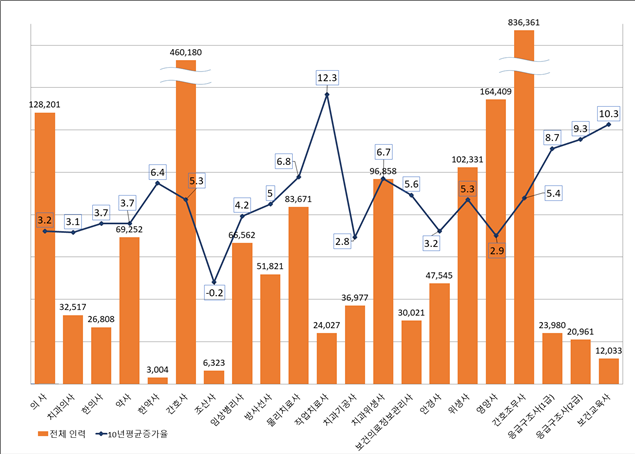
The average annual growth rate was 5.6 percent for doctors, 3.5 percent for nurses, 3.1 percent for dentists, 2.7 percent for pharmacists and 0.6 percent for traditional Korean medicine doctors.
The total number of people holding health licenses or certifications across the 20 occupations reached about 2.324 million in 2023, up roughly 900,000 from 2013.
By occupation, nursing aides were the largest group at 836,000 (36.0 percent), followed by nurses at 460,000 (19.8 percent), dietitians at 164,000 (7.1 percent) and doctors at 128,000 (5.5 percent). Occupational therapists numbered 24,000 in 2023 and recorded the highest average annual growth rate of any occupation at 12.3 percent.
Of the 2.324 million license and certificate holders, 67 percent — about 1.557 million — were actively working.
Active workers included 480,000 nursing aides (30.9 percent), 340,000 nurses (21.8 percent) and 118,000 doctors (7.6 percent).
Midwives were the only occupation to see a decline in active workers, falling from 2,997 in 2013 to 2,789 in 2023.
Some 766,000 license or certificate holders — 33 percent of the total — were not engaged in any work activity. Among doctors, 118,000 of the 128,000 licensed (92.1 percent) were active, while about 10,000 were not.
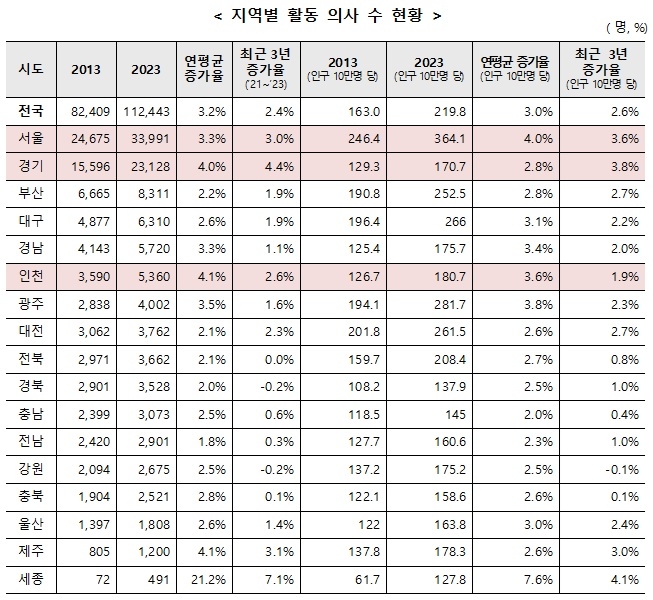
A regional breakdown of active doctors over the decade shows the greater Seoul area's share grew while that of non-metropolitan cities and provinces fell. Excluding Sejong, the regions with the fewest doctors in both 2013 and 2023 were North Chungcheong Province, Ulsan and Jeju.
As of 2023, the number of doctors per 100,000 people stood at 158.6 in North Chungcheong Province, 163.8 in Ulsan and 178.3 in Jeju. Gangwon Province, North Gyeongsang Province and North Jeolla Province all saw their doctor counts begin declining over the most recent three-year period from 2021 to 2023.
As of 2023, doctors active in North Gyeongsang Province had the highest average age in the country at 50.8, while Seoul doctors had the lowest at 44.7.
The health workforce survey is conducted under the Health Workforce Support Act, drawing on license and certification data from the National Health Insurance Service's integrated health workforce information system, along with national health insurance enrollment records and medical institution registration data.
Im Eul-gi, director of medical resource policy at the Ministry of Health and Welfare, said the regular survey allows the ministry to monitor changes on the ground. "We will use the findings as a basis for policy to systematically develop skilled workers and ensure a smooth supply of personnel across different regions and fields," he said.
thlee@heraldcorp.com