MoonPay Korea officially launches with media day
Won stablecoin overseas distribution, remittances in the works
KakaoBank partnership targets US account transfers within one hour
'Not competing with Circle — think of us as the Switzerland of payments'
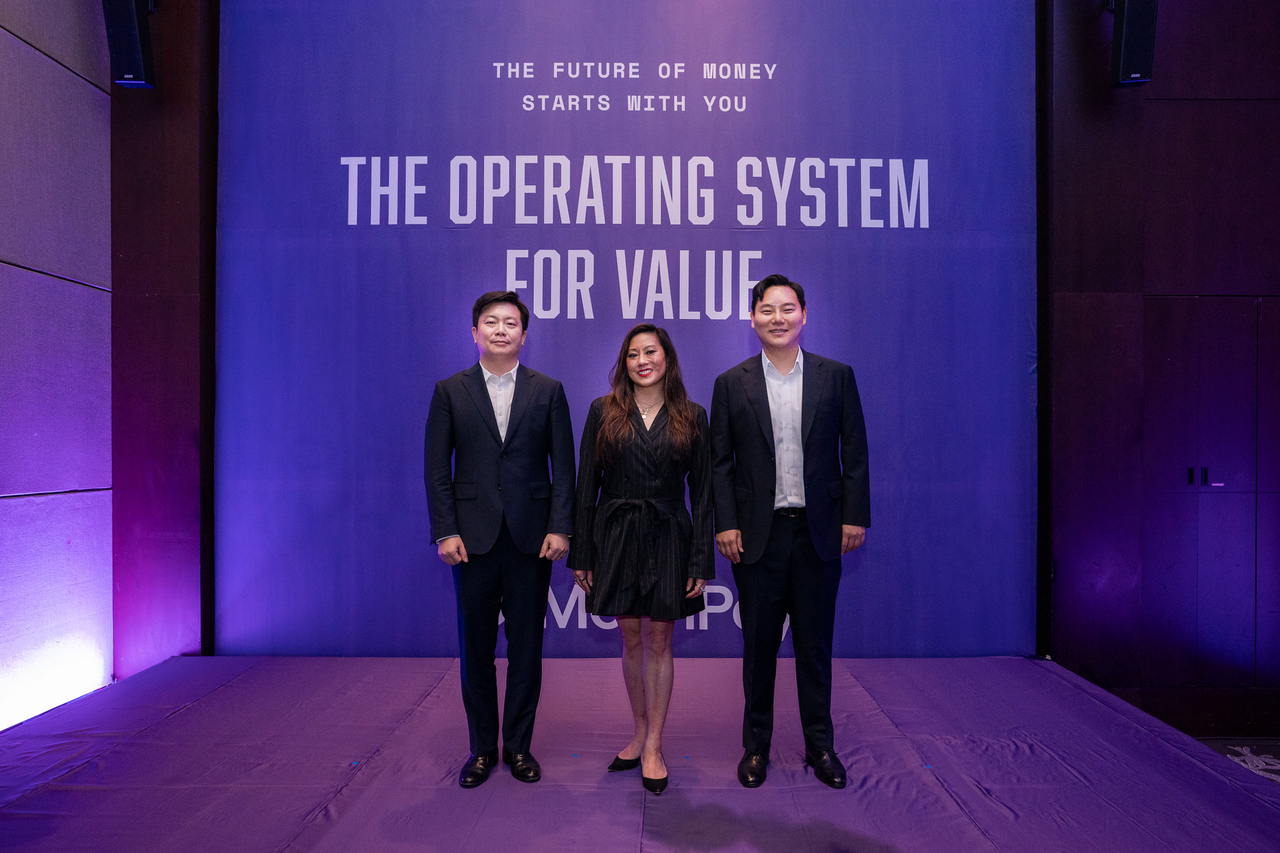
MoonPay, a global digital asset payments and stablecoin infrastructure company, is joining forces with Woori Bank, KB Financial Group and KakaoBank to push into the South Korean market. The company plans to build out real-world services in Korea — spanning overseas distribution of a won-denominated stablecoin, cross-border remittances and payments, and on- and off-ramps connecting digital assets with the won — before positioning Korea as its base for Asian expansion.
MoonPay held its official Korea launch media day Tuesday at Conrad Seoul in Yeouido, unveiling the establishment of its Korean subsidiary and its domestic business strategy. The company has processed more than $4.5 billion in cumulative transactions, serves about 32 million verified users and works with more than 1,500 partners.
"Korea is a market that has both the demand for digital assets and the digital payments infrastructure to support them," said Lee Bu-geon, co-founder and Asia head of MoonPay. "We see an opportunity to develop new financial services and improve the efficiency of existing ones on that foundation."
The three business areas MoonPay is targeting in Korea are collaboration with financial institutions and digital platforms, cross-border fund transfers and digital asset distribution, and localization experience to support its broader Asian expansion. Lee added that the company is preparing to apply for a virtual asset service provider license next year.
Partnerships with financial institutions are already taking shape following the launch. With Woori Bank, MoonPay is pursuing a plan that would allow a won-denominated stablecoin — once issued — to be bought, held and exchanged overseas using MoonPay's global wallet and on- and off-ramp network. The two sides are also exploring a remittance service targeting foreign nationals living in Korea, including migrant workers and international students.
With KB Financial Group, MoonPay is looking at digital asset financial services that leverage the customer touchpoints of KB's banking and card businesses. With KB Kookmin Bank, the company is examining on- and off-ramp infrastructure for converting between fiat currency and digital assets, as well as wallet and overseas remittance and payment infrastructure. With KB Kookmin Card, the focus is on a model that takes digital assets all the way through to actual payment — for instance, a structure in which foreigners pay at domestic merchants using stablecoins or digital assets while merchants receive settlement in won. The partners plan to assess system integration, safety and commercial viability through a joint proof-of-concept project.
With KakaoBank, MoonPay will conduct a blockchain-based overseas remittance proof of concept. The model would connect the entire process — from a remittance request in Korea, through stablecoin transfer and dollar conversion, to deposit into a US bank account. The target for the proof-of-concept stage is to cut the time from remittance request to local account deposit to within one hour.
At the launch event, MoonPay drew a clear line against being seen as a direct competitor to Circle in the stablecoin market. Caroline Pham, CEO of MoonPay Institutional, said that unlike Circle, which issues its own stablecoin USDC, MoonPay focuses on a white-label model that helps financial institutions and companies issue stablecoins under their own brands.
Lee echoed that view. "I don't think of us as competing with Circle," he said. "I'd like people to think of us as the Switzerland of payments, in effect."
Meanwhile, Choi Han-gyeol, formerly deputy head of Streami, recently joined MoonPay Korea as head of strategy. Having spent more than eight years at Streami, he is expected to serve as the bridge between MoonPay's global headquarters and its Asia-Pacific organization on one side and the Korean market on the other.

kyoung@heraldcorp.com