ECCK holds press conference for 2026 white paper
Ministry of Climate, Environment and Energy simplified US auto certification in June
'Unnecessary differences should be reduced under Korea-EU FTA spirit'
Chamber also calls for streamlined EV certification process
ECCK President Philippe van Hooff stresses importance of regulatory consistency
"To launch an electric vehicle, you must first obtain environmental certification, then undergo a separate subsidy evaluation and performance assessment, and then wait another two months to be listed as an eco-friendly vehicle. We need regulatory reform to minimize launch delays."
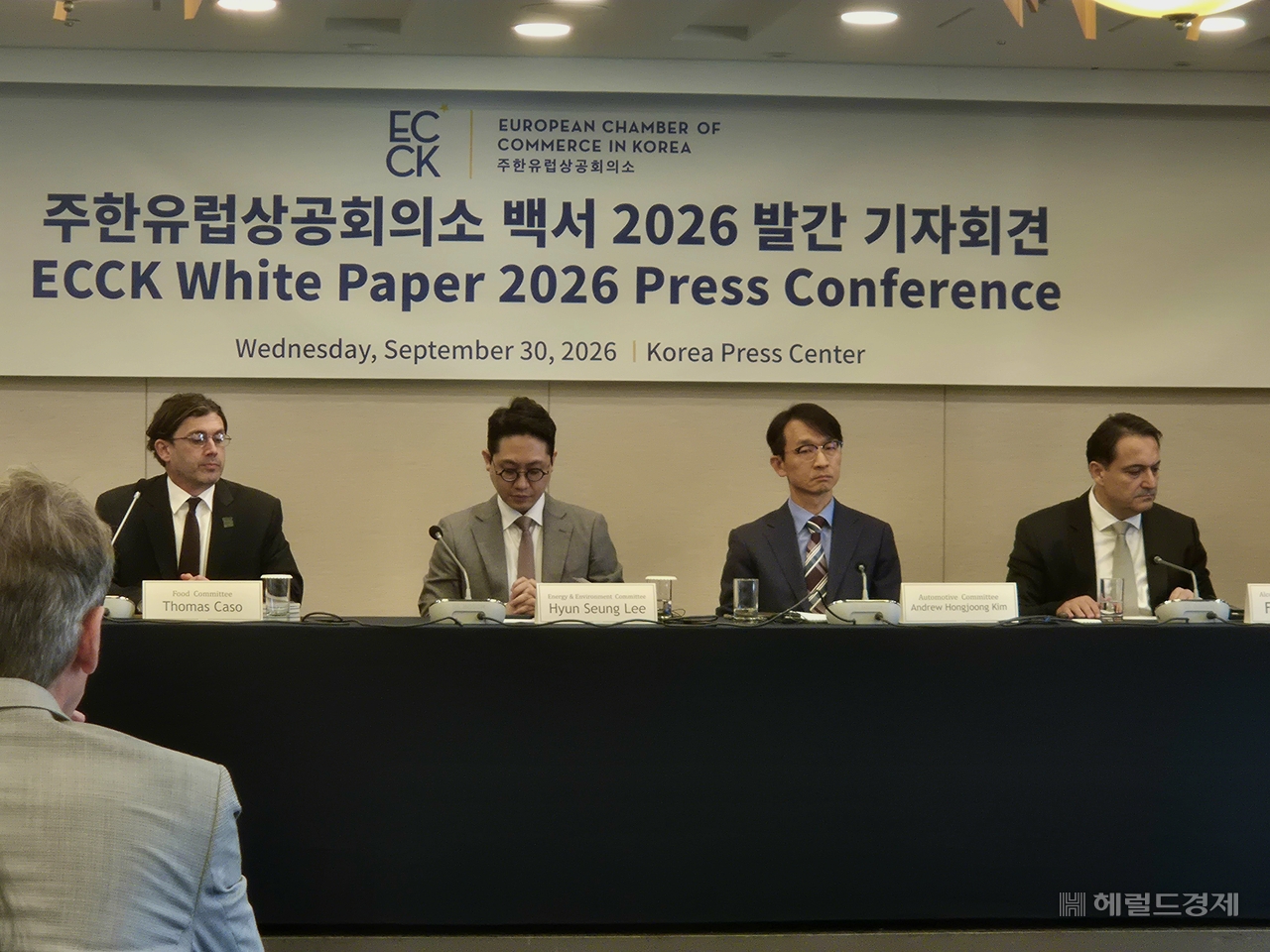
The European Chamber of Commerce in Korea held a press conference Wednesday at the Press Center in Jung-gu, Seoul, to mark the release of its 2026 white paper. Representatives from European automakers as well as energy, healthcare, liquor and food companies attended and called on the South Korean government to improve its regulatory environment.
The white paper compiles 82 recommendations gathered from 15 committees and three forums within the chamber. The passenger vehicle committee alone put forward policy proposals covering 15 issues.
Kim Hong-jung, chair of the ECCK passenger vehicle committee, said the white paper proposes improvements to the EV certification process and calls for greater harmonization and mutual recognition of international standards for advanced automotive technology.
He particularly noted that the complex certification process for EVs delays their market launch by two to three months compared with internal combustion engine vehicles, and called on the government to run environmental certification, subsidy evaluation and eco-friendly vehicle registration procedures in parallel.
The chamber also addressed a notice issued by the Ministry of Climate, Environment and Energy on June 30, which simplified domestic certification procedures for US vehicles under the Korea-US tariff consultations, and called for most-favored-nation treatment to be extended to European automobiles.
Citing the most-favored-nation clause in the Korea-EU Free Trade Agreement, the ECCK said vehicles produced in Europe should not be treated less favorably than those from third countries in the enforcement of South Korea's vehicle emissions certification regime.
"If Korea and Europe enhance regulatory alignment and reduce unnecessary differences on the basis of the FTA spirit and international standards, it will contribute greatly to expanding EV adoption and bringing advanced new technologies to Korean consumers more quickly," Kim said.
In the energy sector, speakers called on the South Korean government to provide stronger support for offshore wind power, a large-scale infrastructure undertaking.
Lee Hyun-seung, chair of the ECCK energy and environment committee, said offshore wind involves trillions of won in investment and spans multiple ministries — including the Ministry of Climate, Environment and Energy, the Ministry of Trade, Industry and Energy, the Ministry of Oceans and Fisheries and the Ministry of National Defense. "Because it is also affected by macroeconomic factors such as exchange rates, a stable business environment that maintains investment reliability and predictability is essential," he said.
Lee went on to say the government should clarify bidding procedures and price adjustment mechanisms that reflect inflation following the sunset of the renewable portfolio standard, and promptly establish criteria for calculating fees for the use and occupation of public waters. "This could have a ripple effect that promotes the growth of not only the domestic offshore wind industry but also related sectors such as shipbuilding, steel, submarine cables and EPC," he said.
Chairs of the chamber's aerospace and defense, liquor, food, and healthcare committees also attended, sharing challenges their respective industries face and submitting recommendations for regulatory reform. The ECCK plans to deliver the white paper to related ministries and relevant agencies.
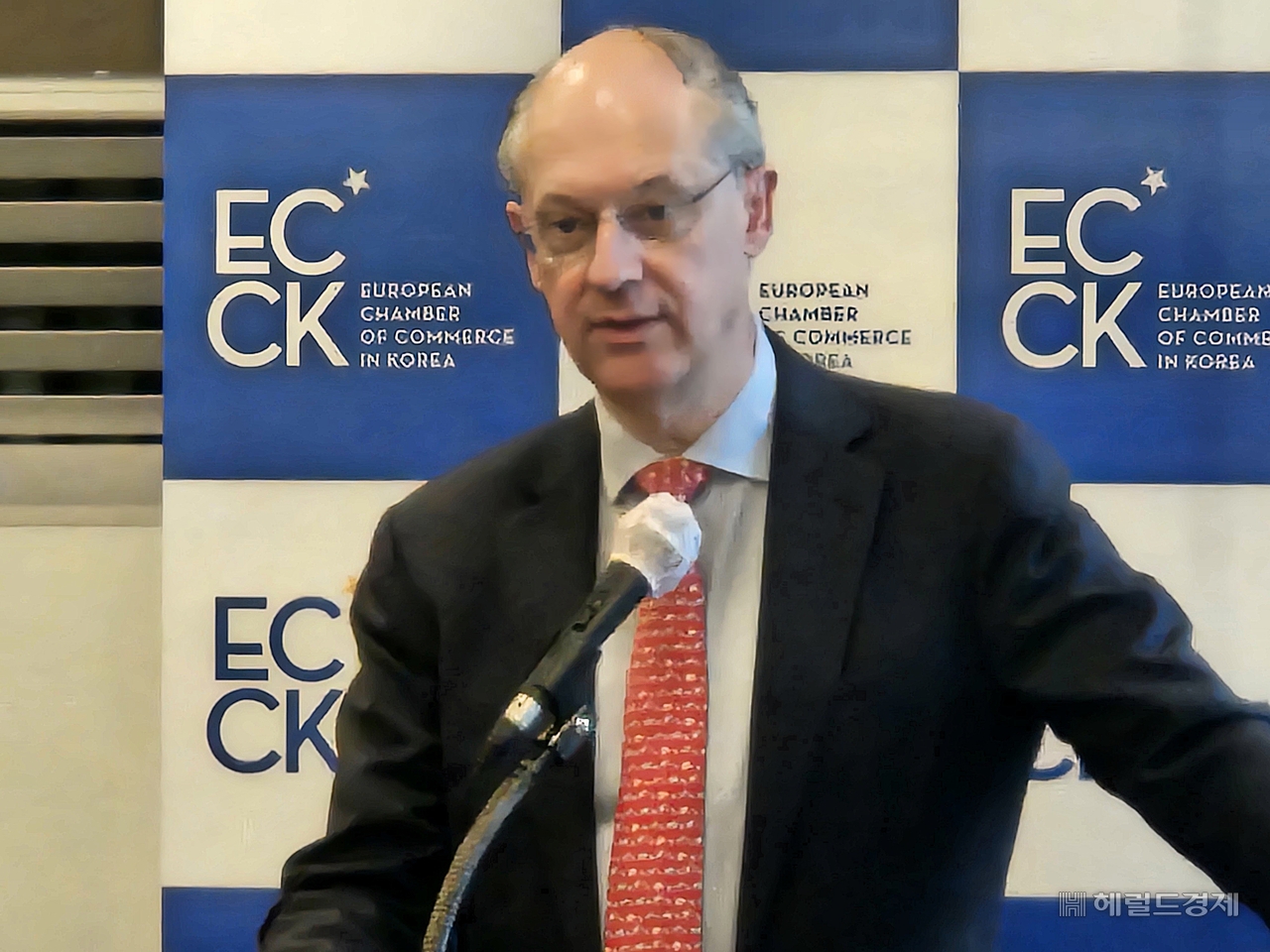
ECCK President Philippe van Hooff said predictable and consistent regulatory enforcement is more important now than ever. "If regulations achieve their legitimate policy objectives while at the same time aligning with international standards, they will help strengthen Korea's competitiveness and enhance its appeal as an investment destination," he said.
joze@heraldcorp.com