Site covers about 6.9 square kilometers across Paju-eup, Munsan-eup and Wollong-myeon
Yeoncheon-gun and Pocheon to apply as second-round candidates next year
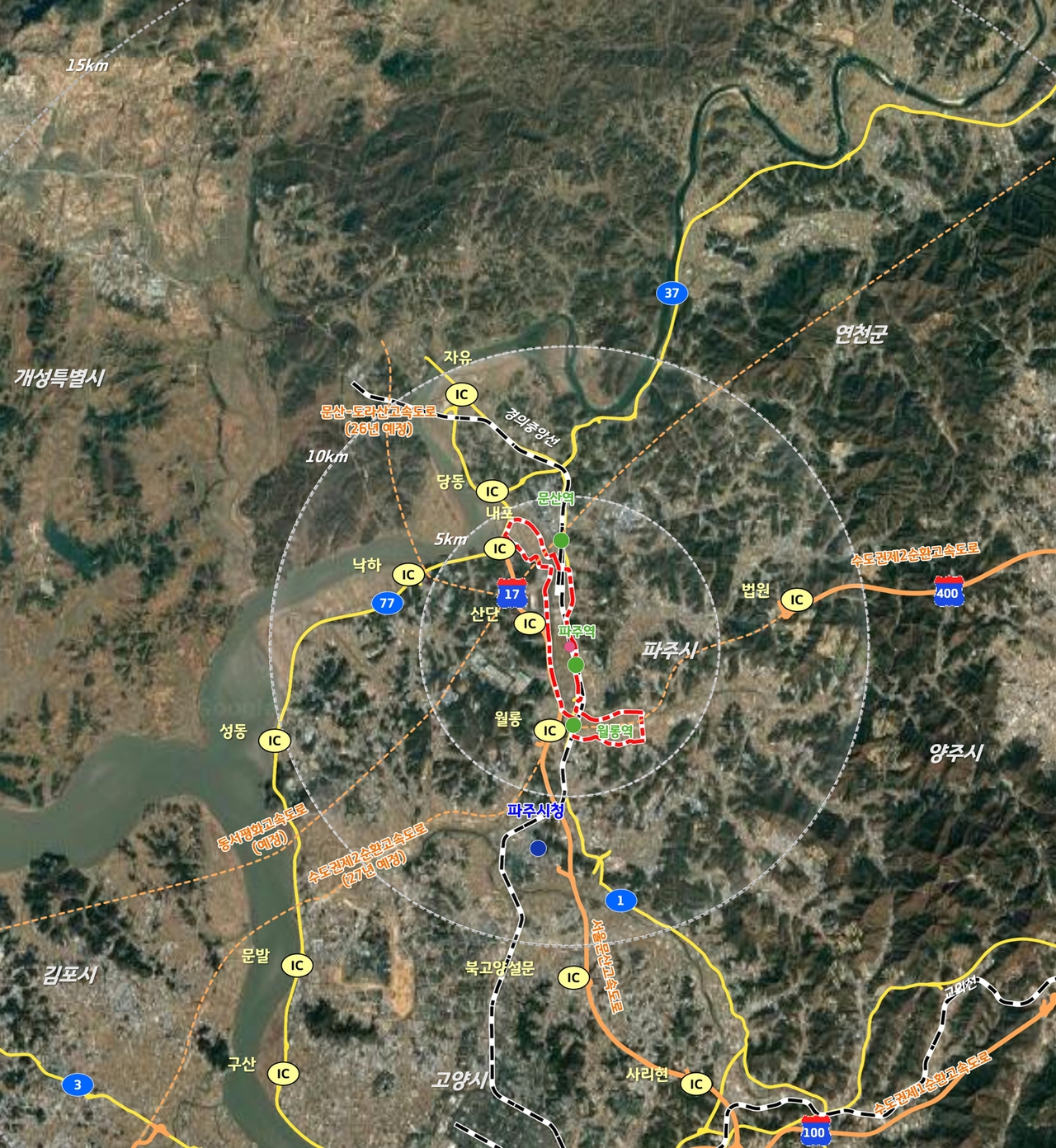
Gyeonggi Province has applied to designate Paju as a candidate site for the government's planned peace economy special zone. The province submitted Paju as its first-round candidate, while Yeoncheon-gun and Pocheon, which are still drawing up development plans, are set to apply as second-round candidates next year.
Gyeonggi Province announced Thursday that it submitted a development plan to the Ministry of Unification and the Ministry of Land, Infrastructure and Transport on Wednesday, requesting that an area of about 6.9 square kilometers spanning Paju-eup, Munsan-eup and Wollong-myeon in Paju be designated as a peace economy special zone.
The application follows the Ministry of Unification's first basic plan for peace economy special zones and its official designation announcement. Gyeonggi Province completed and submitted its development plan for the Paju peace economy special zone by the first-round deadline of Wednesday. The second-round application deadline is Aug. 31 next year.
A peace economy special zone is a nationally designated special district established in border areas near North Korea to pursue industrial, tourism and logistics development projects, with the long-term goal of building a foundation for inter-Korean economic exchange and an economic community. Unlike ordinary industrial complexes, these zones take into account the peace and security conditions of border regions, local development needs and the potential for future inter-Korean cooperation. Designated zones are eligible for tax and levy reductions, licensing exemptions and infrastructure support. The Ministry of Unification plans to designate up to four such zones in total.
According to the application Gyeonggi Province submitted, the Paju peace economy special zone will focus on fostering advanced future industries and, in the longer term, linking the area to an inter-Korean economic community.
The development plan calls for a mixed-use approach combining industry, tourism and residential functions, organized into five districts — two industrial districts and separate zones for mixed use, cultural tourism and inter-Korean logistics. Six strategic industries will be intensively developed, including AI, advanced manufacturing, pharmaceuticals and smart logistics, with about 20 percent of the total area, or 1.4 square kilometers, set aside as a peace-use zone. The province said 210 companies have already expressed intent to move in, demonstrating strong investment demand. Total project costs are estimated at around 2 trillion won ($1.47 billion).
The province said Paju is the optimal location because the Ministry of Unification's basic plan already designates the western inland corridor — which includes Paju — as a "smart and convergence industry cooperation zone," and because Paju offers an existing advanced industrial base, proximity to the Kaesong Industrial Complex and broad metropolitan transportation infrastructure. The province said it will mount a full effort in the government review process, highlighting the site's strong location advantages and robust corporate demand.
In the lead-up to this application, Gyeonggi Province has been driving the creation and pursuit of the peace economy special zone regime since 2016, conducting 80 policy activities — including proposals to the National Assembly and central ministries, forums and consultations — along with eight related research projects.
Gyeonggi Province expects that if Paju is designated as a peace economy special zone, it will also give momentum to Governor Choo Mi-ae's "Great Transformation of Northern and Eastern Gyeonggi" initiative.
At a divisional briefing held at the Northern Gyeonggi office in July, Choo laid out a development strategy encompassing not only the border areas of northern Gyeonggi but also the eastern region, which faces challenges of heavy regulation and a weak industrial base. "I want to make northern and eastern Gyeonggi a land of opportunity that blazes a trail for South Korea's tomorrow," she said.
Choo plans to leverage returned US military bases and idle military land through frameworks such as the peace economy special zone and opportunity development special zone to attract investment and industries in aviation, space and maintenance, repair and overhaul; climate and energy technology; and advanced smart farming.
"Gyeonggi Province has done its utmost to achieve peace economy special zone designation, from the legislative stage through the drafting of the basic plan and the selection and development planning of candidate sites," Choo said. "We will put everything into securing first-round pilot zone designation on the strength of Paju's locational and industrial competitiveness. We will concentrate our administrative resources to ensure that the Paju peace economy special zone serves as a successful starting point for establishing a peace economy hub across northern and eastern Gyeonggi."
Yeoncheon-gun and Pocheon, which were selected alongside Paju as provincial candidate sites in March, are currently working through preliminary administrative procedures including development planning and strategic environmental impact assessments. The province plans to complete those procedures and development plans before submitting second-round applications next year. Separately, the province will open an additional candidate site competition in October, with plans to select one more site by the end of the year.
pjh@heraldcorp.com