Herald Money Festa 2026 special lecture
Treat education like investing — think long-term
Give children the reins after college admissions
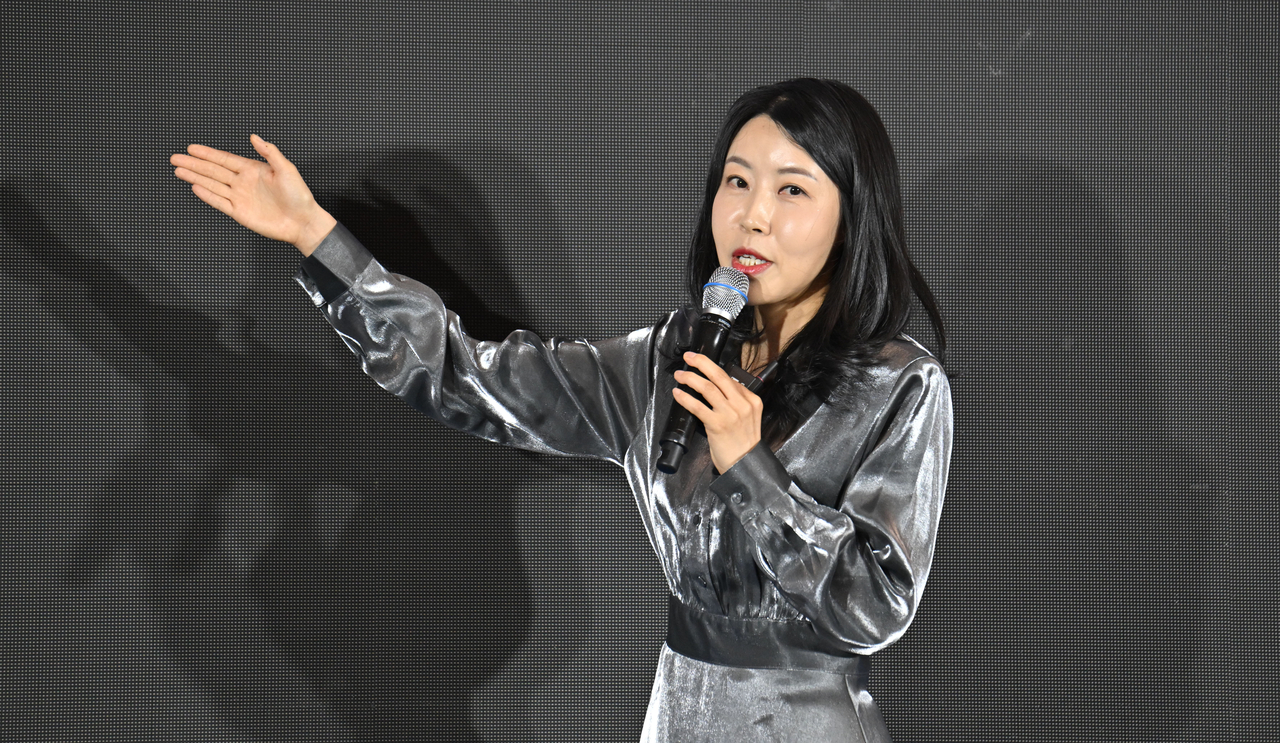
"Everyone here is probably interested in real estate and share investment, but education costs may actually be a bigger expense than your mortgage. It is time to ask whether we are truly protecting and investing in our 'education assets.'"
Bang Jong-im, CEO of Daegija Corporation, delivered a lecture titled "A 10-year roadmap for raising talented children in the AI era" at Herald Money Festa 2026, held Friday at Art Hall 1 of Dongdaemun Design Plaza in Jung-gu, Seoul. Drawing on 19 years of reporting from education settings, Bang said the ability to make independent choices and overcome failure becomes even more critical for children in the age of AI.
The point Bang pressed most strongly was the importance of handing children the reins. While parents can support their children through college admissions with information and financial backing, she said, they cannot design the rest of their children's lives for them.
Bang pointed to the simultaneous rise in both the college enrollment rate among high school graduates and the dropout rate at higher education institutions. "It is only natural to hope your child gets into as good a university as the kid next door," she said, "but what happens to students after they enter university has been missing from the education conversation until now."
She also expressed concern about the trend in private tutoring toward starting earlier and doing more. "When children feel they cannot make any choices for themselves, 'learned helplessness' sets in," Bang said. "Middle and high school students are already experiencing a great deal of helplessness, and I worry the current private-tutoring trend will push that age lower and lower."
Bang added that children who experience helplessness at a young age risk losing their passion precisely when they need to focus on studying. "The word 'burnout' is coming up a lot even among parents of elementary school children these days," she said. "Just as with any other investment, we need to think about what results today's inputs will produce 10 years from now."
After interviewing top college entrance exam scorers and students admitted to Ivy League universities, Bang found that high-achieving students shared two traits: resilience and the ability to manage their smartphone use. "Children today face evaluations and the experience of failure from an early age — through level tests and the like — and they need the strength to bounce back," she said. On smartphones, she explained, "Children accustomed to a hamster-wheel kind of life can more easily get drawn into the online world, where they are free to move as they please."
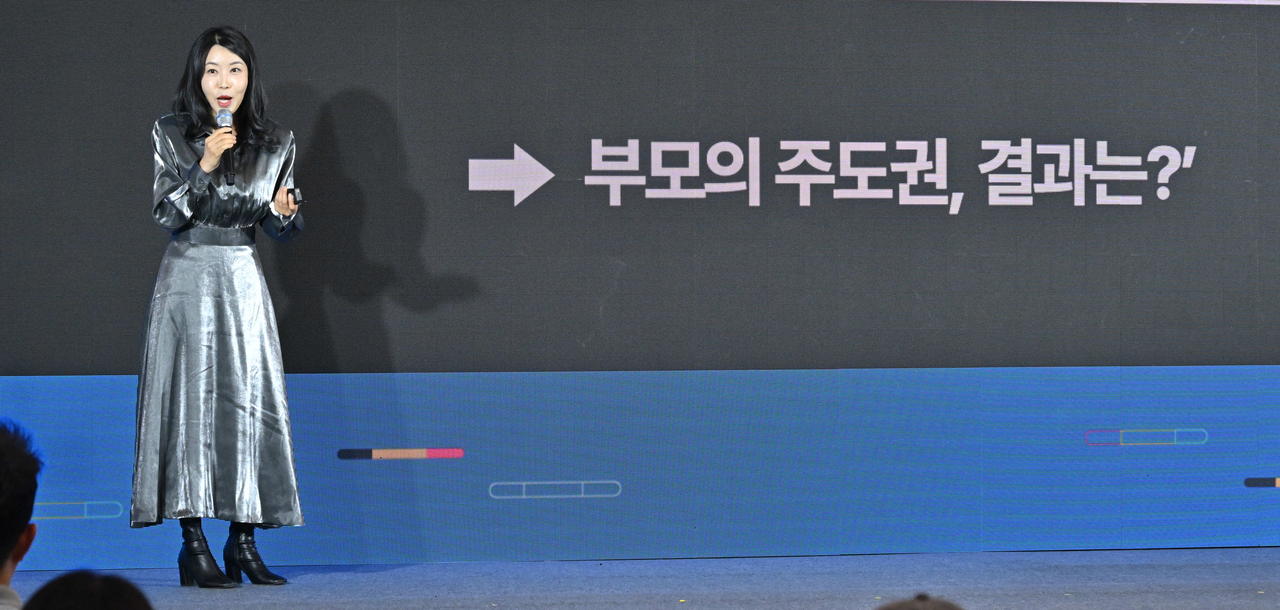
Bang also raised the concern that closely tracking every shift in the college admissions system can transfer parental anxiety onto children. "Education policies — such as the regional physician quota system and the high school credit system — change just as frequently as real estate policy," she said. "You need to keep up with how things are changing, but if you worry about everything, your child can end up with emotional scars around studying." She added, "In the AI era, when we must keep learning until we are 100, studying must not become a source of trauma."
Bang presented eight principles she said remain constant in education even in the AI era: the importance of Korean, English and mathematics; a preference for students who bridge the humanities and sciences; reading comprehension and literacy; the ability to express knowledge; positive feelings toward school; the disadvantage of anxiety; harmonious family relationships; and the importance of having given one's best effort.
She then identified "competency" as the keyword encompassing all eight elements, explaining that the ability to accomplish things independently and sustain that effort is especially important. "When a child possesses all three components of competency — a sense of capability, connectedness and autonomy — that child can learn happily," she said.
Bang urged parents to preserve their children's freedom of choice, both for the children's own sake and for success in college admissions. "You need the courage to part ways with the mom next door," she said. "In the past, a lack of information meant you had no choice but to be swayed by what people around you were doing — but today, if you enter your child's temperament and circumstances into AI, it can analyze the situation better than your neighbor ever could."
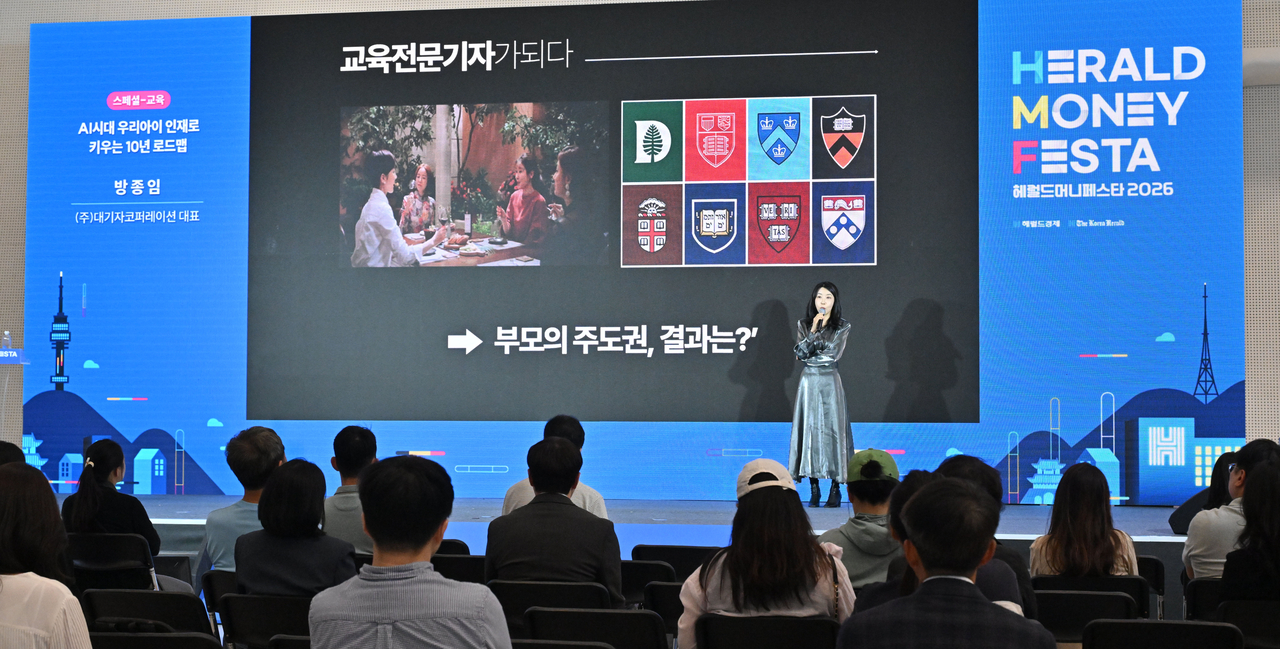
Bang also proposed five practices for parents in the age of "science-based parenting": observing the learning process and working together to find the root cause of problems; asking about the thinking process rather than the right answer; creating an atmosphere where failure is not feared; giving children ample time to try things on their own; and designing frequent small successes.
"I know it is hard for parents to wait," Bang said, "but you need to check whether your child can get back up on their own. You have to create even small experiences of success — by adjusting the difficulty or scope — so they can try again next time." She added, "The effects of an education that hands children the reins may not be felt right away, but they will compound and come back to you."
Questions continued even after the lecture ended, with audience members gathering at the foot of the stage. Kim Ji-eun, 40, who is raising a four-year-old, said, "I thought it might be too early to think about, since my child is still so young, but I appreciated the long-term perspective." A 65-year-old former educator surnamed Lee said, "I have been worried about how to approach education going forward as the school-age population shrinks, and the lecture gave me some answers."
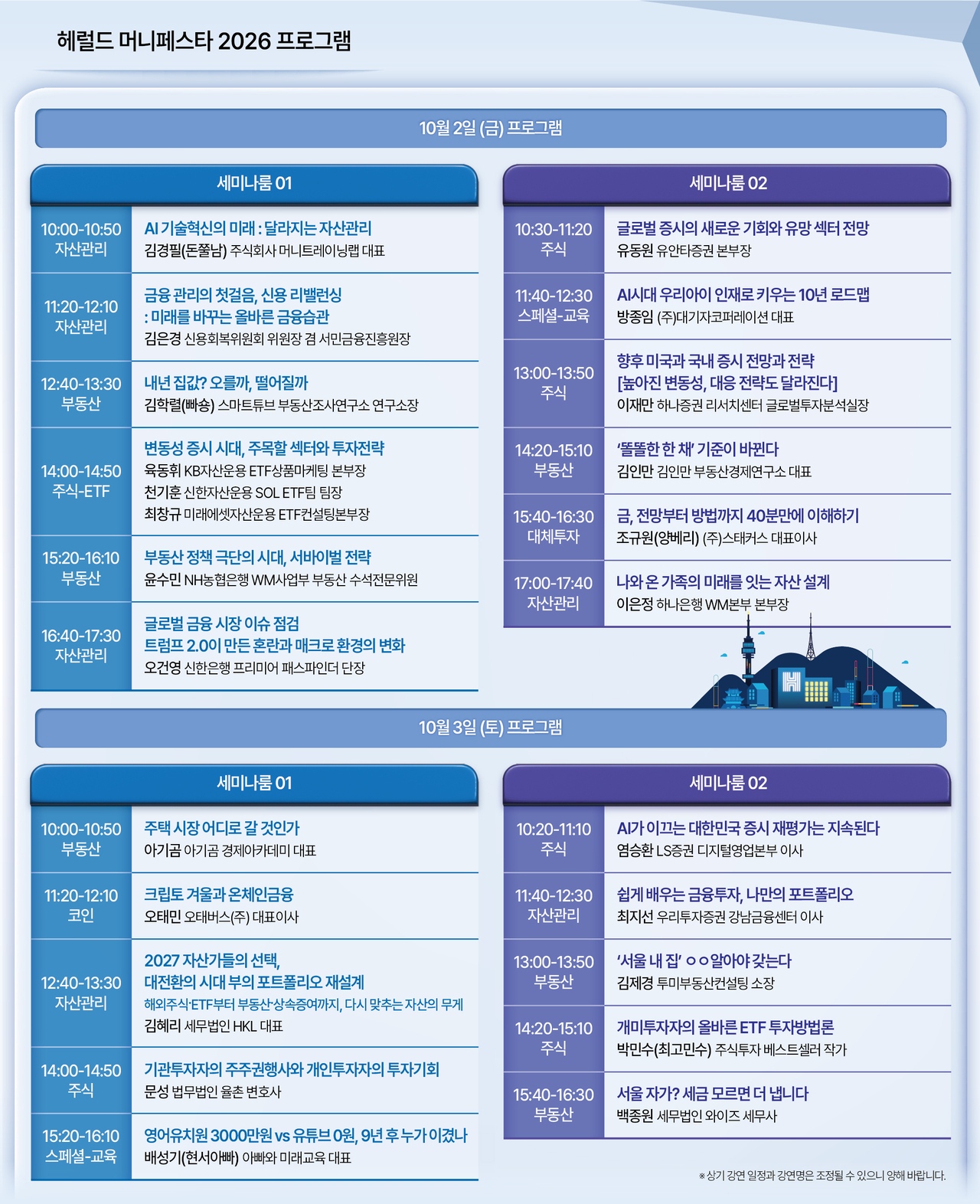
Meanwhile, Herald Money Festa, now in its third year, runs through Saturday under the theme "Money Rebalancing: Recalibrating the Weight of Your Assets." The event features lectures covering the full spectrum of asset management — from shares, ETFs, real estate, gold and virtual assets to wealth management, tax planning and inheritance — offering attendees a chance to reassess their financial flows and portfolios in a rapidly changing investment environment.

shy@heraldcorp.com
lucky@heraldcorp.com