Construction sector logged 42,837 workers' compensation claims last year, rising for a third consecutive year; occupational disease claims climbed from 4,542 to 20,000 in three years, with filings through August already near last year's full-year total; land and water transport sectors also saw disease-related claims jump 84% over the same period
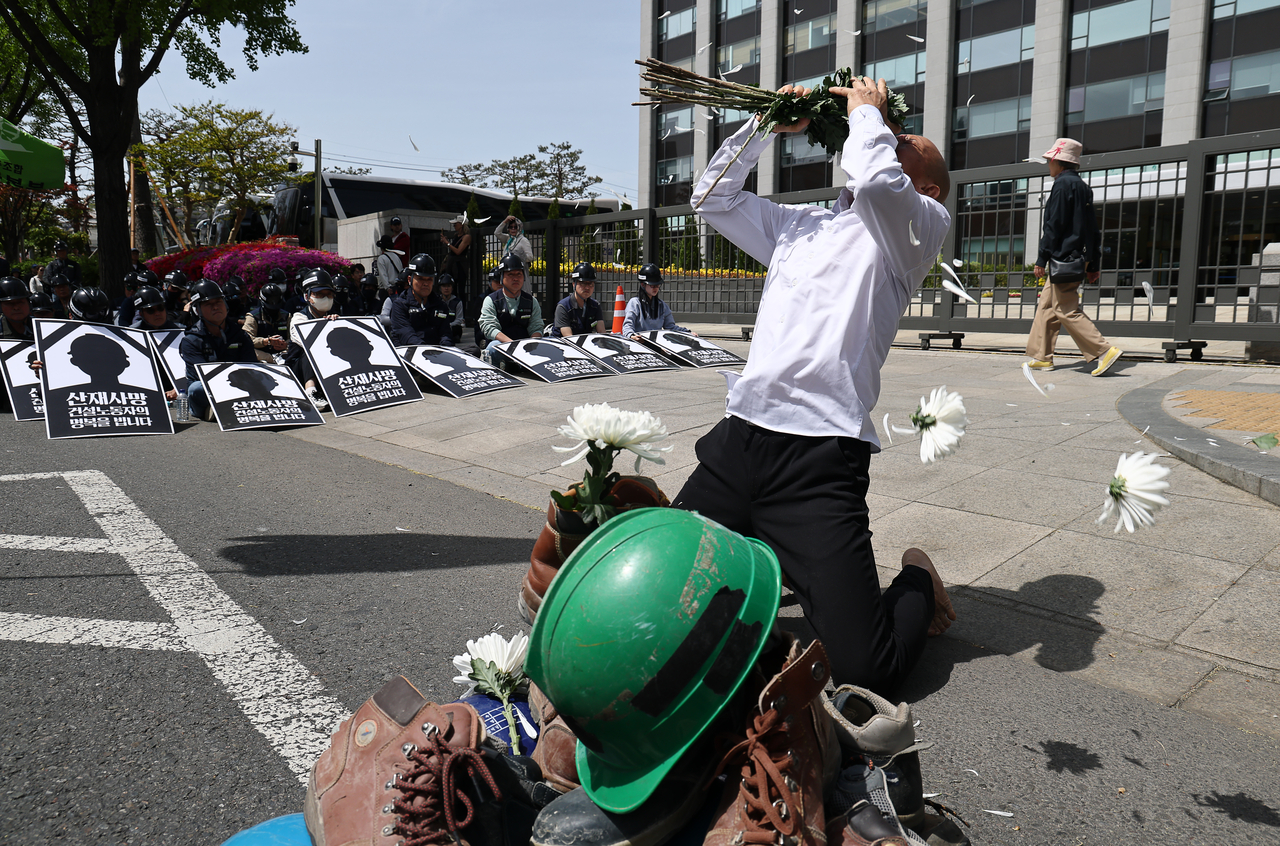
Workers' compensation claims in the construction sector have risen nearly 30% over the past three years, with filings for occupational diseases — including musculoskeletal disorders — surging more than fourfold and far outpacing the growth in accident-related claims.
Data submitted by the Korea Workers' Compensation and Welfare Service to Democratic Party of Korea lawmaker Yeom Tae-young show that construction industry claims totaled 42,837 last year, up 9,688 cases, or 29.2%, from 33,149 in 2022.
Claims have risen every year since 2022, climbing from 33,149 to 35,349 in 2023, 38,932 in 2024 and 42,837 last year. With 33,297 claims already filed through August this year, the annual total could set a record if the trend continues.
Of the 42,837 construction claims filed last year, 35,958 were approved.
The sharpest increase has come from occupational disease claims, which jumped from 4,542 in 2022 to 20,000 last year — a 4.4-fold rise in three years. Filings through August this year have already reached 19,258, nearly matching last year's full-year figure. Approvals for occupational disease claims over the same period stood at 12,582.
Approvals for bereaved families of construction workers who died from occupational diseases also rose, from 58 in 2022 to 103 last year — a 77.6% increase in three years. Through August this year, 73 bereaved families have received approval.
The trend extends beyond construction. In the land and water transport sectors, total workers' compensation claims rose 46.2%, from 10,162 in 2022 to 14,858 last year, while approvals climbed from 9,317 to 13,420 over the same period.
Occupational disease claims in those sectors rose 84.4%, from 615 in 2022 to 1,134 last year, and approvals increased 40.1%, from 292 to 409. Bereaved family approvals grew from 36 in 2022 to 47 last year, with 19 more approved through August this year.
Construction work involves repetitive, physically demanding tasks such as concrete pouring and formwork, and the sector employs a relatively high proportion of older workers, making the accumulation of musculoskeletal conditions more likely. The transport sector is similarly considered high-risk for musculoskeletal and cardiovascular diseases, given long hours behind the wheel and irregular working conditions.
The Ministry of Employment and Labor has been strengthening workers' right to halt dangerous operations and stepping up targeted inspections to reduce construction-sector injuries. It is also pushing to introduce a basic workplace rights law and an "employee presumption" system to better protect workers in special-employment and platform arrangements.
"Occupational disease claims are surging in physically demanding sectors like construction and delivery, making it urgent to prevent long hours and high-intensity work," Yeom said. "Because proving a causal link for occupational diseases is difficult, we must reform the recognition process and support system so that workers are not left to bear the burden of proof alone."
fact0514@heraldcorp.com