Han Byung-do calls for digital security to be elevated to a national-level priority
Jeong Jeom-sik says North Korea's illegal hacking must be sanctioned regardless of mine provocations
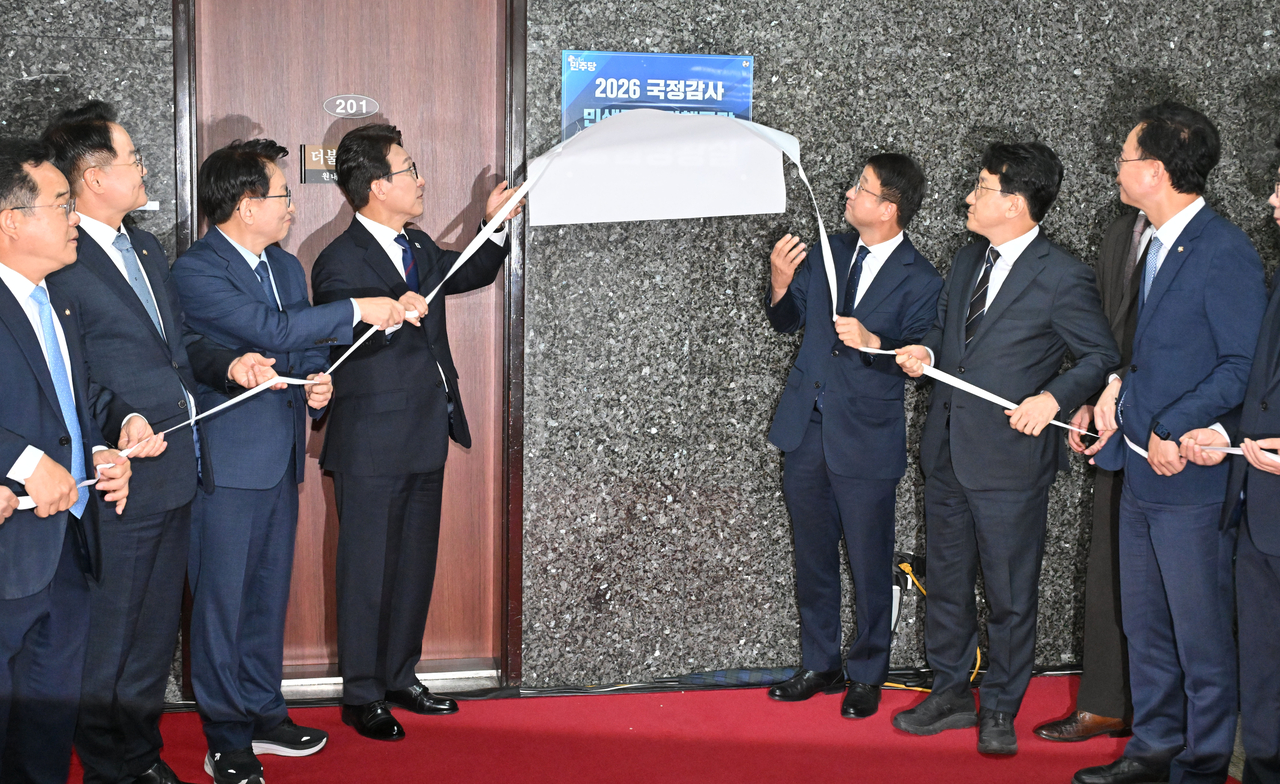
A wave of hacking incidents and personal data breaches that has rocked the financial sector has emerged as one of the central issues of this year's national audit, with the ruling and opposition parties offering sharply different takes on the crisis.
The Democratic Party of Korea focused on the use of artificial intelligence in the attacks, calling for stronger response systems and greater digital security. The People Power Party, meanwhile, broadened its line of attack, framing the incidents as part of a wider state-level cyber threat targeting government systems.
Democratic Party Floor Leader Han Byung-do said at a national audit strategy meeting Tuesday that the party and the government would "strengthen preemptive response systems against AI-based cyber threats and elevate the securing of digital safety in the financial and public sectors to a national-level integrated priority."
Han said the gravity of the situation was compounded by signs that some of the attacks had involved AI. "As AI-powered attacks are rapidly becoming more sophisticated, an urgent shift to AI-based defense systems is needed," he said.
He also called on the Financial Services Commission, the Financial Supervisory Service, the Ministry of Science and ICT, the National Intelligence Service and police to conduct thorough investigations and work with full force to establish airtight measures to prevent a recurrence.
Policy committee chair Kwon Chil-seung said the crisis should not be treated as a simple security incident involving financial firms. "We must treat this as an opportunity to achieve a fundamental overhaul of our security systems with a heightened sense of urgency," he said.
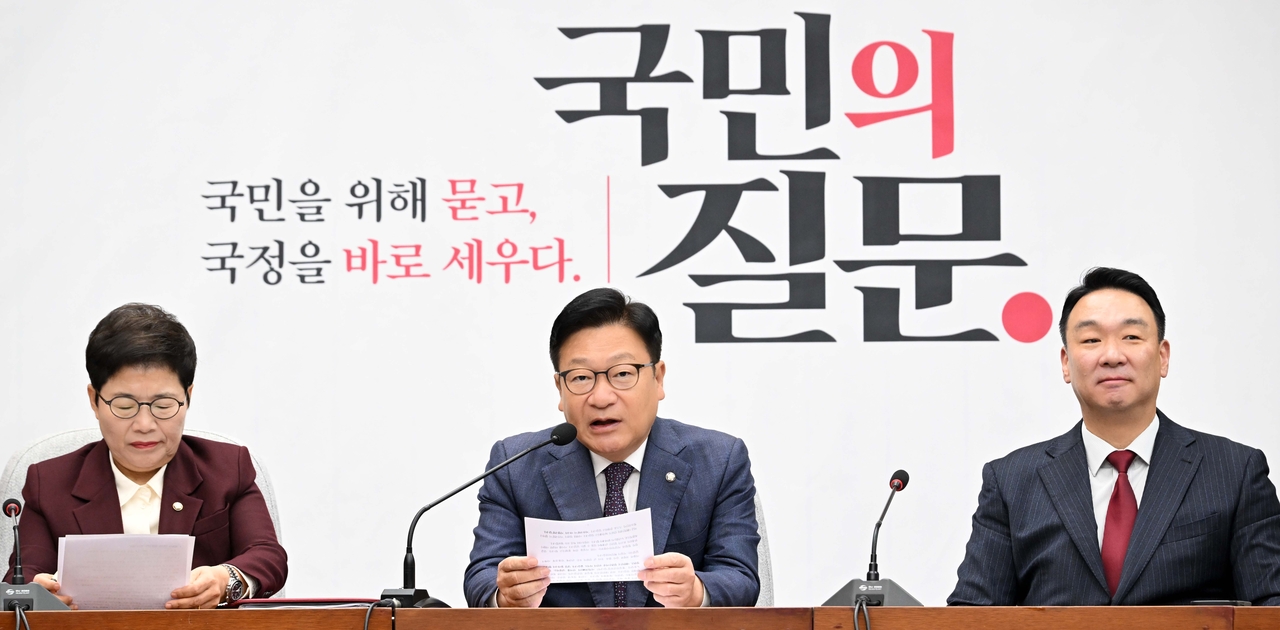
The opposition warned that hacking attacks on private-sector entities such as financial firms could spread to government systems and public institutions, while pressing for sanctions against North Korea's illegal cyber activities.
People Power Party Floor Leader Jeong Jeom-sik said at a national audit strategy meeting Tuesday that Foreign Minister Cho Hyun had proposed sanctioning North Korea's illegal cyber activities, but that Unification Minister Jeong Dong-young had reportedly objected, questioning why cyber sanctions unrelated to the landmine incident were being pursued. "North Korea's illegal hacking, virtual asset theft and other criminal acts should naturally be subject to sanctions at all times, regardless of any landmine provocation," Jeong said.
People Power Party lawmaker Choi Hyung-doo also criticized the government, saying a large-scale leak of sensitive personal data was spreading from private companies and financial institutions to government systems. "The government is strict when it comes to data breaches at private firms, but lenient when it comes to hacking of government systems and state-level cyberattacks," he said.
addressh@heraldcorp.com
raining@heraldcorp.com