Nearly 28,000 victims identified since special crackdown began
Most victims in their 20s and 30s, living in villas and officetels
Losses from jeonse fraud confirmed by police since a special crackdown began have surpassed 4 trillion won, with nearly 28,000 victims identified — two-thirds of them in their 20s and 30s. Nine out of every 10 victims were tenants in villas or officetels, underscoring how the fraud has fallen disproportionately on young renters and those living outside the apartment market.
According to data the Korean National Police Agency submitted to the office of Democratic Party of Korea lawmaker Lee Sang-sik, a member of the National Assembly's Public Administration and Security Committee, police confirmed 27,912 victims and losses of 4.08 trillion won ($3.04 billion) from the start of the special jeonse fraud crackdown in July 2022 through August this year. During that period, police apprehended 13,452 suspects and detained 764.
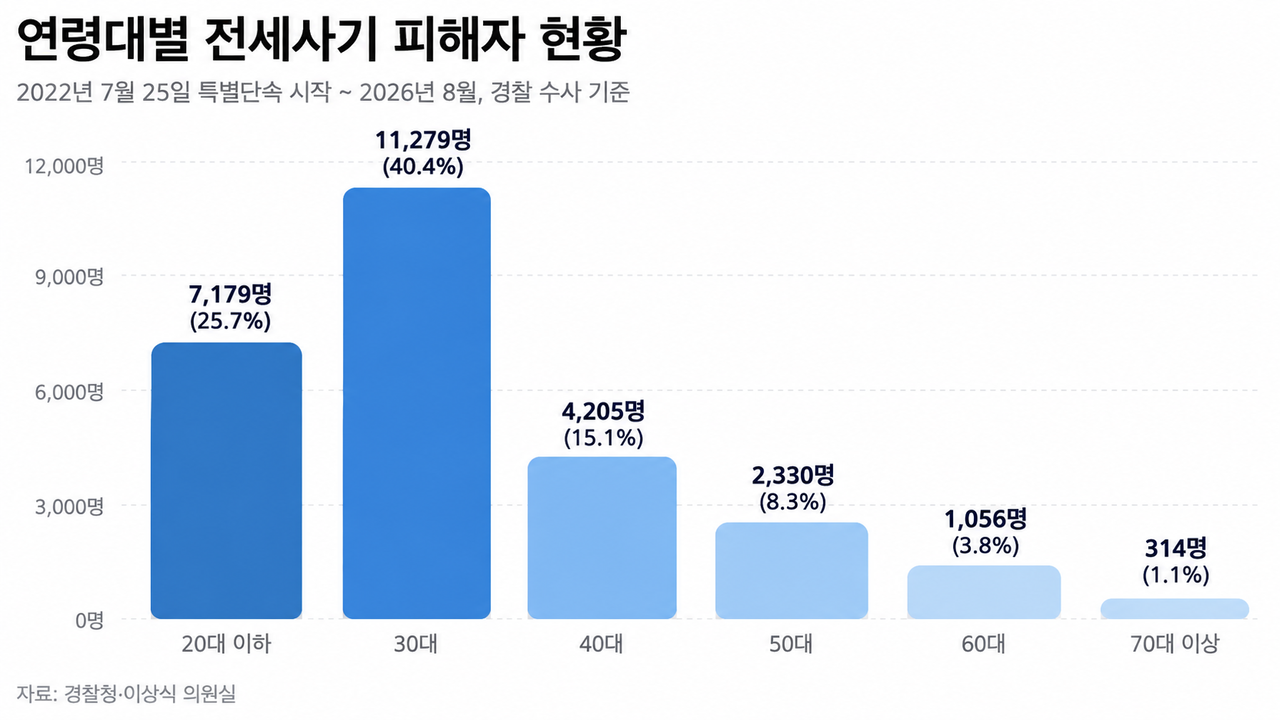
The damage was concentrated among younger victims. Those in their 30s were the largest group at 11,279, followed by victims in their 20s or younger at 7,179. Together, victims in their 20s and 30s accounted for about 66 percent of the total. Victims in their 40s numbered 4,205, followed by 2,330 in their 50s, 1,056 in their 60s and 314 aged 70 or older. A total of 1,549 corporate entities also suffered losses.
Breaking down losses by amount, the largest group — 10,795 victims — lost between 100 million and 200 million won. Another 6,698 lost between 50 million and 100 million won, 4,663 lost 50 million won or less, and 4,547 lost between 200 million and 300 million won. Some 1,209 victims lost more than 300 million won. In all, 16,551 people — 59.3 percent of all victims — suffered losses of at least 100 million won.
9 in 10 victims were villa or officetel tenants
Most jeonse fraud cases occurred in villas, or multi-family low-rise housing. More than 60 percent of victims — 17,408 people — had signed jeonse contracts for such properties. Combined with officetel victims, non-apartment tenants accounted for 90 percent of all fraud cases. Apartment victims numbered 2,318, while 272 lived in detached houses.
Measured by losses, the most prevalent form of jeonse fraud was "zero-capital gap investment," in which perpetrators used tenants' deposits to purchase additional properties with little or no money of their own, then failed to return the deposits. Losses tied to this scheme totaled 2.38 trillion won. Police arrested 3,558 suspects in connection with this type and detained 216.
Other fraud types, ranked by losses, were: unreturned deposits in "underwater jeonse" cases and similar schemes at 808.2 billion won, fraudulent lease guarantee insurance at 464.4 billion won, and false disclosure of encumbrances at 367.9 billion won.
Suspects were not limited to landlords. Fake landlords and tenants made up the largest category at 4,180, followed by actual landlords and property owners at 3,565, licensed real estate agents and their assistants at 3,242, and brokers at 1,741. Police also arrested 452 building managers, 247 developers and 25 appraisers.
Police continuing the special crackdown believe the concentration of victims among young people and non-apartment renters reflects both housing prices and the financial constraints of younger tenants. "In non-apartment properties, the gap between the jeonse price and the sale price is relatively small, making them more vulnerable to jeonse fraud," a Korean National Police Agency official said. "Because young people have less financial capacity than other age groups and tend to live in non-apartment housing, we believe that is why victims in their 20s and 30s and non-apartment tenants have been hit hardest."
"I feel deep sorrow over jeonse fraud crimes that have stolen the futures of young people," lawmaker Lee said. "Police must respond with investigations that see things through to the end, so that victims in their 20s and 30s do not lose hope."
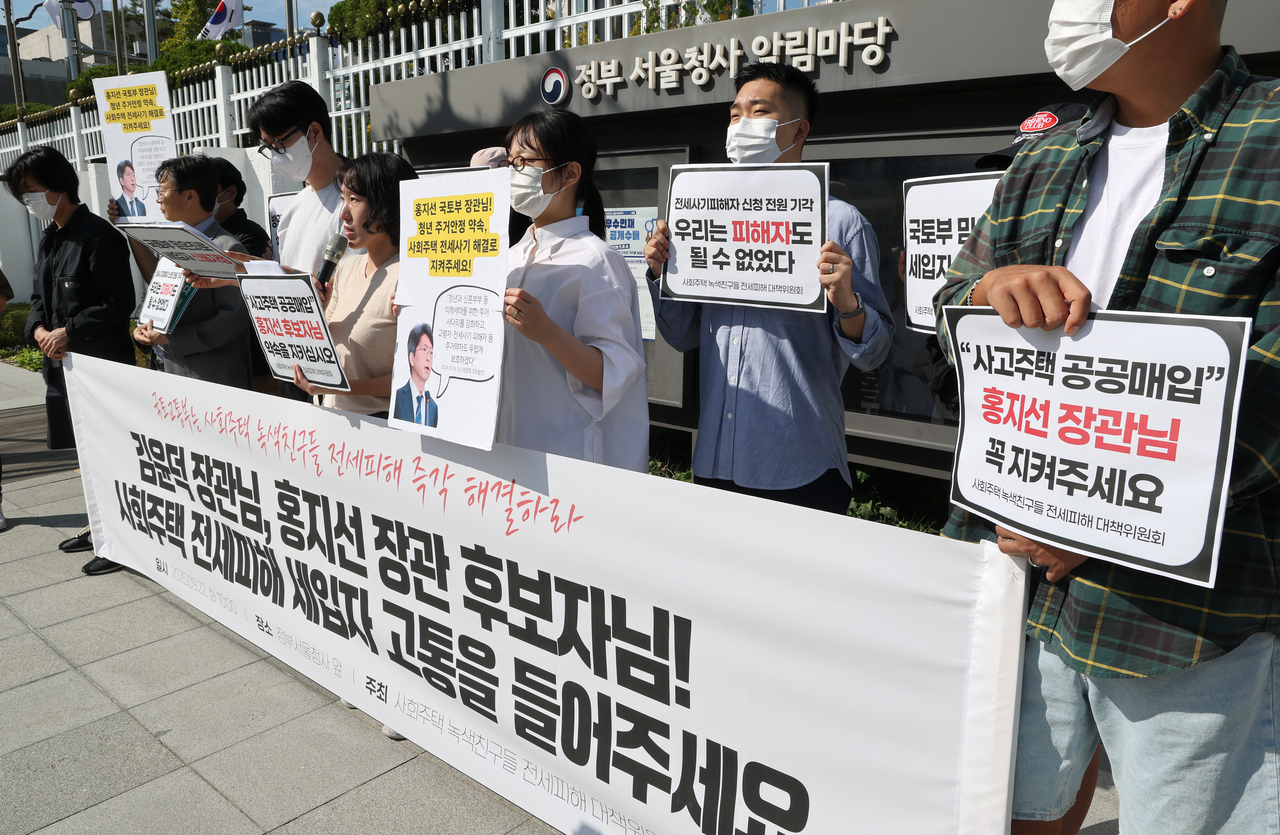
The government has also expanded support for victims. As of the end of August this year, a cumulative 40,936 cases had been recognized under the Jeonse Fraud Victims Protection Act, and the Korea Land and Housing Corporation had purchased 10,718 fraud-affected housing units.
Starting Nov. 13, the government will provide supplementary payments to victims who recovered less than one-third of their deposit, covering the shortfall. Victims who need support before court-ordered auction proceedings conclude — including those affected by trust fraud — will receive payments upfront, with a final settlement to follow.
jookapooka@heraldcorp.com