'Sacrifice' debate dominates National Assembly audit
'The planning itself is public work'
'Never thought about it for even a second' as political promotion
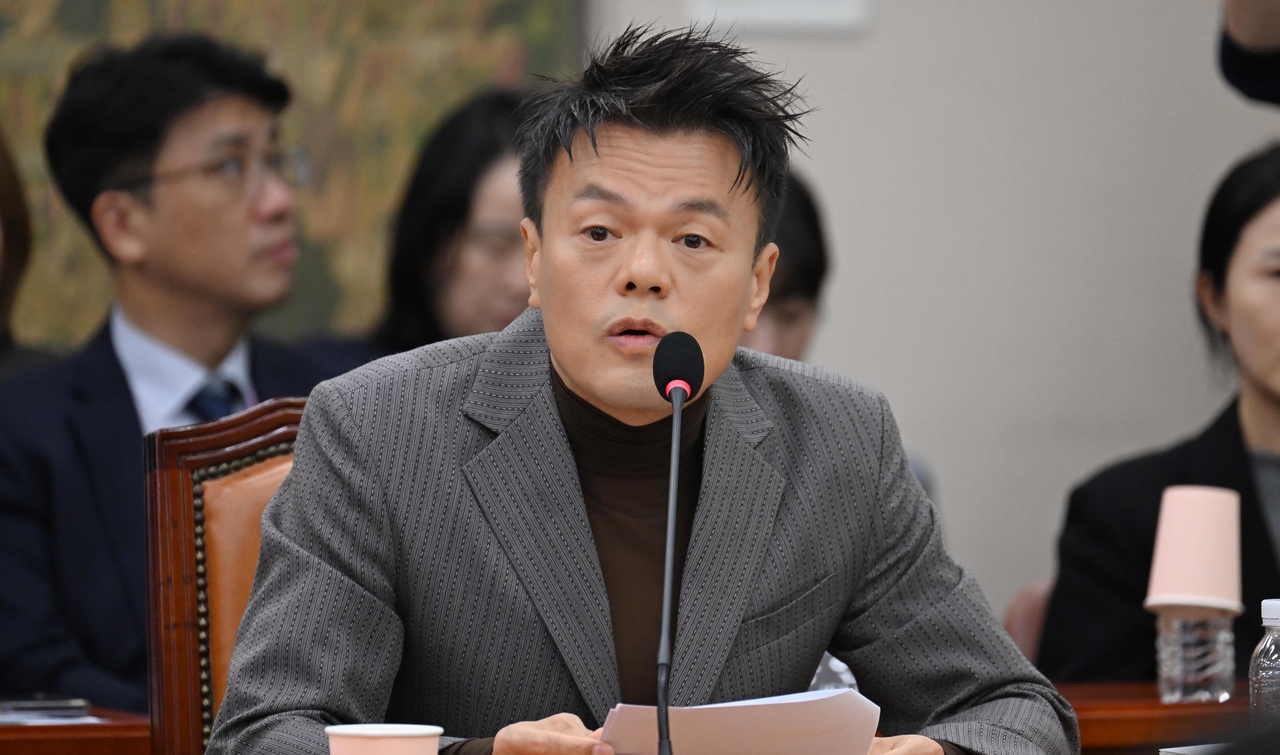
"The sacrifice of the four companies is something the four companies can make on their own. There is no need for government support here."
That was People Power Party lawmaker Bae Hyun-jin's challenge to Park Jin-young, co-chair of the Presidential Committee on Popular Culture Exchange, at the National Assembly's audit of the Ministry of Culture, Sports and Tourism on Wednesday. Bae was pushing back on Park's characterization of FANOMENON — a planned large-scale global K-pop festival — as a project that requires the four major entertainment agencies to make sacrifices. Fellow PPP lawmaker Kim Seung-su also pressed Park, asking why the government needed to step in when the private sector could handle it.
Park, appearing as a witness, said that if the four companies' interests alone were the consideration, it would be better not to proceed. He cited a "spillover effect" — using K-pop to draw tourists and channel them into other industries — as the rationale, and described FANOMENON as "a government-planned project."
The audit also put under scrutiny allegations of preferential treatment for the Big 4 agencies, JYP Entertainment's early trademark filing, suspicions of political promotion, and the basis for projected economic benefits. Park defended his intentions while acknowledging that the trademark filing approach "was not a normal method."
FANOMENON, set to hold its debut event in December next year, combines K-pop concerts, a fandom awards ceremony, and exhibition and experience programs by K-culture companies. Hybe and SM, YG and JYP Entertainment — the four major K-pop agencies — are the driving forces behind the event. Its distinguishing feature is treating the fandom not as consumers but as the agents of K-culture's spread. The name itself reflects this: it blends "fan" and "phenomenon" to convey the idea of "a phenomenon created by fans."
'Separate concerts would earn 2–3 times more' — opposition asks why the state is involved
The debate over FANOMENON began with allegations of preferential treatment. Bae said government projects normally involve a public tender to select capable companies, but that this project had insiders using internal information to enter a state project exclusively from the very start.
Park countered with his "sacrifice" argument. He said that if the four agencies' top artists performed separately instead of at FANOMENON, they would earn two or three times as much, and that he had "begged YG, begged SM, begged Hybe." He added that the companies stood to lose hundreds of billions of won over the next few years, making it hard to characterize what they were receiving as preferential treatment.
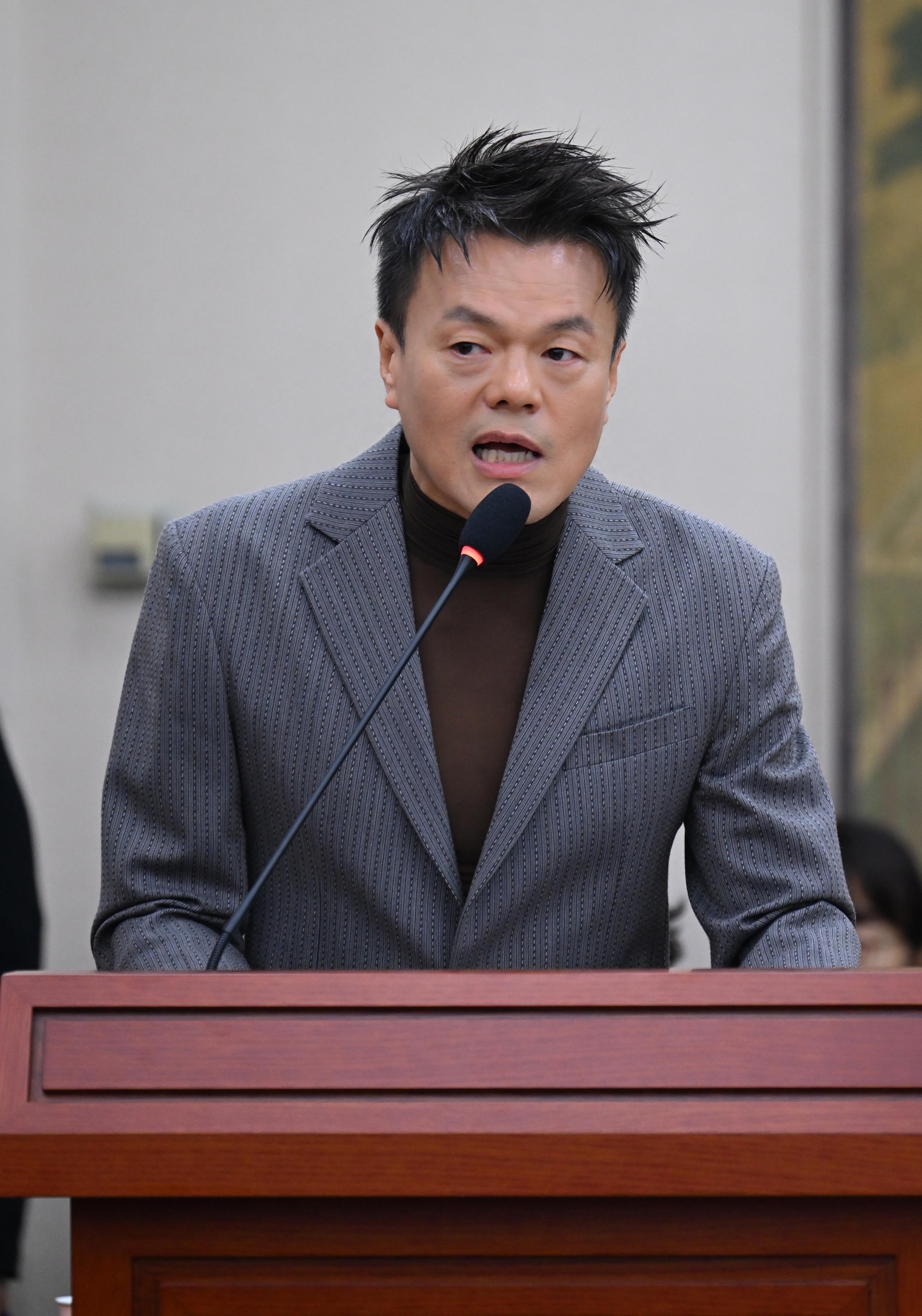
Tour revenue figures for top K-pop acts underscore the scale of what is at stake. According to the US Billboard Boxscore, BTS's ARIRANG world tour earned $171.7 million across 12 shows in August alone. Stray Kids' dominATE world tour, on JYP's roster, recorded $185.7 million across 31 shows in Billboard's 2025 annual tally.
The "sacrifice" argument handed the opposition an opening. Bae said government support was unnecessary if the companies were making sacrifices of their own choosing, and Kim asked why the state should intervene and deprive them of the chance to earn even more on their own.
Park conceded that if only the Big 4's interests were considered, it would be better not to proceed — but said the event was designed to draw tourists and generate a spillover effect into gaming, fashion, lifestyle and beauty. When PPP lawmaker Jo Eun-hee raised the same point, Park said that thinking only of the four companies' profits, it would be better to go it alone, but that the goal of pulling in large crowds and channeling them toward fashion, cosmetics and gaming was what made it necessary to treat the planning itself as a public undertaking.
Culture Minister Choi Hwi-young said FANOMENON was not a case of the Big 4 agencies entering a government event to pursue vested interests, and that the event could not happen if any party walked away.
'I wear two hats alternately' — government project or private event?
The nature of the project also became a point of contention. Jo asked whether FANOMENON was a project of the government committee, of Park personally, or a private-sector initiative.
Park said he wears two hats alternately — one as a JYP executive and one as committee co-chair — and that FANOMENON was developed while wearing the committee hat.
He then declared it "a government-planned project" while adding that who would handle operations would be decided case by case depending on the project. The implication was that the government committee handles planning while the private sector handles execution.
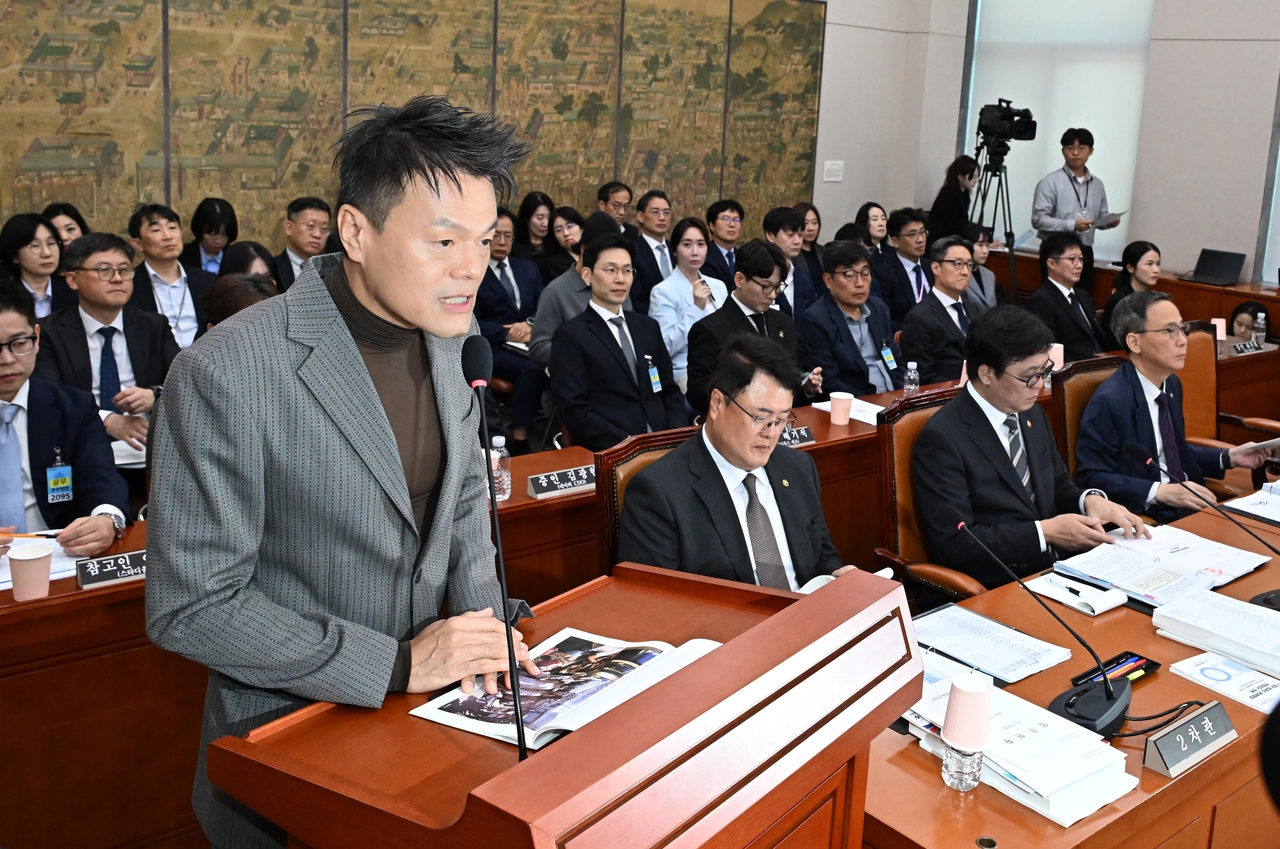
Park had laid out the same structure in his earlier briefing. He said the committee plans and generates ideas between the government and private companies, and that execution is decided to be either government-led or privately led depending on the nature of each project. He said the committee concluded that the FANOMENON awards ceremony and festival were better suited to private-sector leadership. He added that the four K-pop agencies had established a company with equal capital contributions and equal voting rights.
The government's public messaging emphasized the private-sector dimension. The Ministry of Culture, Sports and Tourism said through its official social media account that FANOMENON would proceed entirely on private capital. The 15 billion won ($11.2 million) budgeted for the committee for next year, it said, would go toward supporting small and medium-sized enterprises' participation in the event and attracting foreign tourists.
The budget also sparked a heated exchange at the audit. Kim cited the committee's operating costs and next year's event support budget, arguing that the government was providing close to 10 billion won and that the event was therefore not a private one. Culture Minister Choi rebuffed the claim, saying no government budget was going into FANOMENON itself and that the funds were solely for supporting smaller K-culture companies in participating in the exhibition.
'I'll just file it for now' — trademark filed after meeting with minister
FANOMENON had already drawn controversy before the audit over an early trademark filing. JYP filed for the domestic trademark for FANOMENON on its own on Oct. 1 last year — the same day the committee announced its launch. JYP subsequently filed in the United States in November of that year, and later in Japan and Mexico as well. Park acknowledged all of this when Bae raised the issue.
Bae cited a partial trademark rights transfer agreement signed between JYP and the Ministry of Culture, Sports and Tourism on April 1, saying the contract stipulated that the ministry would hold only half of the domestic rights while all overseas rights would remain with JYP. When asked whether it was appropriate for JYP to retain the overseas trademark rights, Park said it was not.
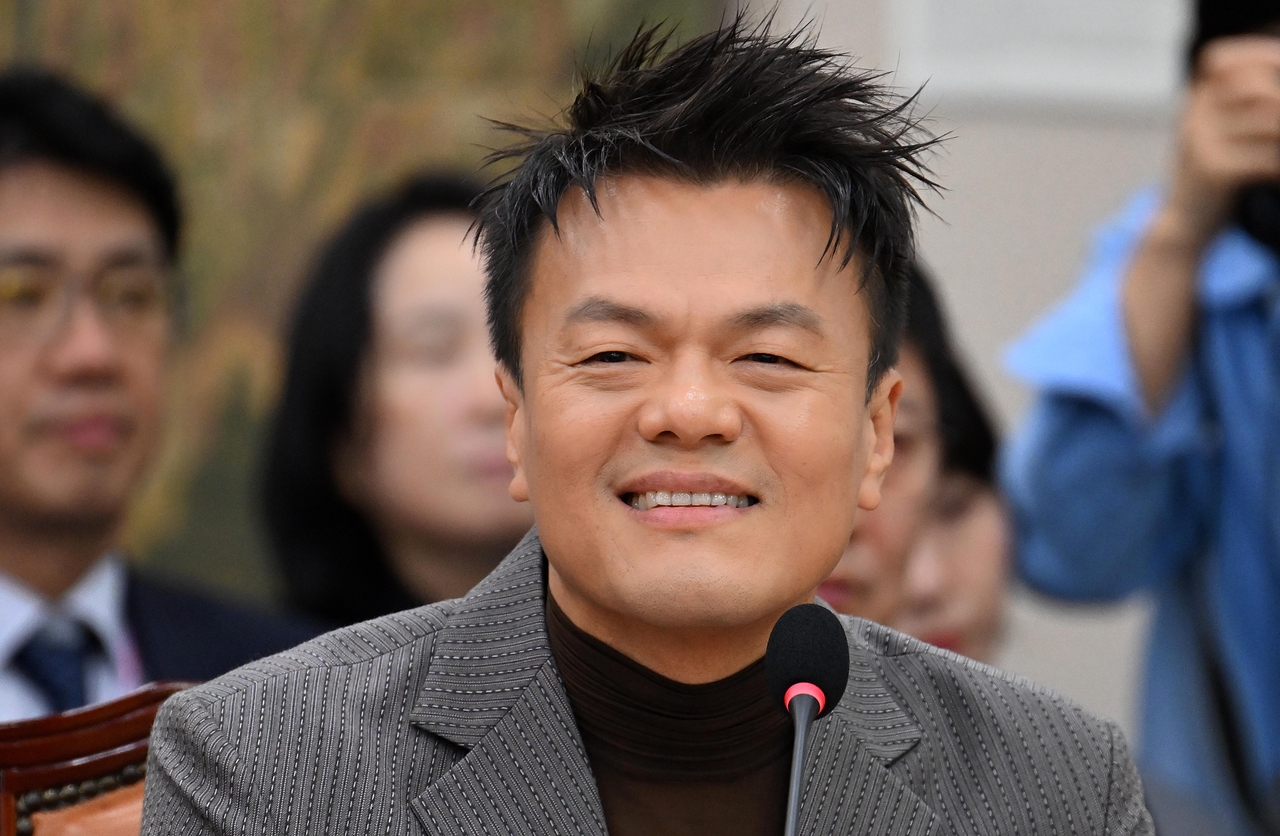
Park acknowledged that the process had been flawed. He said JYP, having a dedicated team, had clearly taken an irregular approach by filing in advance and then transferring the rights to the government, and that the method had come about because of a fear that someone else might claim the name first. "I think they were irregular methods," he said.
When Democratic Party lawmaker Choi Min-hee asked about potential revenue from the trademark, Park drew a line, saying he did not know but that none of it would stay with his company. Democratic Party lawmaker Jeong Jun-ho added that if a bad-faith individual had filed first, Thursday's audit would have been about why the process had been bungled.
The opposition also took issue with the timing of the event. Kim said FANOMENON was set to be held just months before the 2028 election and asked whether it was designed to boost the president's approval rating.
Park rebuffed the suggestion, saying that even if someone above the president asked him to do something he did not believe was good for the country, he would not do it, and that he was not the type to act out of fear of being told what to do. He added that he was "absolutely not the kind of person who does things for the president or for the Democratic Party" and that he had not even been thinking about when the general election was.
When Jo raised concerns that the project could be seen as aligned with the current administration, Park said he had "not thought for even a second" about doing this for President Lee Jae Myung, the current administration or the Democratic Party. "I'm doing this because I genuinely believe it will help the next generation," he said, and appealed to the committee to trust him given that he had taken a witness oath.
FANOMENON, which combines K-pop concerts, a fandom awards ceremony, and exhibition and experience programs by K-culture companies, is scheduled for December next year. In his briefing, Park said the committee was "still going through so many trials and errors in figuring out how the public and private sectors should work together" and pledged to do its best to make the project a good example of such collaboration.
shee@heraldcorp.com