Interview with Joseph Chalom, CEO of SharpLink
Second-largest publicly listed Ethereum holder in the world
Manages 890,000 ETH; institutional share rose from 6% to 60%
For K-BUIDL, stablecoin infrastructure trumps yield targets
Toss and Kakao Pay named as next-generation financial infrastructure companies
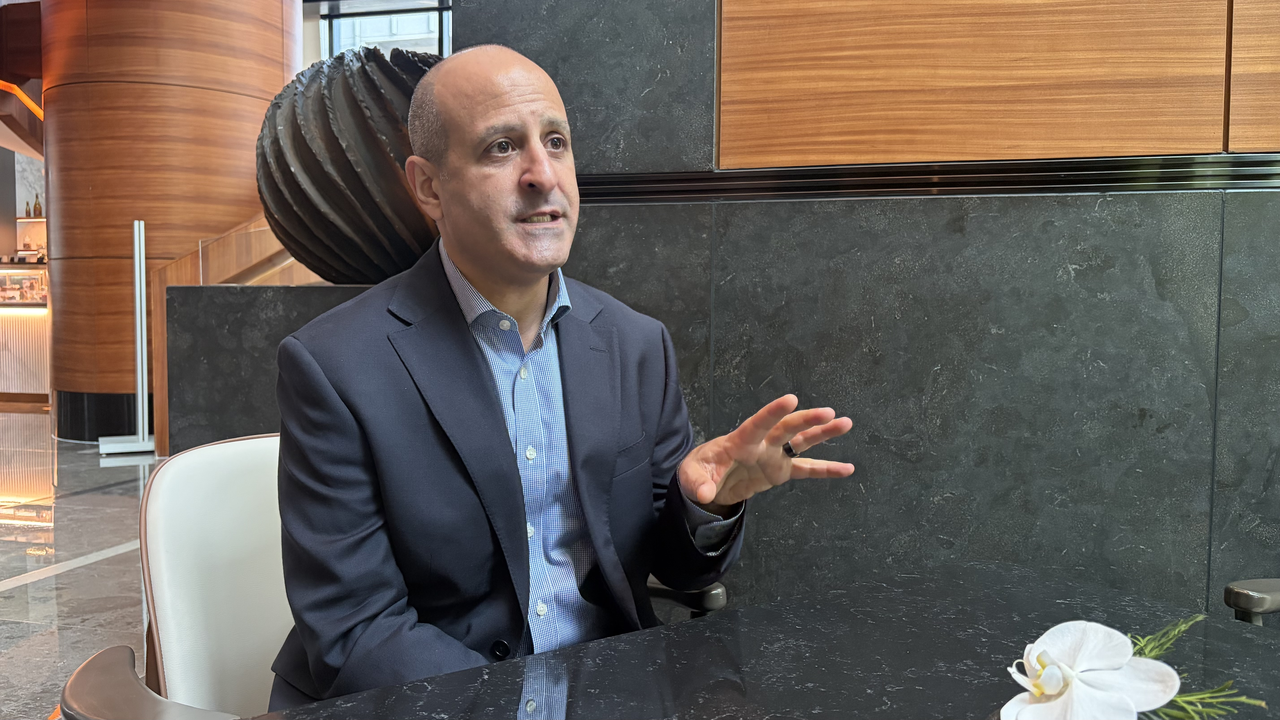
"Regulators always focus on three things: investor protection, market integrity and innovation. The problem is that companies tend to focus only on innovation, while regulators focus only on investor protection."
Joseph Chalom, CEO of SharpLink, made that observation in a recent interview, arguing that revitalizing the digital asset market requires companies and regulators to understand each other's priorities. His broader point: the goal should not simply be to restrict markets, but to build the products and infrastructure that allow people to invest safely.
Chalom spent 20 years at BlackRock, the world's largest asset manager, overseeing its digital asset strategy. He led the design and launch of the spot Bitcoin ETF IBIT, the spot Ethereum ETF ETHA and the tokenized fund BUIDL. He now heads SharpLink, a Nasdaq-listed company that holds Ethereum as its primary treasury asset.
Having worked through both the Joe Biden and Donald Trump administrations, Chalom said the center of gravity in digital asset policy has shifted. Where the previous administration focused on preventing fraud and market manipulation, the current one is focused on the competitive advantage that new financial technology can deliver.
"The Trump administration sees crypto as a strategic national strength," he said, "and you can see that in the growth of dollar-backed stablecoins." He added that Korea, too, needs a won-backed stablecoin to maintain monetary sovereignty. "A won stablecoin will become the payment rail for Korean assets that get tokenized going forward," he said.
For roughly a decade, applications to launch a spot Bitcoin ETF in the United States were repeatedly rejected. Canada and other markets opened first, but US regulators held the line. Chalom spent about 18 months in discussions with the Biden administration and then-Securities and Exchange Commission Chair Gary Gensler, who had taken a cautious stance toward crypto.
BlackRock's central argument in those negotiations was not innovation — it was investor protection. "We spent 18 months convincing regulators that an ETF actually helps protect investors," Chalom said. "We emphasized that investors could hold Bitcoin simply and conveniently, without having to manage their own keys or take custody of the asset, and that they could trade in a highly liquid market."
Designing the product also meant building in market safeguards. BlackRock established a structure involving broker-dealers and banks and put surveillance systems in place to detect manipulation. Because Bitcoin trades around the clock, determining a daily pricing mechanism was another challenge. The firm required assets to be held with regulated qualified custodians and kept segregated from other client assets.
IBIT is often cited as the fastest-growing ETF in US history, surpassing $50 billion in assets under management just 228 days after launch. As of Tuesday, its net assets stood at approximately $69 billion, according to iShares data. Average daily trading volume over the past 30 days reached roughly 45.2 million shares.
"BlackRock didn't create demand for Bitcoin," Chalom said. "Demand had been building for years — from retail investors to pension funds, insurers and asset managers — all waiting for a better, more accessible product." He added that the same dynamic played out when the Ethereum ETF launched five months later, drawing more than $10 billion in inflows.
The internal view at BlackRock also shifted significantly, he said. Bitcoin moved from being seen through the lens of speculative rallies and skepticism to being recognized as an asset worth a modest portfolio allocation, even given its volatility. "Bitcoin came to be seen as digital gold, and Ethereum as a new kind of internet," Chalom said. "The conversation moved from crypto as an asset class to digital infrastructure as the backbone of future financial services."
The path was not without setbacks. From 2018 to 2020, BlackRock tried to build solutions on private permissioned blockchains and failed. The need for consensus among participants and the difficulty of connecting with other systems proved too limiting. "We were wrong to think institutions had to use private blockchains," Chalom said.
![[Created using ChatGPT]](https://wimg.heraldcorp.com/news/cms/2026/10/09/news-p.v1.20261008.505d09eec8714050b5e530ca82ff473e_P1.png)
Shinhan Securities and other domestic financial firms are working on a Korean version of BlackRock's tokenized fund BUIDL. Chalom described the original as a product designed so that "investors operating within the blockchain ecosystem can earn yield without moving their funds back into traditional financial markets."
Simply holding a stablecoin earns no interest. BUIDL, by contrast, generates fund returns while also functioning as on-chain collateral — similar in principle to posting interest-bearing government bonds as collateral in traditional finance.
Shinhan Securities has previously indicated a target yield floor of around 4 percent for the Korean version. Chalom declined to evaluate individual products but noted that "investors in money market funds or government bond funds are not seeking a fixed rate — they are pursuing near risk-free returns through government bonds and short-term instruments."
He argued that building market foundations matters more than chasing yield. The right sequence, in his view, is to establish stablecoins as a payment layer first, then introduce short-term yield products like BUIDL, and gradually expand tokenization to equities, bonds, real estate and raw materials. Once 24-hour trading platforms are in place, AI agents could eventually automate transactions across that infrastructure.
Chalom said BUIDL was built on Ethereum because of its operational track record and deep liquidity. BlackRock conducted a year-long due diligence process, examining ecosystems where stablecoin and decentralized finance activity was concentrated. "Ethereum is the oldest programmable blockchain, and it has run without interruption for 11 years," he said. "More than half of stablecoin transactions and about 60 percent of tokenized assets were in the Ethereum ecosystem."
He also said the future belongs to public blockchains with privacy features, and noted that many industry participants in Korea have asked him to relay a message to regulators: "Please allow public blockchains with compliance mechanisms."
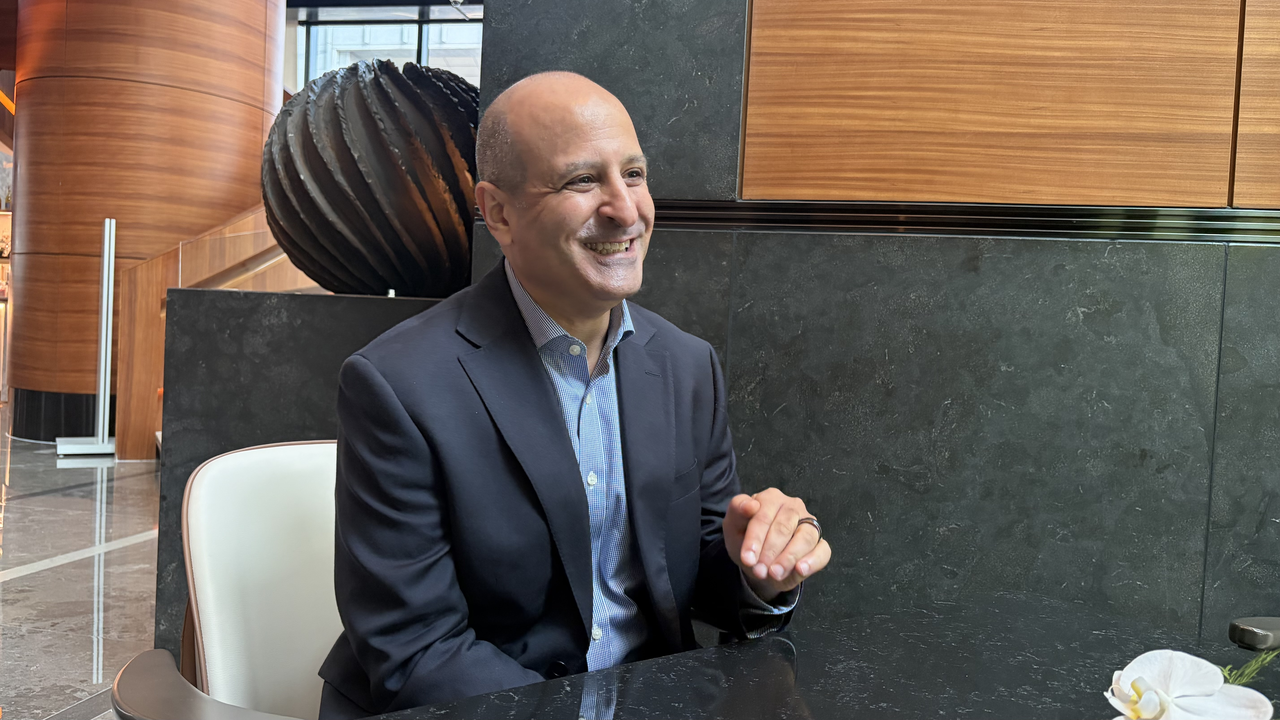
SharpLink is the second-largest publicly listed holder of Ethereum in the world. The company holds 891,714 ETH, and Chalom described it as "the fifth-largest digital asset treasury company among all DAT firms globally."
The company stakes its holdings and deploys a portion into DeFi protocols — including Etherfi, EigenCloud and Lido — over multi-year periods to earn incentives. In August, SharpLink established a $125 million Ethereum fund with Galaxy Digital, structured to generate returns by providing early liquidity to new on-chain protocols.
Rigorous due diligence underpins every deployment decision. "We reviewed more than 100 investment opportunities but actually committed capital to only four," Chalom said. "You have to invest with institutional discipline, and you need the infrastructure to pull funds within one minute — even on a weekend — the moment a problem appears." Separately from long-term positions, the firm monitors risk around the clock through technology and dedicated personnel.
Chalom also applied the disclosure and audit standards he learned at BlackRock. SharpLink appointed KPMG as its auditor and assembled an executive team drawn largely from major financial institutions including JPMorgan. Ahead of the quarterly disclosures required by the SEC, the company publishes financial metrics daily on a website dashboard. As a result, the institutional ownership share rose from 6 percent in June last year to 60 percent by the end of June this year, Chalom said.
"It took one year to become the DAT with the highest institutional ownership share in the world," he said. "Nine bank research teams now cover SharpLink and sell our shares to their clients."
SharpLink maintains a measured tone with investors. It explains both the long-term opportunity and the volatility of Ethereum, but avoids short-term price forecasts. "The lesson I learned at BlackRock is that you have to respect your investors," Chalom said. "If you predict short-term prices, you will ultimately disappoint retail investors — so we will not be giving specific price targets going forward."
![[Created using ChatGPT]](https://wimg.heraldcorp.com/news/cms/2026/10/09/news-p.v1.20261008.01bcab887e2c4b2f9c01cc1b458c8686_P1.png)
Chalom sees a convergence of stablecoins, tokenized assets, DeFi and AI agents as a force that will transform personal finance. "Combine programmable stablecoins with 24-hour DeFi platforms and AI agents, and you will take fund movement, investment and trade execution to an entirely new level," he said.
The first change, he predicted, will come in how idle cash sitting in accounts is managed. "An AI agent will look at your account and ask, 'Why aren't you earning 3 percent interest?' — and then move the money on your behalf," Chalom said. From there, the agent would adjust portfolios based on specific savings goals, whether saving for a wedding or preparing for retirement.
Liabilities and spending would fall within scope as well. When mortgage rates drop, the agent could recommend early repayment or refinancing. At insurance renewal, it could compare coverage and premiums to find better terms. Reducing the interest rate applied to credit card debt is another possibility he envisions.
These changes could also reshape competition among financial firms. Chalom named Korea's Toss and Kakao Pay, alongside US companies Robinhood, Stripe and Coinbase, as challengers building new financial infrastructure. Services that started with remittances or payments could expand into brokerage, insurance, stablecoins and tokenized assets — evolving into "digital-native super apps" that let users manage their entire financial lives in one place.
"Younger financial consumers will want to see their entire financial life at a glance and use the same tools that Wall Street uses," he said.
Regulating AI-driven finance will prove harder than institutionalizing digital assets, Chalom warned. "If crypto legislation feels difficult, just think about what AI regulation will be like," he said. "Regulating AI agents and AI itself will be the single hardest regulatory challenge facing governments around the world."
"What matters most," he added, "is that agents must work for financial consumers — not for financial institutions."
kyoung@heraldcorp.com