Korea Testing & Research Institute-led proficiency test yields 'satisfactory' rating, objectively verifying calorific value analysis capability; corporation pursues KOLAS accreditation expansion to cover calorific value and ash content, bringing analysis in-house from external labs
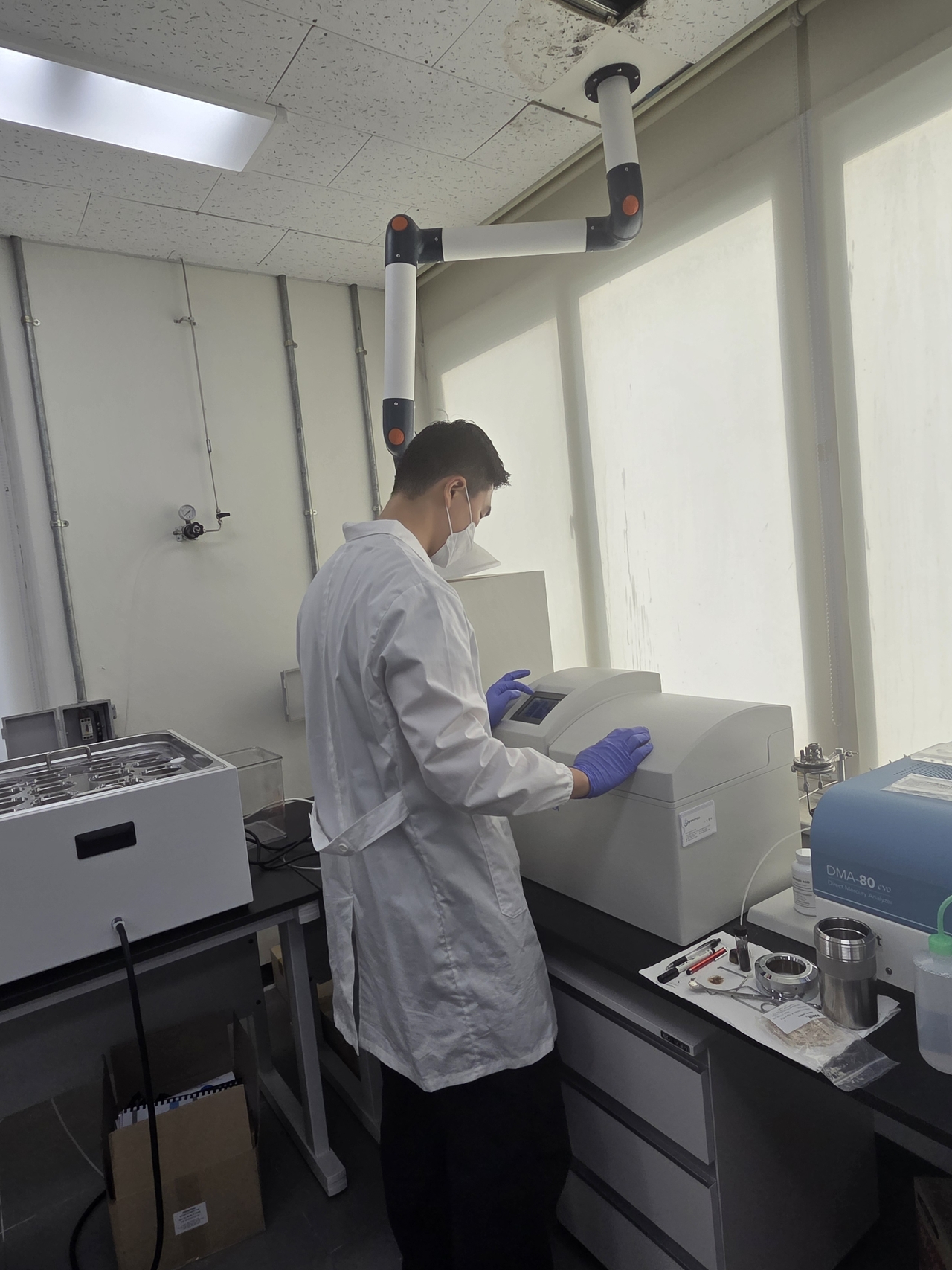
The Seoul Water Regeneration Facility Corporation is seeking to expand its Korea Laboratory Accreditation Scheme (KOLAS) accreditation to cover calorific value and ash content testing, after independently verifying its analytical capabilities for sewage sludge calorific value.
KOLAS, operated under the Korean Agency for Technology and Standards, is the national accreditation body that evaluates the technical competence and quality management systems of testing and inspection institutions in accordance with the international standard ISO/IEC 17025.
Sludge generated during sewage treatment is processed through drying and other steps before being used as fuel. The corporation received KOLAS accreditation in March last year for 17 metal-related items in the wastewater and waste sector, and now plans to extend that accreditation to include calorific value and ash content — the parameters needed to use dried sludge as fuel.
Calorific value refers to the amount of energy released when a fuel burns. Dried sludge must meet a minimum calorific value threshold to qualify for use as fuel.
Accurate measurement and management of calorific value is therefore critical.
Currently, calorific value analysis of dried sludge produced at Seoul's four water regeneration centers is outsourced to external laboratories.
The corporation plans to expand its KOLAS accreditation so that its Water Regeneration Research Institute can conduct calorific value analysis in-house, enabling faster turnaround of results and more effective quality control.
To that end, the corporation recently participated in the "KOLAS PT-2026-13 Coal Calorific Value Measurement Test" organized by the Korea Testing & Research Institute (KTR) and received a "satisfactory" rating.
A total of 15 institutions took part in the test, including domestic KOLAS-accredited laboratories. Participants analyzed identical samples, and the results were compared to evaluate each institution's testing and analytical capabilities.
The proficiency test is a required step toward expanding KOLAS accreditation to cover calorific value and ash content for waste materials including dried sludge. Based on the results, the corporation plans to apply for the accreditation expansion in December.
Once the expanded KOLAS accreditation is granted, the corporation will be able to analyze and manage the calorific value of dried sludge produced at all four water regeneration centers in-house. Quality analysis previously sent to outside laboratories will be handled internally, allowing for faster confirmation of results and more direct application to quality management.
"Having objectively verified our calorific value analysis capabilities through this proficiency test, we will move forward with expanding our KOLAS accreditation to analyze and manage dried sludge calorific value in-house," said Jin Jae-seop, president of the Seoul Water Regeneration Facility Corporation. "We will continue to strengthen our testing and analytical capabilities to ensure accurate and reliable results."
seouldream01@heraldcorp.com