Reconstruction and redevelopment paired with education and transport upgrades aim to make Gangdong-gu a city people want to stay in — while job hubs like Godeok Biz Valley push it toward self-sufficiency
A planned greenway linking the Han River, mountains and forests will weave nature into everyday life as the district grows

Gangdong-gu, a Seoul district that has grown into a city of more than 500,000 residents, is moving beyond simply expanding its physical footprint and accelerating efforts to build a community where housing, jobs and leisure coexist.
The plan calls for overhauling the residential environment through large-scale reconstruction and redevelopment projects, expanding education and transport infrastructure, and creating jobs centered on Godeok Biz Valley and an advanced business complex — transforming the district into a self-sufficient city where people live close to where they work.
A project called the Gangdong Han River Greenway will tie together the Han River, mountains and forests into a single ecological corridor, giving residents space to walk and unwind in nature as part of their daily lives.
The future Gangdong-gu envisions is not simply a large city of 500,000 people, but a place where residents can live the life they want — what the district calls "Wannabe Gangdong."
Faster reconstruction and redevelopment — with education — to make Gangdong-gu a place people put down roots
A competitive city starts with its residential environment.
During the eighth elected-term administration, Gangdong-gu successfully completed construction and move-in at Olympic Park Foreon, the largest reconstruction complex in South Korea, fundamentally redrawing the district's residential map.
Built on the site of the former Dunchon Jugong apartment complex, Olympic Park Foreon comprises 12,032 units in total. The large-scale move-in and urban development it brought served as a pivotal moment in Gangdong-gu's growth into a city of 500,000.
The transformation is ongoing.
Reconstruction and redevelopment are actively under way in Myeongil-dong, Cheonho and surrounding areas, and the district is pursuing more than 70 improvement projects in total, including remodeling schemes and "Moa Town" neighborhood renewal initiatives.
The ninth elected-term administration has made faster reconstruction and redevelopment a top priority.
The district plans to accelerate project timelines by using type-specific task forces to quickly identify obstacles on the ground and by running permitting procedures in parallel — a fast-track approach — to the extent permitted by law.
Yet better housing alone does not make a city people want to live in.
For young families to put down roots in Gangdong-gu, the quality of education matters just as much.
As young families have moved in alongside large housing developments and urban growth, the school-age population in Gangdong-gu's elementary and middle schools has been rising — bucking a citywide decline across Seoul.
Since the eighth elected-term administration, the district has pursued the "The Best Gangdong Education Belt," expanding a cooperative education framework that links universities with high schools.
The ninth term has made activating International Baccalaureate education and securing Seoul's first designation as an international education special zone its top campaign pledge, channeling resources into strengthening public-school competitiveness.
The district views reconstruction and redevelopment not merely as projects to build new housing, but as opportunities to reshape the city by simultaneously expanding the full range of everyday infrastructure — housing, education and transport.
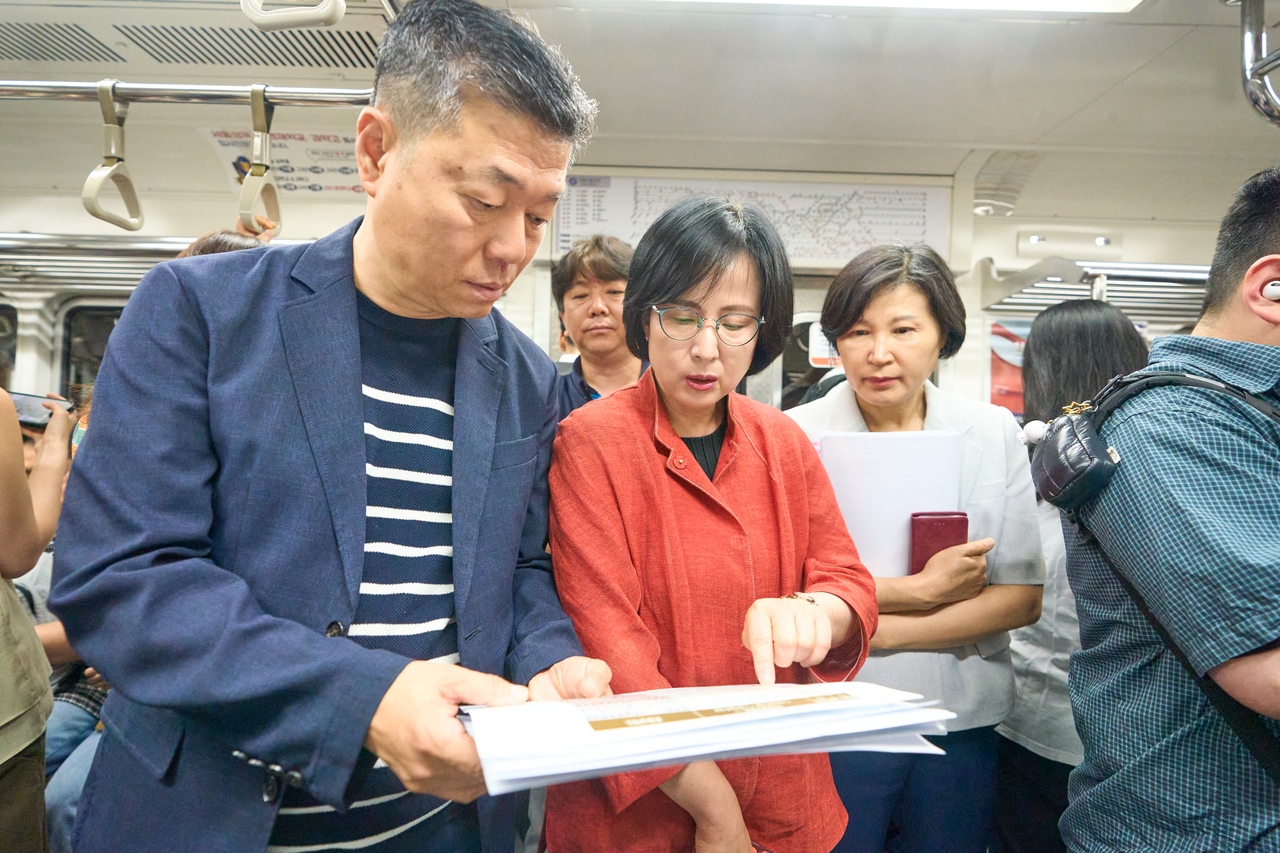
Lines 5, 8 and 9 — plus GTX-D — to make Gangdong-gu a regional transport hub
As population and employment grow, so does the importance of transport links.
Gangdong-gu is already served by subway lines 5, 8 and 9, the Seoul Ring Expressway and the Sejong–Pocheon Expressway.
With the GTX-D express rail line and an extension of Line 9 now in progress, the district's role as a regional transport hub connecting the eastern Greater Seoul area is set to expand further.
During the eighth elected-term administration, the district worked alongside residents to secure confirmation that GTX-D would pass through Gangdong-gu, and it plans to continue coordinating with relevant agencies to ensure the project stays on track and that the transport benefits for Gangdong-gu residents are fully reflected.
The fourth-phase extension of Line 9 is currently under construction. Once complete, it will allow passengers to travel from the Godeok and Gangil areas to Gangnam without transferring, improving transport access to Godeok Biz Valley and the Gangil district.
Connecting the Songpa–Hanam Line 3 extension with Dunchon-Oryun Station is another key issue.
The district is examining a plan to link the Songpa–Hanam Line with Dunchon-Oryun Station to create a transfer connection between lines 3 and 9.
To address rising transport demand from Olympic Park Foreon, the planned reconstruction of the Olympic Athletes' Village apartment complex, and development in Hanam's Gamil and Gyosan districts, the district plans to commission a preliminary feasibility study on connecting Line 3 to Dunchon-Oryun Station.
Congestion on Line 8 during rush hours has also worsened since the Byeollae Line opened, and the district will work with Seoul and Gyeonggi Province to add trains and improve operating conditions to ease crowding.
Godeok Biz Valley and the advanced business complex drive Gangdong-gu's push to become a self-sufficient live-work city
Jobs are another pillar of Gangdong-gu's urban competitiveness.
The district is expanding its industrial base around Godeok Biz Valley, an advanced business complex and the Gangdong General Industrial Complex, aiming to emerge as an economic hub for eastern Seoul.
Godeok Biz Valley is particularly central to local job creation.
Since KX Group moved in in 2022, 24 companies now operate there, employing about 10,000 people. Those tenants have hired roughly 1,000 Gangdong-gu residents to date, building a foundation for the district and its businesses to grow together.
The advanced business complex has also reshaped the district's industrial profile.
Since Samsung E&A, Samsung C&T, Cesco, Korea Engineering Consultants Corp. and six other leading companies moved in in 2015, the complex now employs about 9,000 people. Through the first half of 2026, it had hired 1,938 Gangdong-gu residents, contributing to local employment growth.
The Gangdong General Industrial Complex, under development in the Sangil-dong area, is being built as a digital engineering cluster that merges advanced engineering with software industries. Infrastructure construction is currently under way, with completion targeted for the second half of 2027.
Drawing on these industrial anchors, the district aims to create a self-sufficient live-work city where residents can work, spend and enjoy leisure close to home — without long commutes.
Linking the Han River, mountains and forests — the Gangdong Han River Greenway
Nature is another competitive asset Gangdong-gu holds.
Green spaces and waterfront areas — including Iljasan, Godeoksan, Amsa Ecological Park and Godeokcheon stream — are scattered throughout the district, with the Han River, mountains and forests all within close reach.
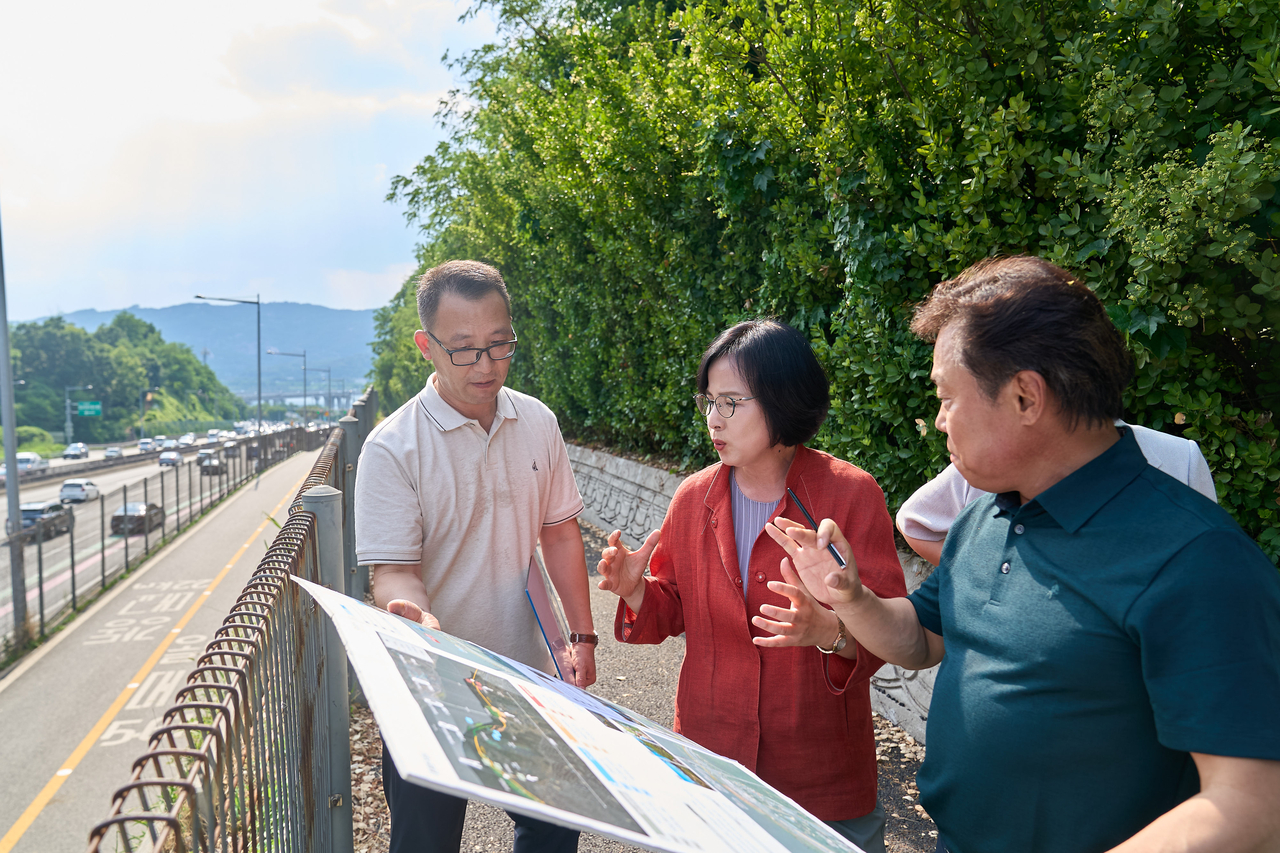
To connect this natural environment with residents' daily lives, the district is developing the Gangdong Han River Greenway.
The project extends the existing Gangdong Greenway to the Han River, creating a green ecological corridor that runs from Iljasan through Godeoksan and Amsa Ecological Park all the way to the river.
Plans call for building an ecological observation trail from the Amsa water intake facility to Godeoksan, and installing a "green bridge" over the Olympic Expressway — which currently cuts off Godeoksan from the Han River — to link the mountain and the riverbank.
Once complete, the project will create an unbroken ecological corridor unique to Gangdong-gu, allowing people to walk continuously from Iljasan through Godeoksan to the Han River.
The district intends to make it not merely a walking path but everyday infrastructure that raises the quality of life for a city of 500,000.
Spaces will be designed so that children, parents, young adults and senior citizens alike can walk, cycle and enjoy nature close to home.
The district also hopes that visitors to the Han River and Godeoksan will naturally extend their trips to nearby Godeok Biz Valley and surrounding commercial areas, injecting vitality into the local economy.
The next goal for a city of 500,000 — a Gangdong-gu where residents can live the life they want
The housing, education, transport, employment and natural-environment policies Gangdong-gu is pursuing are not separate initiatives — they form a single vision.
A city where people live in good homes, raise children, work nearby, move around easily and rest in nature close at hand.
That is the future Gangdong-gu is building now that it has surpassed a population of 500,000.
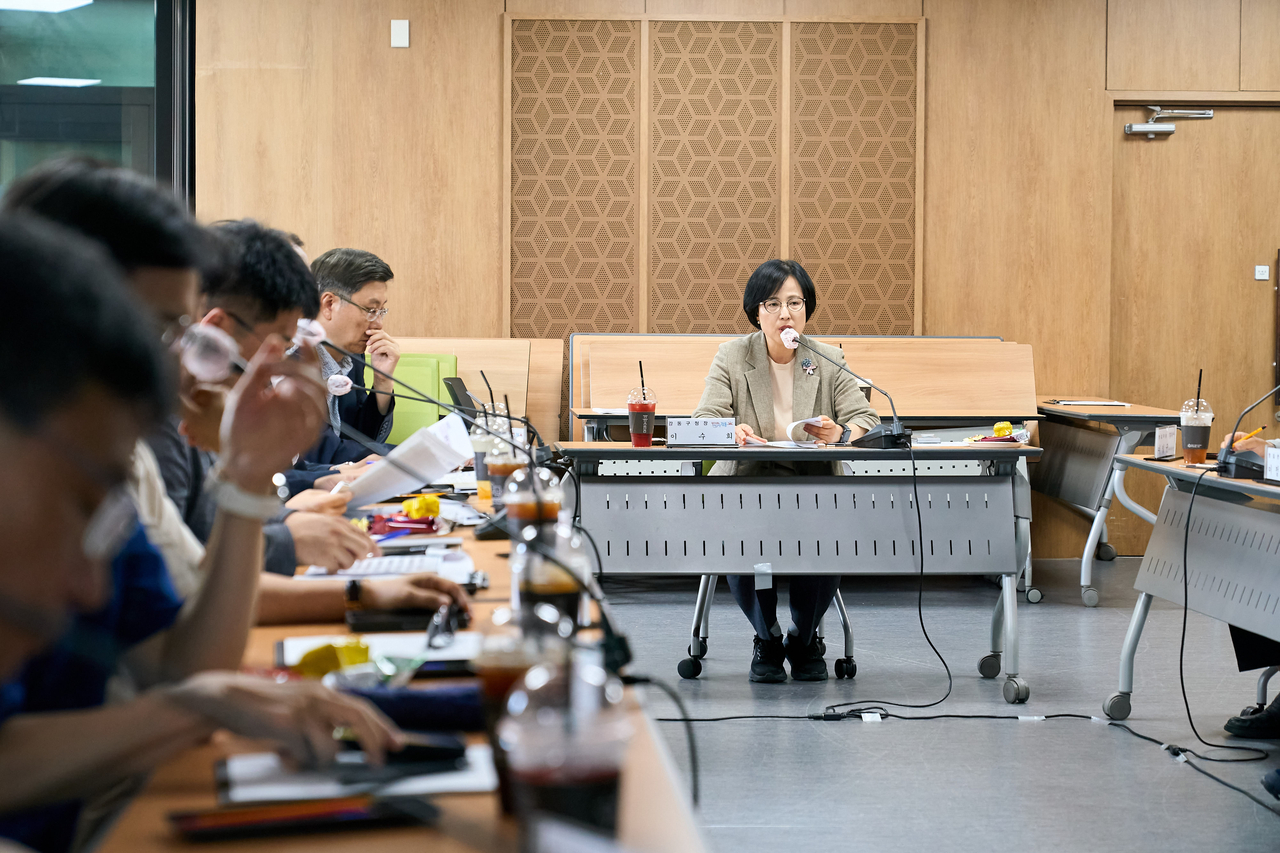
The goal is not simply to grow bigger. As the city expands, the district believes residents' everyday lives must grow richer alongside it. "What matters is making the most of Gangdong-gu's strengths so that residents can feel real change in their daily lives," District Mayor Lee Su-hee said. "We will build a 'Wannabe Gangdong' — a city that raises the fundamental competitiveness of urban life through education, transport, jobs and housing, while also offering the breathing room that nature and culture provide, so that every single resident can live the life they want."
seouldream01@heraldcorp.com