'We will make Seoul a city where sick residents can feel safe even outside the hospital'
Kim prioritizes establishing Seoul's integrated care system, linking post-discharge treatment, rehabilitation and daily life
Welfare policy for a super-aged society shifts away from facility dependence toward community-based care
Low birth rate solution lies in easing child-rearing burdens; specialized care and independence support for children with disabilities to expand
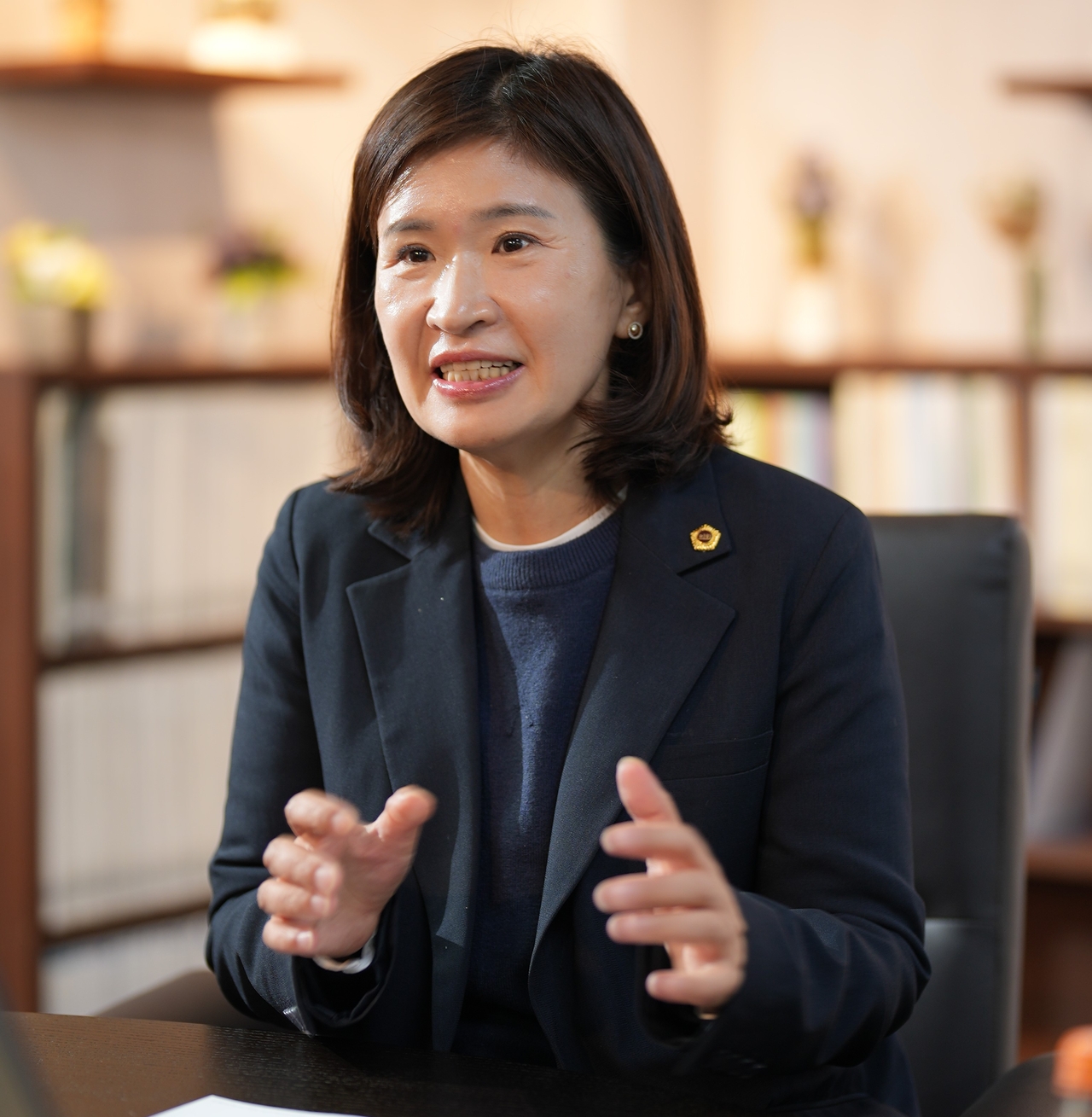
In Seoul, life after leaving the hospital can be harder than the treatment itself. An elderly person living alone worries about three meals a day and whether medications are being taken on schedule. Parents raising a child with a disability desperately need somewhere to leave their child during school breaks. A young person cut off from social ties may find it difficult even to ask for help. The difficulties residents face vary widely, but they share a common thread: medical care, welfare and support services fail to connect at the moments people need them most.
Kim Kyung-woo, chair of the Seoul Metropolitan Council's Health and Welfare Committee and a Democratic Party of Korea lawmaker representing Dongjak 2, has identified this disconnect as the central challenge Seoul's welfare policy must address. Simply adding more welfare facilities or launching new support programs, he said, is not enough to meaningfully change residents' lives. His plan is to focus policy efforts on filling the care gaps that arise across the entire life course — recovery after treatment, child-rearing after birth, and independent living after a person with a disability reaches adulthood.
In an interview on Thursday, Kim outlined his priorities: establishing Seoul's integrated care model, strengthening public healthcare, addressing the low birth rate and eliminating blind spots in the welfare system.
He said it is not enough for Seoul to operate its medical and welfare infrastructure in isolation — the key is connecting those resources organically within local communities. He said he would back the necessary systems and budgets to enable hospitals, public health centers, welfare centers and care providers to deliver the right services based on each resident's health condition and living circumstances.
Solving the super-aged society: connect care, don't just build facilities
The first area Kim said he wants to overhaul is the medical and care system that kicks in after a patient is discharged from hospital.
Medical services today are concentrated on in-hospital treatment, but a patient's recovery continues well after discharge. Many patients who have completed acute-phase treatment still need medication management, rehabilitation, dietary support and ongoing health monitoring.
The problem begins once they return home. If family caregiving capacity is insufficient or coordination with local medical providers breaks down, a patient's condition can deteriorate — sending them back to the hospital.
To break that cycle, Kim said a system is needed in which community medical and welfare institutions participate from the moment of discharge.
Now that national-level integrated care policy has gained momentum, Seoul should leverage its rich medical resources and neighborhood-specific characteristics to build a more advanced model, he said.
"Patients are not always fully recovered when they are discharged," Kim said. "If no one is checking whether they are taking their medication properly, eating well or making progress in rehabilitation, their condition can worsen and they end up readmitted — a vicious cycle."
To address this, he called for building a Seoul-style integrated care system that links hospitals, local medical providers, public health centers, home-visit medical and nursing services, and long-term care and support services.
He said elderly welfare policy must follow the same logic. In a super-aged society, what matters is not how many facilities house older people, but how well the system supports them in living healthy, independent lives in familiar surroundings.
He said neighborhood infrastructure — senior centers and welfare centers — should be actively used to detect early signs of health deterioration or social isolation among elderly people living alone or with limited mobility.
The goal, he said, is to shift policy from a reactive posture — responding after illness or crisis strikes — to a prevention-centered approach, by strengthening home-visit health management and self-care support.
"Older residents should be able to maintain their dignity and autonomy in the neighborhoods where they have lived, even as they age," Kim said. "We need to expand the scope of elderly welfare from facility-centered to community-centered."
Public healthcare strength depends on community ties, not bed counts
Kim said the way Seoul thinks about its healthcare environment also needs to change.
Seoul is a city with a concentration of large hospitals and specialist medical personnel. But the sheer number of medical institutions does not guarantee that every resident can access the care they need on a sustained basis.
For older residents, people with chronic conditions and those with limited mobility in particular, what matters is not just physical access to a hospital but post-treatment management and community-level support.
Kim said the role of public healthcare must expand beyond hospital walls and into communities and homes.
He pointed to Britain's National Health Service virtual ward and hospital-at-home models as reference cases.
These approaches allow patients to receive necessary treatment and health monitoring at home under medical supervision — a model that, he said, leaves room for adaptation to Seoul's healthcare environment.
However, he cautioned against importing foreign systems wholesale, saying any adaptation must account for South Korea's domestic healthcare framework and Seoul's local characteristics.
In that process, he said he would focus on strengthening the public healthcare functions of Seoul city hospitals, including Boramae Medical Center, and on connecting public health centers, local medical providers, pharmacies, and home-visit nursing and rehabilitation services.
He also identified digital health technology as a tool that could supplement the community-based medical system.
"Public healthcare must evolve from a model where people go to the hospital when they are sick, to one where treatment and health management continue in communities and at home," Kim said. "We will build a Seoul-style public healthcare model that connects prevention, treatment, rehabilitation and ongoing health management."
A city where raising children is hard: look beyond birth incentives to the reality of parenting
On low birth rate policy, Kim placed greater weight on improving the actual conditions of child-rearing than on the size of financial incentives.
He said Seoul's high housing and child-rearing costs, along with the care burden on dual-income households, are structural factors making it harder to have and raise children.
Expanding birth support payments alone, he said, cannot solve these structural problems.
He said a particularly urgent fix is the mismatch between parents' working hours and the hours when childcare facilities are available.
Expanding nighttime, emergency and gap-filling childcare, and raising the quality of infant and toddler care, would allow parents to leave their children in safe hands whenever they need to, he said.
This also bears directly on preventing career interruptions for parents and enabling dual-income households to remain economically active.
Kim said the practice of pursuing birth, childcare, education and housing policies as separate tracks also needs to change.
Effective measures to address the low birth rate can only be designed by looking comprehensively at the burdens that arise throughout the process of having and raising a child, he said.
"The low birth rate problem cannot be solved simply by increasing birth support payments," Kim said. "We need to reduce the burden across the entire process of having and raising children."
He also raised care for children with disabilities as an important challenge.
While childcare facilities for children without disabilities are expanding, families raising children with disabilities lack access to specialized care spaces during after-school hours and school breaks, he said.
Kim said the city should consider both improving the accessibility of existing care facilities for children with disabilities and expanding dedicated facilities — such as specialized care centers equipped with trained staff and tailored programs.
Such spaces should go beyond basic supervision to support play, education and social development, he said.
He also proposed expanding the role of welfare centers for people with disabilities into community hubs encompassing rehabilitation, health management, family support and social participation, while strengthening support for vocational rehabilitation facilities and sheltered workshops.
His plan is to build a life-stage support system that ensures vocational and adaptive training suited to each person's disability actually leads to employment and independent living.
Reaching residents who cannot ask for help: rethinking where welfare begins
Kim said that to meet new welfare demands, the system must first change how it identifies people who need support.
Isolated and reclusive young people, residents struggling with mental health, and single-person households with weak social networks are among those most likely to fall through the cracks of a welfare system built around applications, he said.
No matter how well-designed a support program is, its impact is limited if the people who need it most cannot navigate the application process.
Kim said neighborhood community centers and welfare centers must work together with medical institutions, schools and local communities to detect warning signs early and connect people to the services they need.
Policy for single-person households, he added, should look beyond housing to encompass diet, health, safety and social networks.
"No matter how good a program is, welfare blind spots will persist if people who need help cannot find their way to it," Kim said. "We must shift from a welfare system that waits for people to come to it, to one that goes out and finds them first."
These policy ideas connect directly to improving the medical and welfare environment in his own constituency of Dongjak-gu.
Kim said he would strengthen cooperation among Boramae Medical Center, public health centers, local medical providers, pharmacies, welfare centers and care institutions so that residents can access the services they need within their own neighborhoods.
He identified expanding home-visit health management in response to aging and the growth of single-person households, and building out care infrastructure for families raising children with disabilities, as key priorities.
Translating welfare needs identified at the local level into policy improvements and budget allocations at the city level is the role he must play as chair of the Health and Welfare Committee, he said.
"As a constituency lawmaker, I will find the problems on the ground in Dongjak-gu," Kim said. "As chair of the Health and Welfare Committee, I will connect those problems to Seoul's policies and budget."
He also said Seoul's welfare policy must shift from a provider-centered model to one centered on residents' daily lives — building the institutional foundations to ensure that medical care, support services, housing and independent living do not operate in silos but function together at the moments people need them.
Kim reaffirmed that the success of welfare policy should be measured not by the number of programs launched but by how much residents' lives have actually improved, and said he would work to turn the gaps in welfare he has identified on the ground into policy and budget commitments that residents can feel in their daily lives.
7toy7@heraldcorp.com