Seoul's urban planning committee approved the designation of a redevelopment zone and revised improvement plan on Wednesday, paving the way for a mixed-use hub blending commercial, residential and public functions. The site's zoning will be upgraded from second- and third-class general residential to quasi-residential, enabling higher-density development with housing, commercial facilities and community infrastructure.
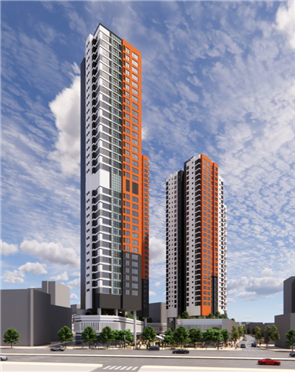
Dongjak-gu announced that its transit-oriented development project centered on Daelim Samgeori Station has cleared a Seoul Metropolitan Government urban planning committee review, formally setting the project in motion.
At the committee session held Wednesday, the proposal to designate a redevelopment improvement zone and establish an improvement plan for the Daelim Samgeori Station transit-oriented development project was approved with modifications.
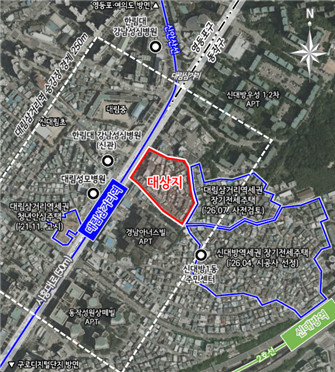
The project site covers 14,452.4 square meters in the transit-oriented area around Daelim Samgeori Station on the Sinansan Line and sits adjacent to Siheung-daero, a major arterial road. The area is currently dense with aging single-family homes and suffers from a narrow road network shared by pedestrians and vehicles, leaving both residential conditions and traffic flow in need of improvement.
In response, the district drew up and submitted an improvement plan to transform the area into a mixed-use hub integrating commercial, residential and public functions. The committee's approval with modifications gives the project fresh momentum.
With the review cleared, the site's zoning will be upgraded from second- and third-class general residential to quasi-residential, unlocking the possibility of high-density mixed development.
The district plans to build residential and commercial facilities within a floor-area ratio of up to 500 percent and a height limit of 124 meters, reinforcing the self-sustaining capacity of the new transit hub. Community infrastructure and street-activation facilities will be placed on the lower floors.
A 3-meter public frontage setback will be secured along the street, and open public space will be created along Siheung-daero to improve accessibility. The development will also be linked to the existing alley commercial district in Sindaebang 1-dong to encourage a natural flow of pedestrian traffic and commercial activity throughout the neighborhood.
The district will also overhaul the area's inadequate road environment and expand resident amenity facilities to dramatically improve living conditions.
Sindaebang-ro and Sindaebang 16-gil, currently 6 meters wide, will be widened to 12 meters and 9 meters respectively to establish a pedestrian-centered, safe and comfortable road network. Reflecting the area's relative shortage of senior welfare facilities, the district also plans to expand community infrastructure — including a senior comprehensive care center linked to nearby medical facilities.
Subsequent procedures remain, including the official designation of the improvement zone and publication of the improvement plan decision. The district said it will proceed with the project without delay once those steps are complete.
Beyond Daelim Samgeori Station, Dongjak-gu is pushing ahead with transit-oriented development projects at five additional locations: the north side of Sindaebang Samgeori Station, the north side of Namseong Station, the south side of Namseong Station, Jangseungbaegi Station and Isu Station — accelerating station-centered growth across the district.
"With the opening of the Sinansan Line, we expect the area around Daelim Samgeori Station to emerge as a vibrant new hub where commercial, residential and public functions come together," Dongjak-gu District Mayor Ryu Sam-yeong said. "We will carefully reflect the area's unique characteristics and residents' needs to improve both the residential environment and everyday infrastructure, and we will push the project forward without a hitch to breathe new life into the community."
seouldream01@heraldcorp.com