'Sinhwa Project' signed on first day in office now in full operation, with district mayor overseeing progress directly
Gaepo-dong and Suseo complexes clear key approval milestones as permit timelines shrink
District targets 27,330 units by 2030 through organizational overhaul and proactive administrative support

Gangnam-gu District Mayor Kim Hyun-gi's reconstruction drive is gaining visible momentum.
Kim has made housing supply expansion — a centerpiece of his "Great Gangnam Transformation" agenda launched with the start of the ninth elected-term administration — a personal priority, directly monitoring project progress and pushing to shorten permit timelines.
The back-to-back approvals of the management and disposal plan for Gaepo Jugong complexes 6 and 7, and the association establishment for the Garam apartment reconstruction in the Suseo land development district, are drawing attention as concrete early results.
The "Gangnam Reconstruction Rapid Harmony (Sinhwa) Project," which Kim signed as his first official act on July 1, the day he took office, has now entered full implementation. Gangnam-gu recently held its first reconstruction progress management meeting, chaired by Kim, to review the status of projects scheduled to break ground and examine key pending issues.
Gangnam-gu is currently pursuing a total of 103 urban renewal projects, including 53 reconstruction schemes as well as redevelopment and remodeling initiatives. The district aims to deliver a combined 27,330 units by 2030 by keeping all projects on schedule.
Annual ground-breaking targets call for 2,560 units in 2027, 8,550 in 2028, 5,600 in 2029 and 10,620 in 2030. Meeting those housing supply goals will hinge on how effectively the district manages delays stemming from individual project permits, infrastructure negotiations and disagreements among residents.
To that end, Kim is strengthening a project-by-project progress management system. The recent meeting brought together the head of the urban environment bureau, the chief of the reconstruction project division, and department heads overseeing roads, flood control, parks and green spaces, transportation, environment and architecture. The intent is to minimize delays through cross-departmental collaboration, given that reconstruction projects require coordinated approvals across multiple fields rather than clearance from a single department.
A standout example is the project implementation plan approval for Eunma apartment. During the approval process, Gangnam-gu coordinated with roughly 80 related departments and agencies and completed public inspection procedures, finishing 33 days ahead of the statutory 60-day deadline. The district plans to apply the same proactive pre-consultation approach to other key renewal projects to further shorten permit timelines.
"Every morning when I arrive at the office, the first thing I do is receive a briefing from the reconstruction TF," Kim said. "I will continue to personally review the progress of each project and establish a management system that resolves delays immediately." He added that he intends to show that reconstruction can move at a different pace when the district mayor is directly involved.
Progress is also advancing at individual project sites.
Gangnam-gu approved the management and disposal plan for the Gaepo Jugong complexes 6 and 7 reconstruction project on Thursday — just eight days after receiving notification that the Korea Real Estate Board had completed its feasibility review.
A management and disposal plan finalizes each association member's allotment, share and contribution. Because approval opens the path to resident relocation, demolition and ground-breaking, it marks a critical turning point in a project's progress.
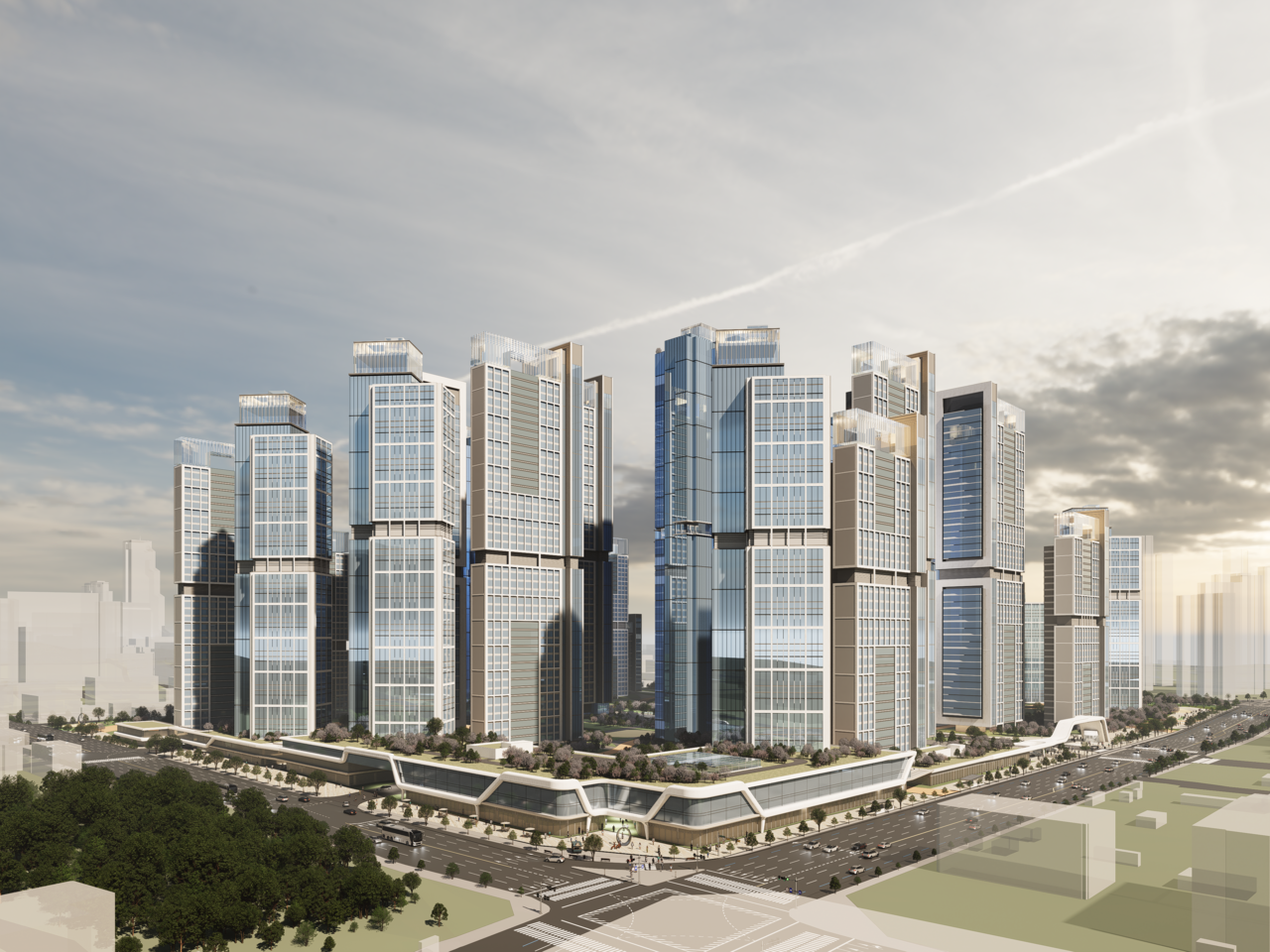
The current 1,960-unit Gaepo Jugong complexes 6 and 7 are set to be transformed into a development of up to 35 stories, 21 buildings and 2,698 units. Hyundai Engineering & Construction (Hyundai E&C) will serve as the contractor. The association plans to begin relocating members in February 2027, with asbestos removal and demolition of existing structures to follow in the second half of that year. Ground-breaking is targeted for 2028, with move-in scheduled for the second half of 2032.

Gaepo Jugong complexes 6 and 7 are among the major reconstruction sites in the mid-rise apartment belt of Gaepo-dong. With management and disposal plan approvals now secured for both complex 5 and complexes 6 and 7, the district has added further momentum to renewal efforts across the Gaepo-dong area.
The Suseo land development district has also recorded its first association establishment approval.
Gangnam-gu approved the establishment of a reconstruction association for the Garam apartment project in Irwon-dong on Monday, processing the application in 10 working days after receiving it on Sept. 22 — well ahead of the statutory 30-day deadline.
Garam apartment is the first complex within the Suseo land development district to receive association establishment approval. It marks the launch of the first association roughly one year and two months after a district-unit plan revision on Aug. 7 last year laid the groundwork for reconstruction in the area.
The swift progress was underpinned by proactive support from the district office and a high resident consent rate. Before the association establishment application was filed, the district conducted estimated contribution verification and notarization of consent forms; after the application was received, it carried out document review and supplementation in parallel.
Of 511 landowners and property holders, 480 consented to the association's establishment, putting the consent rate at 93.93 percent. Since the promotion committee received approval in February, the project has moved rapidly through designation as a renewal zone in April, a founding general meeting in September and association establishment approval this month.
Completed in 1993, Garam apartment currently comprises five stories and 496 units. Through reconstruction, it is set to become a complex of up to 25 stories and 818 units.
Notably, after a 2025 amendment to the Urban Renewal Act allowed promotion committees to be formed before a renewal zone is officially designated, Gangnam-gu tapped its contingency reserve rather than waiting for a regular budget allocation and launched a public support service contract in November last year. The district says moving into preparation from the earliest stage of the project, in step with the regulatory change, helped shorten the overall timeline.
The district is also restructuring its organization around reconstruction. Gangnam-gu plans to position its housing and urban bureau and reconstruction division as the most senior bureau and division in the district office hierarchy, making housing supply its top institutional priority. It will also reinforce communication channels with reconstruction associations and residents, and reorganize housing-related units to encompass transit-oriented mixed-use development.
Ultimately, Kim's reconstruction strategy centers on cutting project timelines by combining direct mayoral oversight of progress management, pre-consultation on permits, organizational restructuring and resident communication. The vision goes beyond accelerating administrative procedures for individual projects — it aims to translate Gangnam-gu's housing supply targets into actual ground-breakings and move-ins.
However, shorter permit timelines do not automatically mean earlier ground-breaking or move-in dates. How smoothly the district navigates project-specific variables at each stage — including association member contributions, relocation and demolition, construction costs and infrastructure expansion — will ultimately determine whether the targets are met.
"Garam apartment moved quickly to prepare in line with regulatory changes, and residents backed the effort with a high consent rate," Kim said. "I will make sure residents can feel a real difference in pace — reducing the time they spend waiting unnecessarily during the reconstruction process."
With the project signed on his first day in office now producing results in the form of meetings, organizational changes and individual project approvals, attention is turning to whether Kim's reconstruction push can turn the target of 27,330 units by 2030 into reality.
seouldream01@heraldcorp.com