
First case in which the IP Office's technology police directly made an arrest under the reformed criminal justice system; one former employee detained, two others indicted without detention
Authorities have arrested a group of former employees of a South Korean semiconductor parts company who allegedly leaked core technology to a Chinese firm.
The Special Technology Leak Judicial Police unit under the Intellectual Property Office — known as the technology police — and the Second Major Crimes Indictment Division of the Daejeon District Prosecution Office announced Wednesday that they had indicted with detention a 45-year-old former employee, identified only as A, on charges of violating the Unfair Competition Prevention Act and the Industrial Technology Protection Act for using the victim company's core semiconductor inspection technology in overseas production. Two other former employees at the same company, identified as B and C, both 40, were indicted without detention.
The case marks the first in which the Intellectual Property Office's technology police arrested a suspect in an overseas technology leak and referred the case to the prosecution office for indictment.
Three former employees arrested for using domestically developed core semiconductor inspection technology abroad
According to the technology police, A and the others are accused of conspiring with an overseas retail company — which handled local distribution for the victim company — to establish a foreign manufacturing firm between November 2023 and February 2026, then using design drawings and technical data for the victim company's core semiconductor inspection technology to produce and supply products overseas.
The investigation found that A, B and C had each switched jobs to the overseas manufacturing firm in November 2023 at twice their previous salaries, at the suggestion of a 58-year-old suspect identified as D, who had fled abroad.
The three are believed to have supplied prototype products made using the victim company's probe card technology — a core semiconductor inspection technology — to overseas buyers in December 2025. The victim company estimates it could suffer annual sales losses of 40 billion won ($29.8 million) if it loses overseas market share as a result of the suspects' actions.
Probe card technology is used to test semiconductor chips for defects while still in wafer form, a field long dominated by US and Japanese companies. The victim company had succeeded in developing a domestically produced version and had gone on to develop equipment for testing high-bandwidth memory (HBM) chips, supplying products to major domestic and overseas semiconductor firms.
Technology police crack case with specialist expertise and expanded investigative staff
The technology police launched the investigation in July 2025 after receiving intelligence from the National Intelligence Service, but faced difficulties because A and the other suspects were staying abroad.
Working with the NIS, investigators identified signs that the overseas manufacturing firm the suspects had established was using domestic supply chains for procurement and design work. They conducted a search and seizure at a domestic design firm in July 2026, securing design drawings and technical data belonging to the victim company that the suspects had used.
The materials seized in the search had the victim company's name and other identifying information deleted, or had been re-edited to appear as if they belonged to the overseas manufacturing firm the suspects had joined, making it difficult to determine at face value whether they were the victim company's technical data.
The technology police deployed specialist investigators with research and development experience in the semiconductor industry, along with expanded investigative staff added in June 2026. A detailed analysis of the seized materials revealed that documents with deleted source information had been drafted and modified on the basis of the victim company's technology.
The technology police referred A for indictment with detention and B and C for indictment without detention. They have also requested an Interpol red notice for D — a former executive of the victim company and the alleged ringleader — who has been evading the investigation from abroad, and plan to proceed immediately upon securing custody.
Cooperation prevents investigative gaps amid criminal justice reforms
The case unfolded alongside changes to the criminal justice system, including the conversion of prosecution offices into indictment offices. The technology police and the indictment office worked closely together at key stages of the investigation — including warrant applications, search and seizure operations, and securing suspects — and maintained their cooperative framework throughout the transition to ensure the investigation and indictment proceeded without disruption.
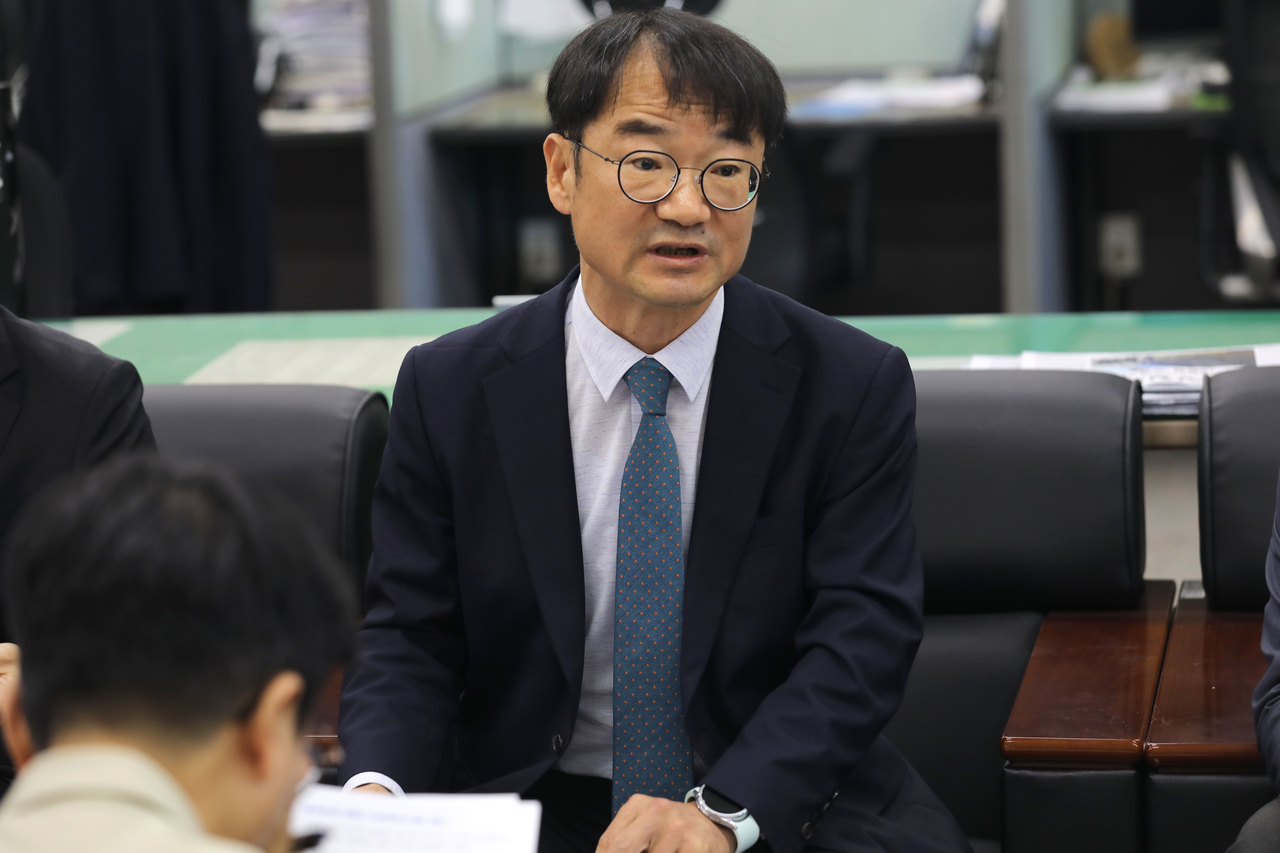
"Once a company's core technology leaks overseas, the damage cannot be undone, so while apprehending those responsible is important, preventing the leak in the first place is even more critical," said Jeong Yeon-woo, deputy chief of the Intellectual Property Office. "We will respond firmly to overseas technology theft through thorough investigations, while also pursuing institutional reforms — including tougher penalties for overseas technology leaks and measures to hold foreign companies that participate in such crimes accountable."
kwonhl@heraldcorp.com





